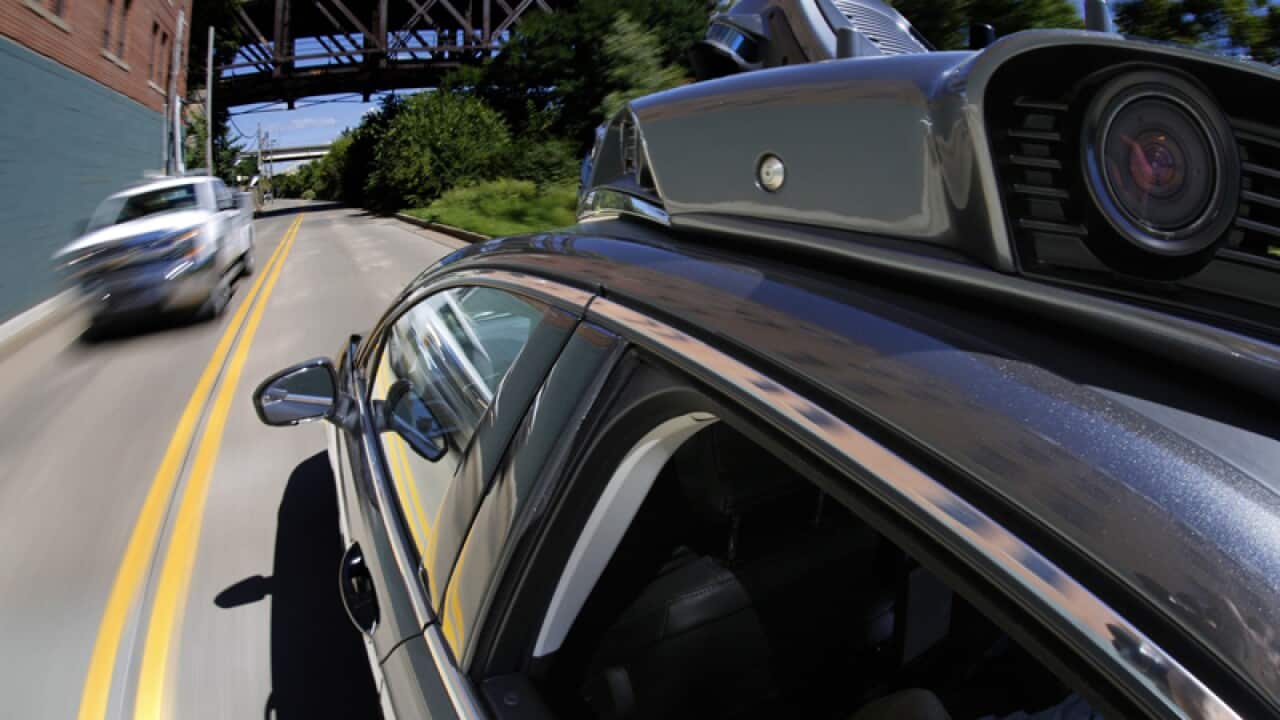
Uber has become the first company to make self-driving cars available to the general public in the US through a test program in Pittsburgh.
The ride-hailing service selected a group of customers, including Pollier, to take free rides in autonomous Ford Fusions, with human drivers as backups.
Pollier, 27, said the Fusion ``felt sharp,'' and the 15-minute ride to his bartending job went smoothly and felt ``like taking an Uber any other day.''
If other riders have a similar reaction, and the autonomous cars are able to handle all the challenges Pittsburgh offers, including snowstorms, rolling hills and a tangled network of aging roads and bridges, then the self-driving car will be one step closer to going from science fiction to a realistic option for travellers.
``That pilot really pushes the ball forward for us,'' said Raffi Krikorian, Director of Uber Advanced Technologies Centre (ATC) in Pittsburgh, the company's main facility for testing self-driving vehicles.
News that makes sense
Your trusted source for staying up-to-date with the world around you. Get free daily news updates and analysis, straight to your inbox.
``We think it can help with congestion. We think it can make transportation cheaper and more accessible for the vast majority of people.''
The race between Silicon Valley upstarts and traditional automakers to perfect a fully driverless car to serve regular people has intensified. Companies such as Audi, Nissan and Google have invested hundreds of millions of dollars and logged millions of miles test-driving autonomous vehicles, typically in more ideal locations such as California. Ford recently announced plans for a fully driverless car for use in ride-hailing and car-sharing programs by 2021.
Many experts predict that it will be years, if not decades, before the public is being driven around in fleets of fully driverless vehicles.







