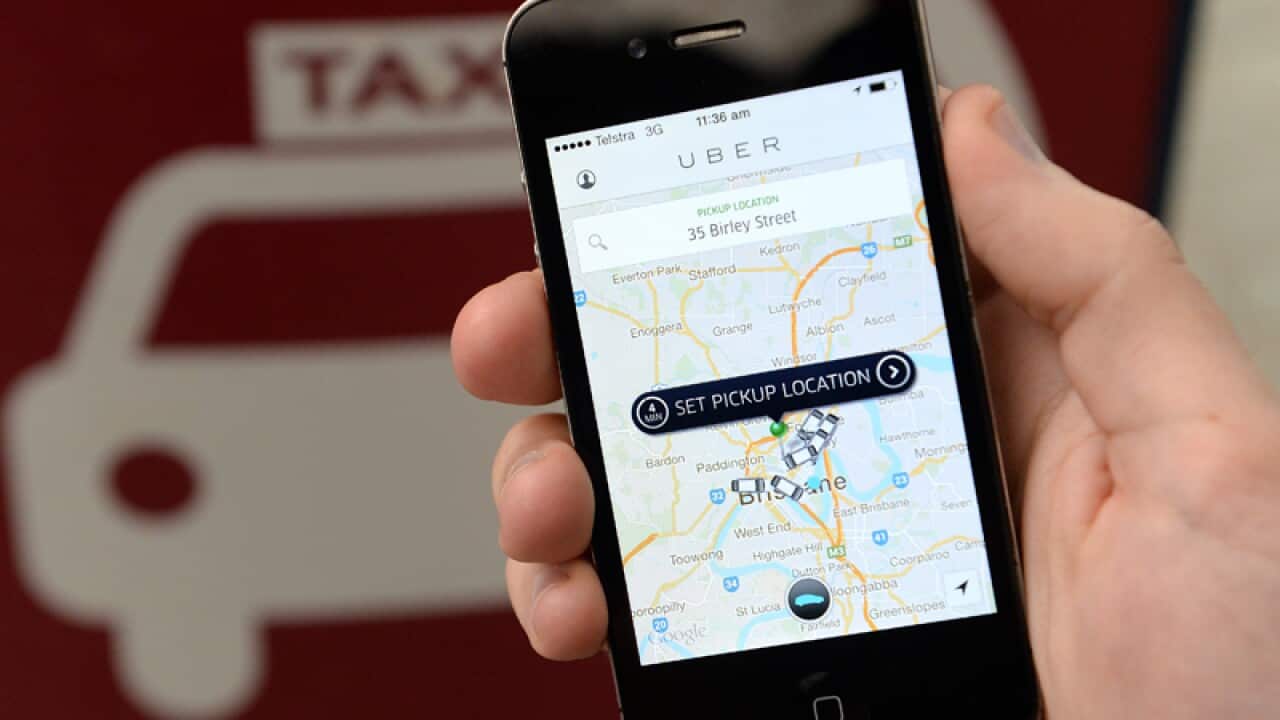
In its campaign to win over Australian governments, controversial ride sharing service Uber is focusing its pitch on something politicians can't ignore: job creation.
Since rolling out its UberX platform in Australia in 2014, the company has been under attack from state governments and the taxi industry.
They claim Uber is illegal or unsafe, while drivers have had to deal with the prospect of fines and even attempted citizen's arrests.
But Uber wants governments to introduce legislation to legalise and regulate ride sharing, and to further that cause, the company this week brought its US-based strategy chief David Plouffe to Australia.
Mr Plouffe, best known as Barack Obama's 2008 campaign manager, has brought with him a message he knows will resonate with his target audience.
"We believe, in partnership with government and organisations around the country, we can have an additional 20,000 drivers on the Uber platform this year," he told AAP.
"Every elected official is thinking through how can we create jobs, so think about that, if government were to really partner with us ... 20,000 jobs, even in a country of Australia's size, is a lot of jobs."
Uber is currently adding around 1,100 drivers a month in Australia and believes it could speed that up significantly with government support, especially as it looks to expand into smaller cities and considers introducing new services like car pooling, which is currently being trialled overseas.
"If we find a way to work together and really find some certainty, Uber and its driver partners could be one of the big economic stories in Australia in the coming years," Mr Plouffe said.
Many, if not most of those jobs will not be full-time, with the average UberX driver working about 20 hours a week.
Those drivers often include students, stay-at-home parents, full-time workers looking for additional income and people who have recently lost their jobs, Mr Plouffe says.
"Think about that - somebody loses their job but they still have a car, they can go through a background check and start making money straight away," he said.
The company has had mixed success with governments overseas.
Twenty six jurisdictions have so far introduced ride-sharing legislation, while a number of countries, including Spain and Thailand, have banned the service.
But Mr Plouffe is confident Australian governments will eventually come to embrace the service, which he argues can help reduce drink driving and provides affordable transport to areas poorly served by trains or buses.
"Part of the challenge with governments is just one of time and education," he said.
"But as they learn about it and talk to more people about it and maybe use it themselves, then you begin to really fill in the education."
Share


