Australia has not changed its travel advice for France or Germany, despite the US and UK issuing warnings to citizens that there is a "high risk of terrorism" in Europe.
As of 11.30am (AEST) Monday morning, the Department of Foreign Affairs and Trade (DFAT) had not amended travel advice for Australians traveling to either France or Germany.
"As a matter of course, the Government is in close contact with consular officials from the [US] State Department on this issue," a DFAT spokesperson said in a written statement.
"The Government provides advice to Australians covering individual countries and does not issue travel advice for Europe as a whole."
News that makes sense
Your trusted source for staying up-to-date with the world around you. Get free daily news updates and analysis, straight to your inbox.
"Our travel advisories reflect our best assessment of the safety and security issues that Australians may face in particular countries," the DFAT statement spokesperson says.
"We can confirm that the travel advice for France and Germany has been updated," a British Foreign Ministry spokeswoman says.
"Like other large European countries, they have a high threat of terrorism, which is reflected in our updated travel advice."
The updated travel advice for France and Germany on the Foreign Office website (www.fco.gov.uk) said that "attacks could be indiscriminate, including in public places frequented by expatriates and foreign travellers".
"US citizens should take every precaution to be aware of their surroundings and to adopt appropriate safety measures to protect themselves when traveling," an alert by the US State Department says.
It said attackers may use "a variety of means and weapons and target both official and private interests," and that particular targets could include railways, subways and locations frequented by tourists.
The alert, which the State Department issues regarding specific events, and is one step down from a travel warning, follows intelligence reports that suggested an al-Qaeda attack could be imminent.
Germany and France immediately responded to the US State Department alert by supporting the securoty measures, particular the urging of caution in public places and in transportation systems.
News media in the past week reported that Western intelligence agencies had uncovered an al-Qaeda plot to launch attacks in Britain, France, Germany and the United States.
The reports said well-armed teams of jihadists planned to seize and murder Western hostages in a manner similar to the attacks two years ago in the Indian city of Mumbai on two hotels and its main railway station, in which 10 gunmen killed 166 people and injured more than 300.
US President Barack Obama has been "following the threat information on a daily basis and was informed on the travel alert throughout," White House spokesman Nicholas Shapiro told reporters.
"From the day we became aware of this latest plot, the president made clear we need to do everything possible to disrupt this plot and protect the American people."
British Home Secretary Theresa May said the US alert was "consistent with our assessment." Britain updated its own travel advice for France and Germany on Sunday, warning there was a "high threat of terrorism."
The foreign ministry in France -- the most visited country in the world, with 74.2 million visitors recorded in 2009 -- said through a spokesman that the US alert is "in line with the general recommendations we ourselves make to the French population."
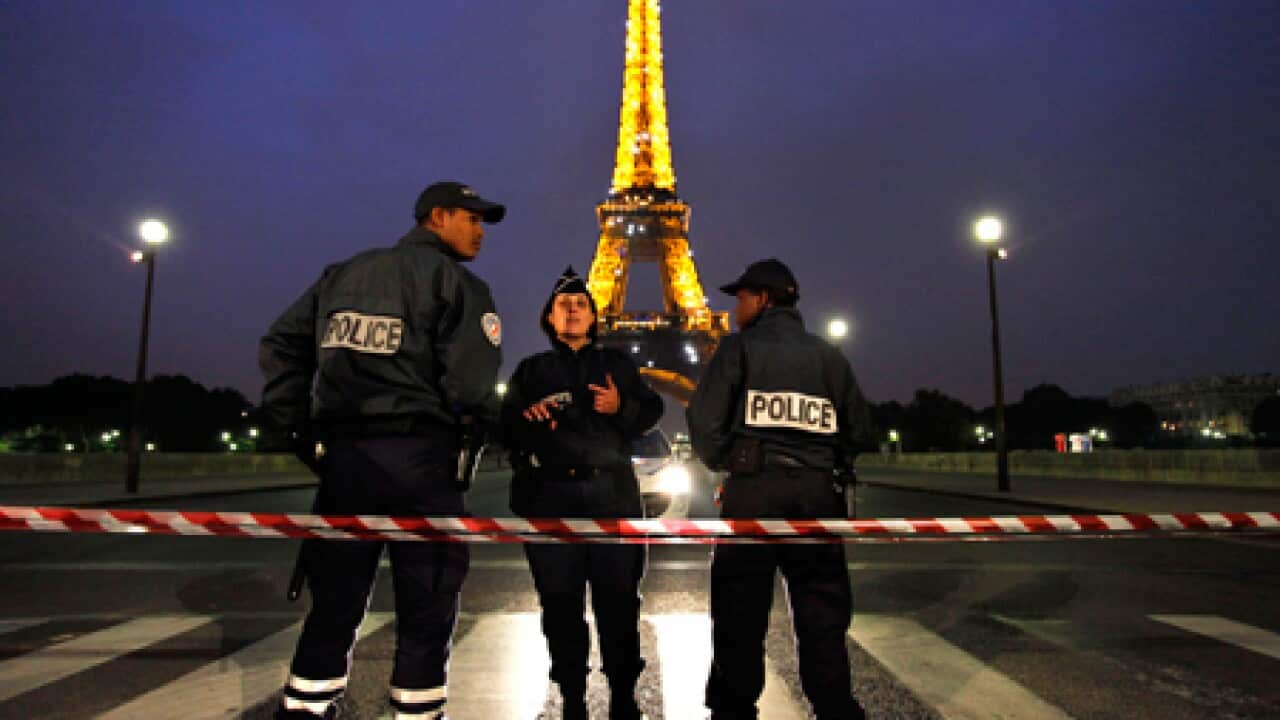
In Paris, bomb scares briefly shutting down the Eiffel Tower and train stations in recent weeks.
A travel alert could have a substantial effect on economic segments in Europe, which earned about $US412 billion dollars from tourism in 2009, according to UN World Tourism Organization figures.
Some 10.6 million Americans reportedly visited Europe last year.
A total of 31 US travel warnings are in effect for various countries including Afghanistan, Iraq, Iran, Israel and Lebanon as well as Sudan and Somalia.







