Cancer-stricken boy Ashya King, whose case made headlines after his parents took him from a British hospital, has undergone scans in Prague as Czech doctors said he had a 70-per cent chance of survival.
The five-year-old's parents sparked an international manhunt after taking him from hospital against doctors' wishes last month, but specialists in Prague are hopeful that lifesaving treatment could work if the tumour does not spread.
"The good news was that there's no visible signs that he has any regrowth of cancer," Ashya's father Brett told reporters on Tuesday, minutes after his son left a Prague medical centre on a stretcher clutching a teddy bear after undergoing brain and spinal cord scans.
"We'll find out in the next couple of days, with the spinal tap, if there's microscopic cancer in his fluid. But we're hoping not," he said.
King also revealed Ashya is unable to speak.
"He's a bit traumatised," he told reporters, pointing to the family's tense journey from England to Spain to the Czech Republic.
Ashya's mother Naghmeh also accompanied the boy to the Proton Therapy Center (PTC) in the Czech capital, where they arrived on Monday after a British court allowed them to leave Spain and returned them full custody of their son.
Jan Stary, head of the Prague Motol hospital children's haematology and oncology clinic, where Ashya is undergoing tests, said he could begin to receive proton beam therapy next week.
He estimated that Ashya had a 70-per cent chance of survival if all the treatment is effective.
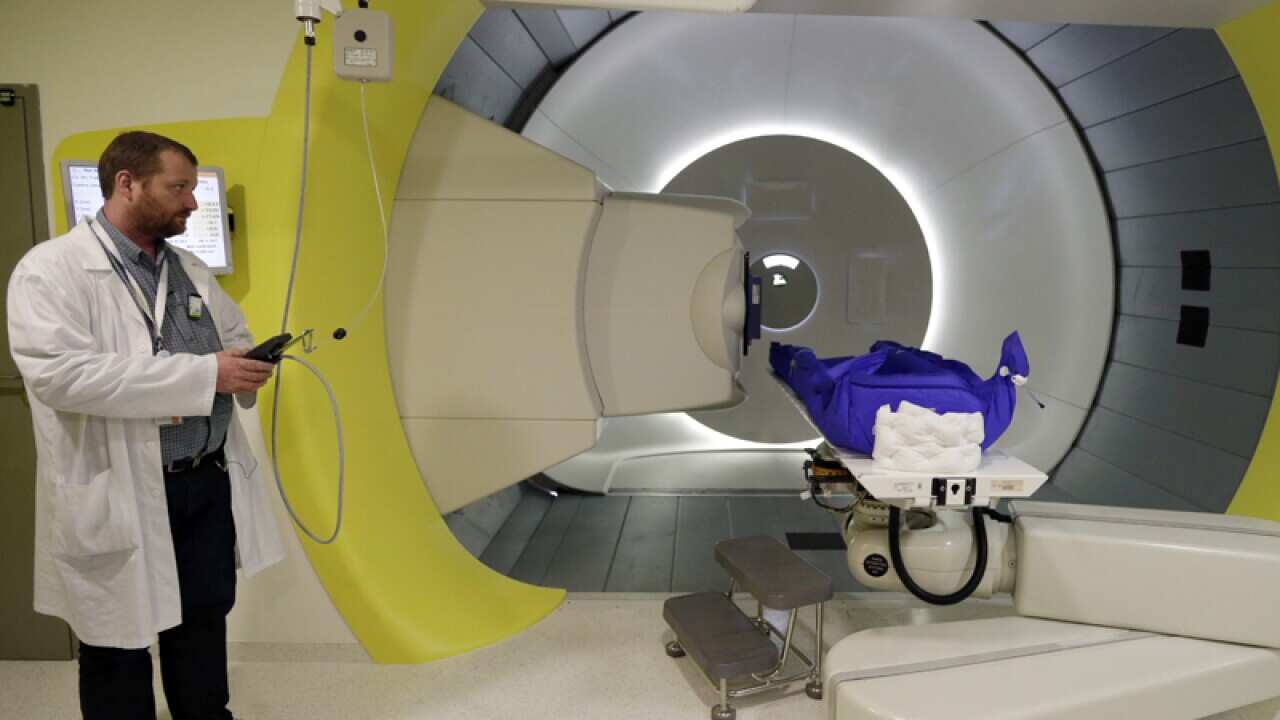
Proton beam therapy is said to be more precise than traditional radiotherapy, allowing doctors to deliver higher doses of energy to a tumour while sparing surrounding healthy tissue.
The treatment is scheduled to start on September 15 and last six weeks.
Ashya has been in the middle of a legal saga that began when his desperate parents whisked him away from a hospital in Southampton in southern England against doctors' advice on August 28.
They want their son to have proton therapy, which was unavailable in Britain, instead of the conventional radiotherapy treatment.
Share


