
in brief
- Healy's resignation makes Starmer's position as UK leader increasingly precarious.
- Australia has downplayed the impact that the move will have on the AUKUS defence pact.
UK defence minister John Healey resigned on Friday over a military spending dispute, accusing Prime Minister Keir Starmer of failing to commit the resources necessary to protect the country from rising threats.
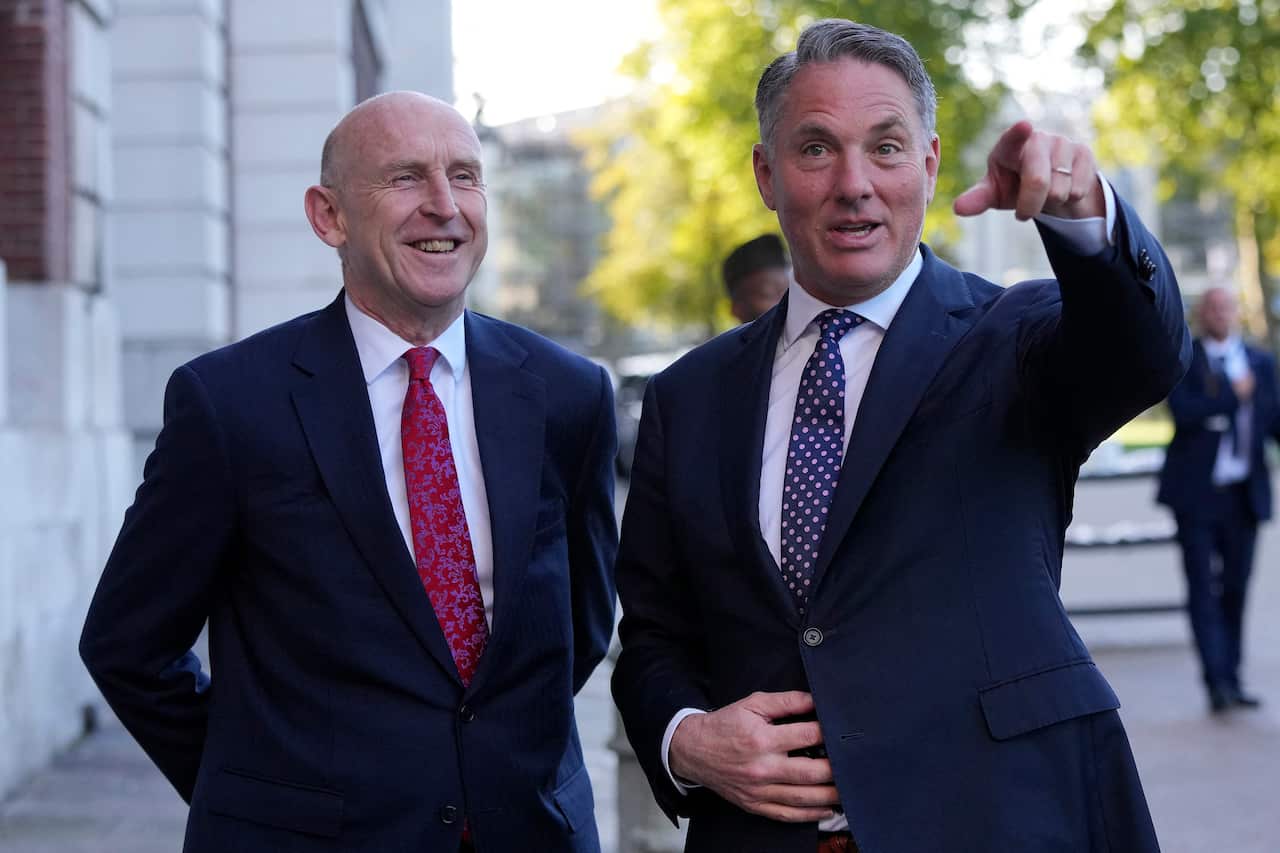
A press conference Healey was due to hold with Australian Defence Minister Richard Marles on a Portsmouth naval base just hours later was cancelled at the last minute.
Australia has downplayed the impact of the snap resignation on plans to acquire a fleet of nuclear-powered submarines.
The resignation, accompanied by a scathing public letter, is another indication that Starmer's authority is draining away.
Healey had been locked in talks with Starmer and finance minister Rachel Reeves over how to meet additional military spending for the UK's delayed Defence Investment Plan, due last year.
News that makes sense
Your trusted source for staying up-to-date with the world around you. Get free daily news updates and analysis, straight to your inbox.
"You have been unable, and the Treasury has been unwilling, to commit the resources that the nation needs to defend the country," Healey said in his letter to Starmer.
Starmer responded with his own letter expressing regret at Healey's departure but saying the defence plan will still deliver an unprecedented funding increase.
"It will provide the resources our military needs to keep us safe and the clarity the British defence industry needs to plan," Starmer said.
The plan will involve "significant reallocations" from other departments.
Following Starmer's reply, armed forces minister Al Carns also resigned, as did Healey's aide, Pamela Nash.
'No effect' on AUKUS
The cancelled UK-Australia media event was supposed to outline both nations' aspirations for the AUKUS partnership.
Industry Minister Tim Ayres said Healey's departure will have "no effect" on the crucial security pact.
"This is a partnership that has deep support across all three countries, political systems within the public service, and the defence agencies in all three countries," he told ABC radio on Friday.
"There will be over the life of this agreement ... many ministers for defence for all three countries, many secretaries for war in the United States case, who are there charged with delivering this program."
Australia is relying on the AUKUS agreement to replace its ageing Collins-class submarines, which are now undergoing life-of-type extensions to keep them in the water a decade longer than their planned retirement date to prevent a capability gap.
New minister named but Starmer in peril
Former army officer Dan Jarvis has been named as Healey's replacement, moving from a junior ministerial post at the Home Office.
Healey's unexpected resignation is another blow to Starmer, who is likely to face a leadership challenge in the coming months.
Starmer's health minister, Wes Streeting, resigned last month, accusing him of lacking a vision.
Key challenger, Greater Manchester mayor Andy Burnham, is seeking to return to frontline politics to launch a leadership bid by standing for MP in a by-election next week.
Labour MP Tan Dhesi said the government must take Healey's warning "with the utmost seriousness", calling his resignation "a grave moment".
Patrick Diamond, politics professor at Queen Mary University of London said Starmer is now a "lame duck prime minister who cannot get decisions through his own government".
One Labour MP said that the resignation was a "hammer blow" to Starmer while another said it was now inevitable he would be forced from his job within months.
Defence plan on the way
Starmer has pledged the largest sustained increase in military spending since the Cold War, aiming to lift it to 3 per cent of national output in the next parliament, meaning tens of billions of pounds of additional money for defence.
But Healey said the plan he had seen would increase defence spending to only 2.68 per cent in 2030, when it will already reach 2.6 per cent next year.
That compares to Germany's plans to spend 3.7 per cent of its GDP on defence by 2030.
Healey argued the increase was "well short" of what was needed to meet increasing threats from Russia and demands in the Arctic and the Middle East.
The UK has slipped to the third-highest-spending country in NATO, having been overtaken by Germany, as the US increasingly wavers on its alliance commitments.
The government has struggled to find the extra cash when the economy is stagnating and both debt and the overall tax burden are at or close to their highest level in decades.
Starmer has insisted he will publish the defence plan before a NATO summit in Türkiye on 7 July.
— With additional reporting from Agence France-Presse.
For the latest from SBS News, download our app and subscribe to our newsletter.







