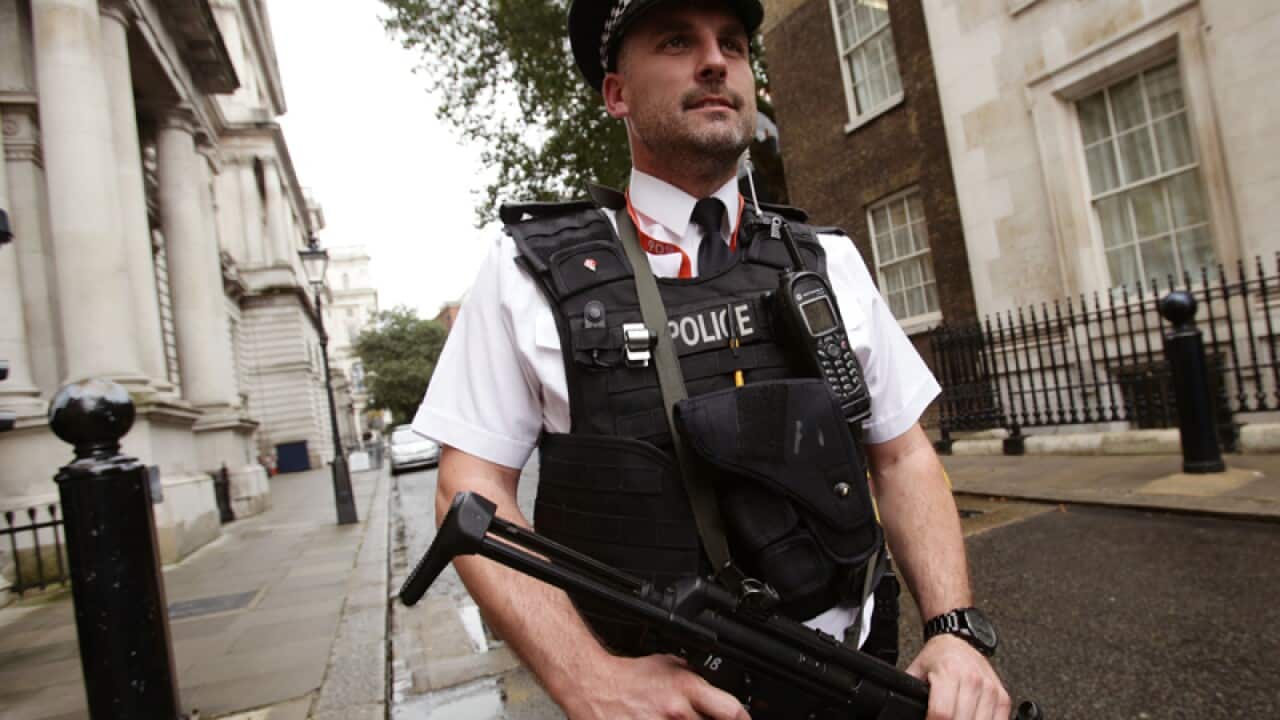
Britain faces its greatest-ever threat from terrorism, the home secretary says, announcing measures to control suspects, strengthen online scrutiny and prevent insurance companies from paying terrorist ransoms.
Theresa May said the advance of the Islamic State group in Syria and Iraq had given "energy and a renewed sense of purpose" to Islamic radicals in Britain, creating a threat more serious "than at any time before or since 9/11."
She said that British authorities have foiled 40 terrorist plots since the July 2005 London transit bombings, which killed 52 people. In August, Britain raised its threat level from "substantial" to "severe," indicating an attack is highly likely.
May said that a new counterterrorism bill, to be introduced in Parliament on Wednesday, will give police and border guards the power to seize passports and tickets from people suspected of planning to travel abroad for terrorist purposes.
Authorities say more than 500 Britons have travelled to fight in Syria. May said some fighters would be temporarily barred from returning to ensure "you will only be allowed to come home on our terms."
She said the bill would clarify the current law to stop British insurance companies reimbursing families who have paid ransoms to free hostages held by terrorists. Britain argues that paying such ransoms places more people at risk.
The bill also requires schools and prisons to introduce anti-radicalisation measures and revives contentious cyber-snooping plans. May said it would make internet providers retain IP address data to identify individual computer users.