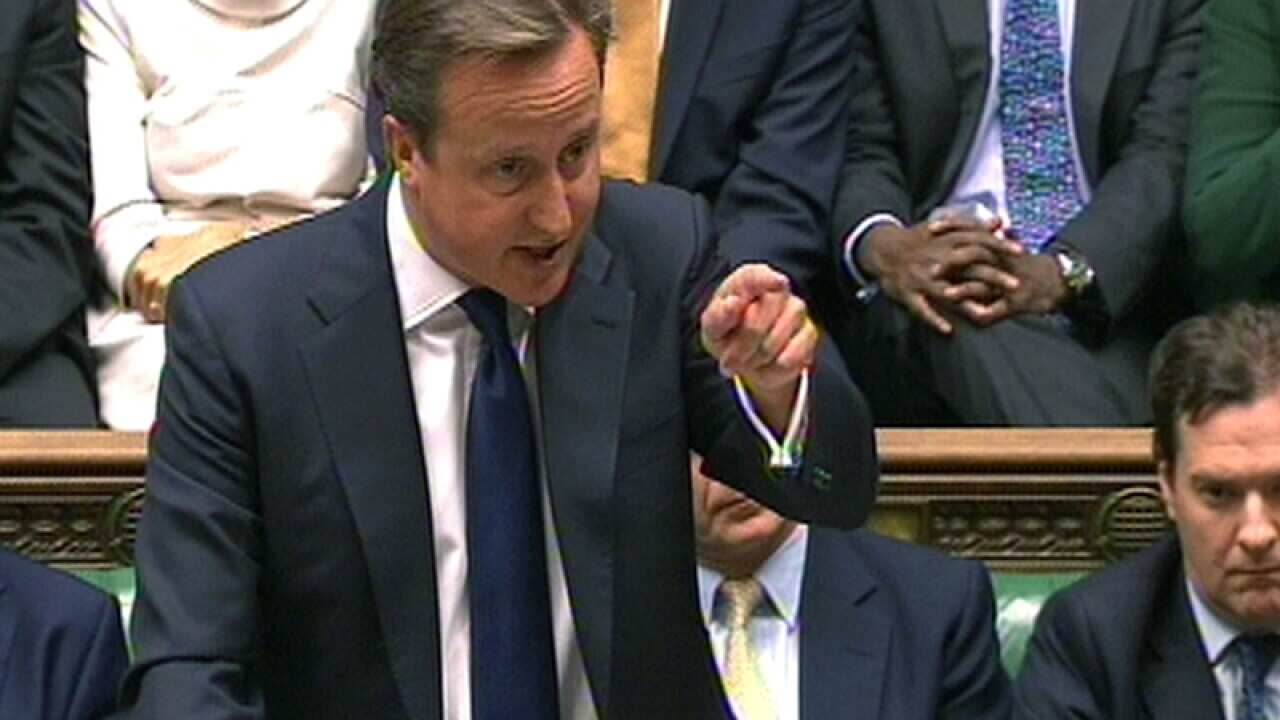
British MPs have voted against military action in Syria in a stunning defeat for Prime Minister David Cameron.
The government was defeated by just 13 votes in the House of Commons in its bid for a "strong humanitarian response" to the alleged use of chemical weapons by the Syrian regime.
Minutes after the shock result, Cameron told MPs: "It is clear to me that the British parliament, reflecting the views of the British people, does not want to see British military action.
"I get that, and the government will act accordingly."
Cameron had recalled MPs from their summer break for the emergency debate, which saw the government's motion defeated by 285 votes to 272.
News that makes sense
Your trusted source for staying up-to-date with the world around you. Get free daily news updates and analysis, straight to your inbox.
In a severe blow to the prime minister's authority, 30 of his own Conservatives voted against the motion, along with nine members of his junior coalition partners, the Liberal Democrats.
Cameron's defeat raises the prospects that the US could act alone against the government of Syrian President Bashar al-Assad, which it blames for horrific poison gas attacks that are believed to have killed hundreds in the suburbs of Damascus last week.
"Britain will not be involved in any military action," a spokesman for Cameron's Downing Street office confirmed.
Seven hours of impassioned debate in the House of Commons had revealed deep divisions over whether military strikes against the Assad regime would deter the further use of chemical weapons, or simply make the conflict worse.
Cameron had made the case for targeted strikes, insisting that Britain could not stand idle in the face of "one of the most abhorrent uses of chemical weapons in a century".
"If nothing is done, (the regime) will conclude that it can use these weapons again and again, and on a larger scale, and with impunity," he had told parliament.
The spectre of the Iraq war came up many times during the long hours of debate.
In 2003, the British parliament gave then prime minister Tony Blair the go-ahead to join the US-led invasion of Iraq on the basis of allegations that dictator Saddam Hussein had weapons of mass destruction.
The weapons never materialised and Britain became embroiled in the war for years.
But Cameron insisted: "This is not like Iraq. What we are seeing in Syria is fundamentally different."







