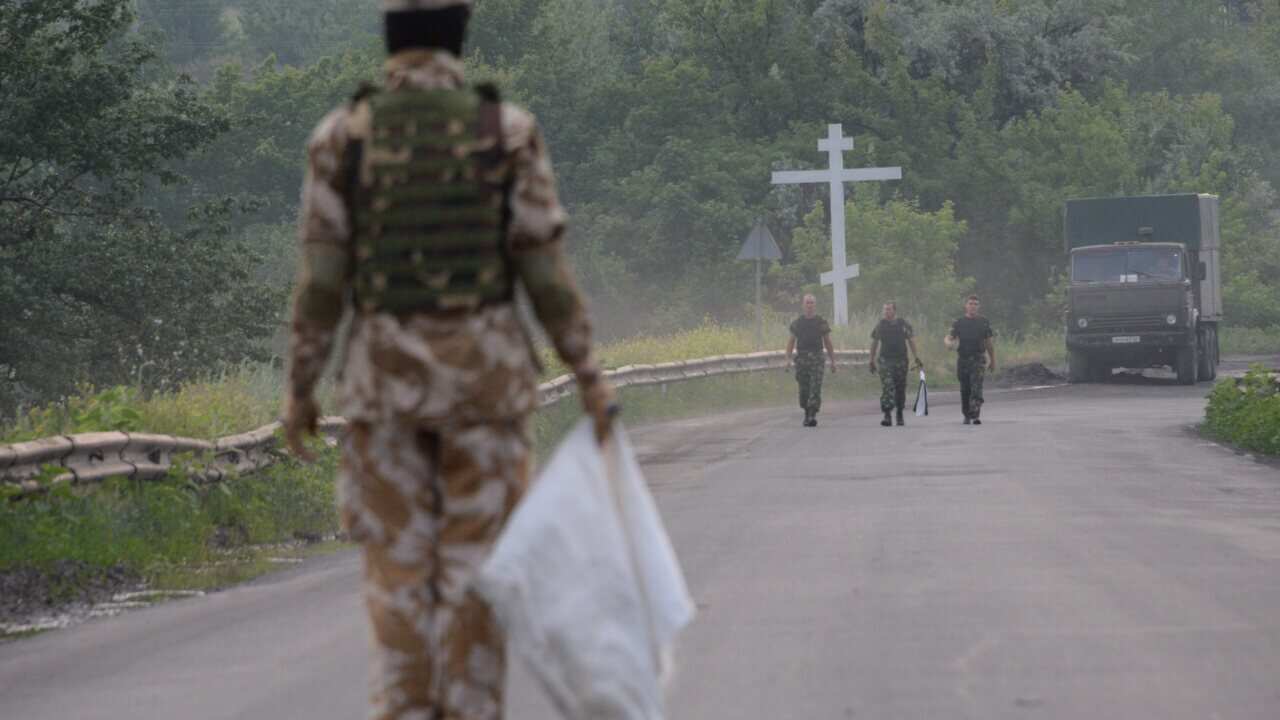
NATO has reported another build-up of Russian forces near Ukraine as its new president put in place key pieces of his pro-Western government and embraced an EU trade pact that has been bitterly fought by the Kremlin.
Ukraine's parliament unanimously confirmed as foreign minister Pavlo Klimkin, a charismatic 46-year-old ambassador to Germany, who had spearheaded the EU negotiations and now represents Petro Poroshenko at closed-door talks with Moscow.
Those high-stakes meetings and Poroshenko's late-night phone exchange on Tuesday with Russian President Vladimir Putin bolstered hopes for a solution to Ukraine's worst crisis since independence in 1991.
Poroshenko promised to soon unilaterally halt the army's 10-week push against pro-Russian insurgents, who have proclaimed independence in Ukraine's eastern rustbelt, a plan some fighters rejected but Moscow cautiously endorsed.
Russia's Deputy Foreign Minister Grigory Karasin called Klimkin "one of Ukraine's most experienced and well-known diplomats".
"We wish the new minister success and are ready for contact with him," the Russian diplomat said.
But the Kremlin's good will was immediately put in question by new charges from NATO that Putin had sent "at least a few thousand more" troops to the border in a reversal of a withdrawal he had begun at the start of the month.
"I consider this a very regrettable step backwards," NATO Secretary-General Anders Fogh Rasmussen said in London.
"It seems that Russia keeps the option open to intervene further into Ukraine."
NATO's findings, met with stony silence in Moscow, came on the heels of US charges that rocket launchers and even tanks were starting to cross the Russian border into the conflict zone.
Daily clashes that have now claimed at least 360 lives have intensified still further in recent days.
Lawmaker Iryna Selkh told parliament she had "just received information" that more that 20 soldiers had been killed near the eastern rebel stronghold of Slavyansk.
US President Joe Biden called on Russia "to stop the flow of weapons and militants across the border and to exercise its influence among the separatists... both of which Russia has thus far failed to do".
Poroshenko's problems have been compounded by a Russian gas cut that threatens to plunge Ukraine's cash-strapped economy into even an deeper recession and limit Europe's own supplies by the end of the year.
And he is certain to irritate Moscow further by vowing to sign the trade and economic relations portion of an historic EU pact in Brussels on June 27.
Share


