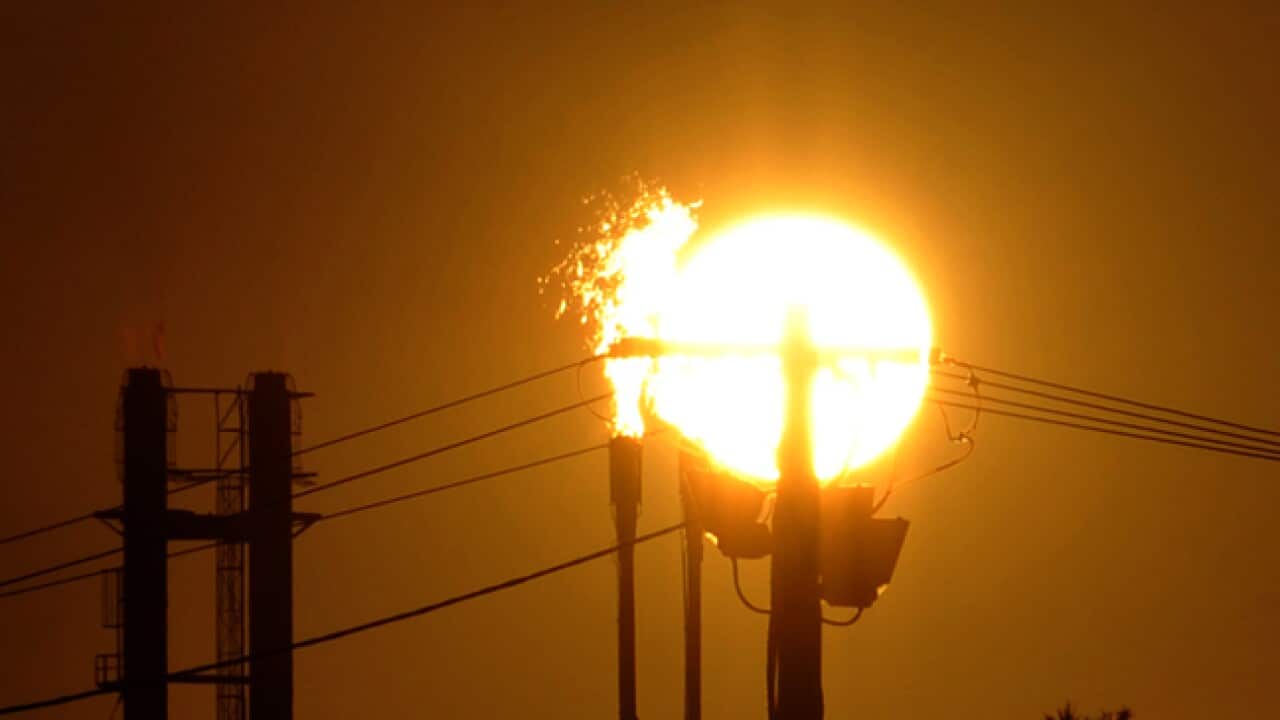
Nations have launched a new round of talks in Warsaw to pave the way for a 2015 deal to cut climate-altering greenhouse gas emissions.
The 12-day United Nations Climate Change Conference on Monday comes amid a slew of warnings about potentially disastrous warming unless humankind changes its atmosphere-polluting, fossil-fuel-burning ways.
The UN has set a target of limiting warming to 2C over pre-Industrial Revolution levels.
The world seeks to reach that goal by curbing emissions of invisible, heat-trapping gases from burning fossil fuels which provide the backbone of the world's energy supply today.
This requires a costly switch to cleaner and more efficient energy, which helps to explain why the UN negotiations have been such a battlefield.
News that makes sense
Your trusted source for staying up-to-date with the world around you. Get free daily news updates and analysis, straight to your inbox.
Though the stakes are high, no specific targets have been set for this 19th round of the annual talks, hosted by one of the world's biggest coal polluters just two years before the tortuous global process must deliver a new deal.
Last week, the UN Environment Program warned the chances of meeting the two-degree goal were "swiftly diminishing", while the World Meteorological Organisation said atmospheric levels of greenhouse gases hit a new record high in 2012.
In September, the UN's Intergovernmental Panel on Climate Change predicted global surface temperatures could climb on average by as much as 4.8C (8.6F) this century - a recipe for catastrophic heatwaves, floods, droughts and sea-level rise.
The Warsaw talks wrap up on November 22 at ministerial level.
Observers hope negotiators will do some legwork for a much-trumpeted deal on emissions cuts due to be signed in Paris in 2015, for implementation five years later.
But the gloves are likely to come off again over help for poor nations to cope with climate change.
Rich economies have yet to show how they intend to meet a pledge, made in 2009, to muster $US100 billion ($A106.84 billion) per year from 2020.
"The developed world - they have capacity, they have means, they have money to handle this - but you do not," UN chief Ban Ki-moon said in Ouagadougou, capital of the impoverished Sahel state of Burkina Faso, last Thursday.
"It is only natural that the developed world provide the necessary funding, necessary technology so that you can address [this] impact, mitigate and adapt to these changing situations."







