(Transcripts from SBS World News Radio)
The United Nations has agreed to send a mission to Iraq to investigate reports of atrocities carried out by Islamic State militants.
It has reports of the group committing war crimes and crimes against humanity and has warned of the risk of genocide in parts of the country.
It comes as the British government prepares to introduce tough new anti-terrorism laws and Australia defends the West's involvement in the conflict.
Santilla Chingaipe has more.
News that makes sense
Your trusted source for staying up-to-date with the world around you. Get free daily news updates and analysis, straight to your inbox.
(Click on the audio tab above to hear the full report)
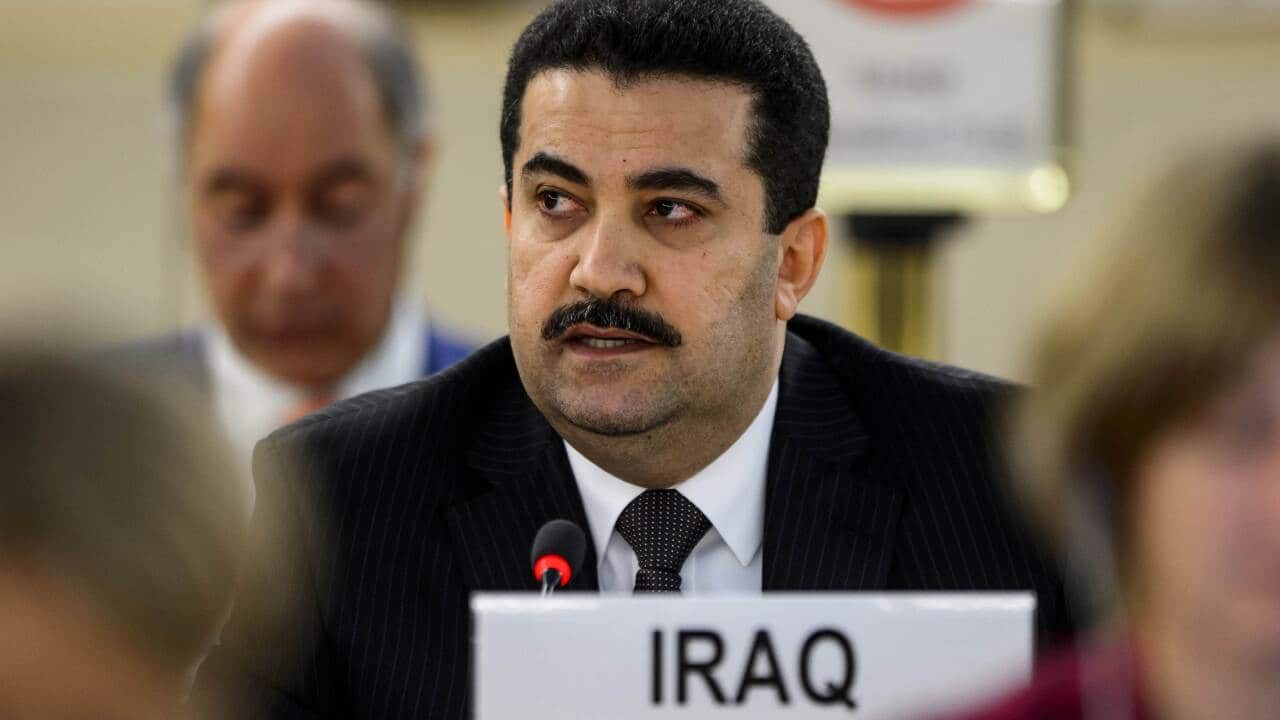
The United Nations Human Rights Council has unanimously agreed to send an emergency mission to Iraq to investigate alleged Islamic State atrocities.
The 47-member body has accepted without a vote a resolution from Iraq supported by more than a hundred other countries.
Deputy Human Rights Commissioner Flavia Pansieri says the Office of the High Commissioner for Human Rights, or OHCHR, has received horrific allegations.
"The reports we have received reveal acts of inhumanity which are on an unimaginable scale."
She says the alleged acts by the Islamic State, also known as ISIS or ISIL, may amount to international crimes.
"OHCHR officers presently in Iraq continue to gather strong evidence that serious violations of international human rights and humanitarian law have been committed in areas under the control of ISIL and associated groups. This includes targeted killings, forced conversions, abductions, slavery, sexual and physical abuse and torture and the besieging of entire communities on the basis of ethnic, religious or sectarian affiliation."
Ms Pansieri says mosques, shrines, churches and other religious sites and places of cultural significance have also been deliberately destroyed.
The United Nations says the investigators will gather evidence for use in possible future prosecutions -- for example, by the International Criminal Court.
The investigators are expected to report back in March.
The Islamic State has grabbed large parts of Iraq since June the 9th, has also occupied parts of Syria and has declared a caliphate across the regions it controls.
Last month, the United States and allies including Australia moved to halt the group's advances with air strikes and the supply of arms to Kurdish fighters.
Prime Minister Tony Abbott has told Macquarie Radio it is making a big difference.
"What we've seen so far is limited but effective US air strikes on the ISIL advance, and those air strikes did relieve the siege at Mount Sinjar. They have been effective in relieving the siege at Amerli. And, of course, Australia was involved in humanitarian air drops to both of those locations. US air strikes have broken the ISIL advance into the Kurdish areas. Air strikes may not roll back their existing conquests, but air strikes can certainly prevent or hinder -- very substantially hinder -- new conquests."
Mr Abbott says the measures are necessary to prevent what he calls the "pure evil" of the Islamic State.
"We've seen in the century just gone, the most unspeakable things happen, but the atrocities that were committed by the Nazis, by the communists and others, they were ashamed of them, they tried to cover them up. This mob, by contrast, as soon as they've done something gruesome and ghastly and unspeakable, they're advertising it on the Internet for all to see, which makes them, in my mind, nothing but a death cult. And that's why I think it's quite proper to respond with extreme force against people like this."
Tony Abbott says at least 60 Australians are fighting with the militants.
The British government estimates about 500 British fighters have joined them in Syria and Iraq.
British authorities have now announced tough new counter-terrorism laws for those planning to fight in foreign conflicts or returning from fighting.
Prime Minister David Cameron says he will introduce legislation giving police the power to seize the passports of suspected Iraq or Syria-bound fighters.
"Passports are not an automatic right. The Home Secretary already has the discretion to issue, revoke and refuse passports under the royal prerogative if there is reason to believe that people are planning to take part in terrorist-related activity. But when police suspect a traveller at the border, they are currently not able to apply for the royal prerogative and so only have limited stop-and-search powers. So we will introduce specific and targeted legislation to fill this gap, but providing the police with the temporary power to seize a passport at the border, during which time they will be able to investigate the individual concerned. This power will include appropriate safeguards and, of course, oversight arrangements."
He says he is prepared to defend what he calls "British values".
"We are proud to be an open, free and tolerant nation. But that tolerance must never be confused with a passive acceptance of cultures living separate lives, or people behaving in ways that run completely counter to our values. Adhering to British values is not an option or a choice. It is a duty for all those who live in these islands. So, we will stand up for our values. We will, in the end, defeat this extremism. And we will secure our way of life for generations to come."
In Australia, the Government is also preparing to introduce its second instalment of tougher laws.
The first, introduced in July, strengthens the powers of the Australian Security Intelligence Organisation, or ASIO.
The Government now wants to make it a criminal offence to travel to designated battle regions overseas without a valid reason.
It also wants to outlaw promoting or encouraging terrorism or training with a terrorist group and to give Federal Police authority to arrest terrorist suspects with limited evidence.
And the Foreign Minister would be given power to quickly suspend suspected foreign fighters' passports.







