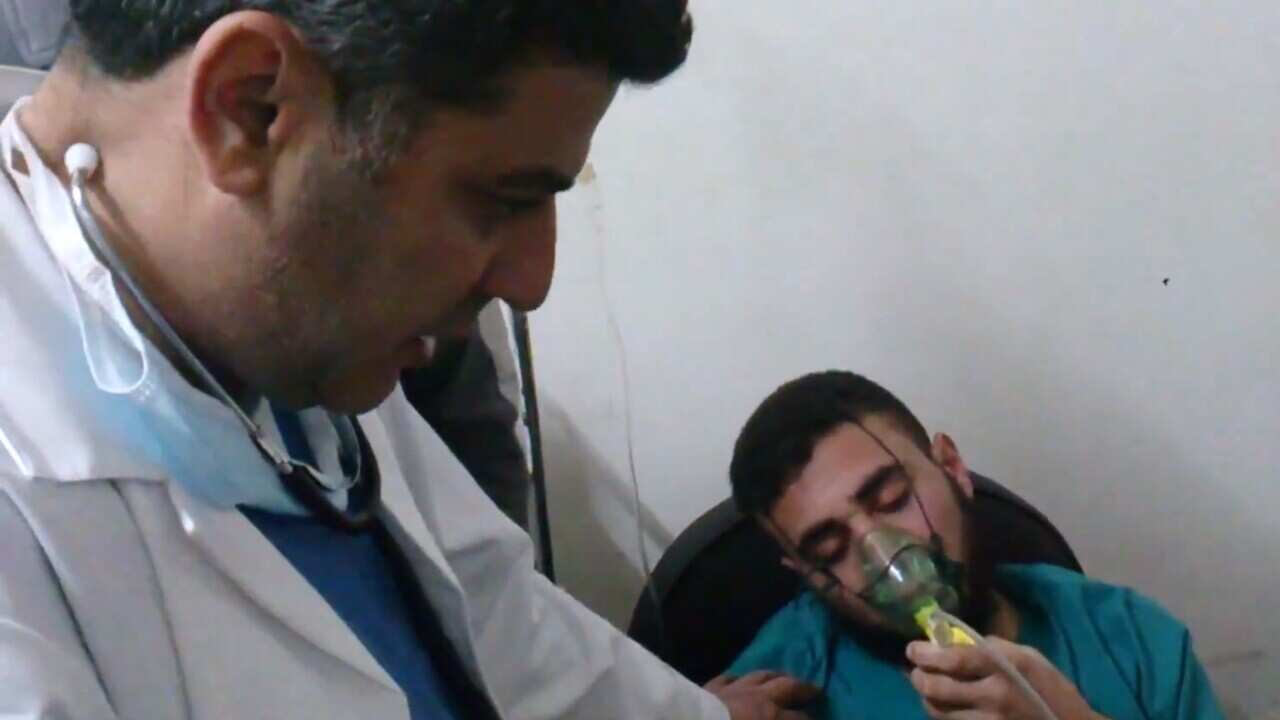
The United Nations Security Council condemned the use of chlorine as a weapon in Syria and threatened to take action if such arms are used again in the conflict, which is now in its fourth year, but didn't lay blame for previous chlorine attacks.
The 15-member council adopted a resolution that "stresses that those individuals responsible for any use of chemicals as weapons, including chlorine or any other toxic chemical, must be held accountable."
Fourteen members, including Syrian ally Russia, voted in favor of the U.S.-drafted resolution. Venezuela abstained because it said the resolution "opens a dangerous path to the use of force."
The resolution threatens repercussions, under Chapter 7 of the U.N. Charter, if chemical weapons including chlorine are used again. Chapter 7 allows decisions to be enforced with economic sanctions or force.
Britain's U.N. Ambassador Mark Lyall Grant said the resolution "puts the Syrian regime on notice that if we receive
further credible reports of use of chlorine as a weapon, then this council will take action."
Still, the Security Council would need to adopt another resolution to take any action in the event of non-compliance.
"We categorically do not accept the possible use of sanctions under Chapter 7 without attempt to confirm (non-compliance) based on proof," Russia's U.N. Ambassador Vitaly Churkin said.
If inhaled, chlorine gas turns to hydrochloric acid in the lungs, which can lead to internal burning and drowning through a reactionary release of fluid in the lungs.
The Organisation for the Prohibition of Chemical Weapons (OPCW) has found evidence that chlorine gas was "systematically and repeatedly" used as a weapon in Syria. The United States, Britain and France accuse the Syrian government of the attacks, which it denies.
"The Assad regime has again demonstrated its brutality by turning to chlorine as another barbaric weapon in its arsenal against the Syrian people," U.S. Ambassador to the United Nations, Samantha Power, said.
Churkin urged his Western colleagues: "Don't protect the terrorists, don't protect those who have used chemical weapons more than once."
Syria agreed to destroy its chemical weapons program in 2013, under a deal brokered with the United States and Russia, after hundreds of people were killed in a sarin gas attack on the outskirts of the capital, Damascus.
Although chlorine is not a prohibited substance, its use as a chemical weapon is prohibited under the 1997 Chemical Weapons Convention, which Syria joined in 2013.
Share


