"It is the first occasion on which the organised community of nations has made a Declaration of human rights and fundamental freedoms, and it has the authority of the body of opinion of the United Nations as a whole, and millions of men, women and children all over the world, many miles from Paris and New York, will turn for help and guidance and inspiration to this document."
That was Australia's Minister for External Affairs, HV Evatt, then President of the UN General Assembly, speaking at the ceremony on 10 December 1948 to mark the unanimous adoption of the Universal Declaration of Human Rights.
As a founding member of the UN, Australia had been a strong supporter of the landmark Declaration, which among other things, expressed the view that everyone in the world was entitled to freedom of thought, opinion, and expression.
A generation later, however, one desperate individual would be pleading with the UN, to take Australia to task for violation of those principles.
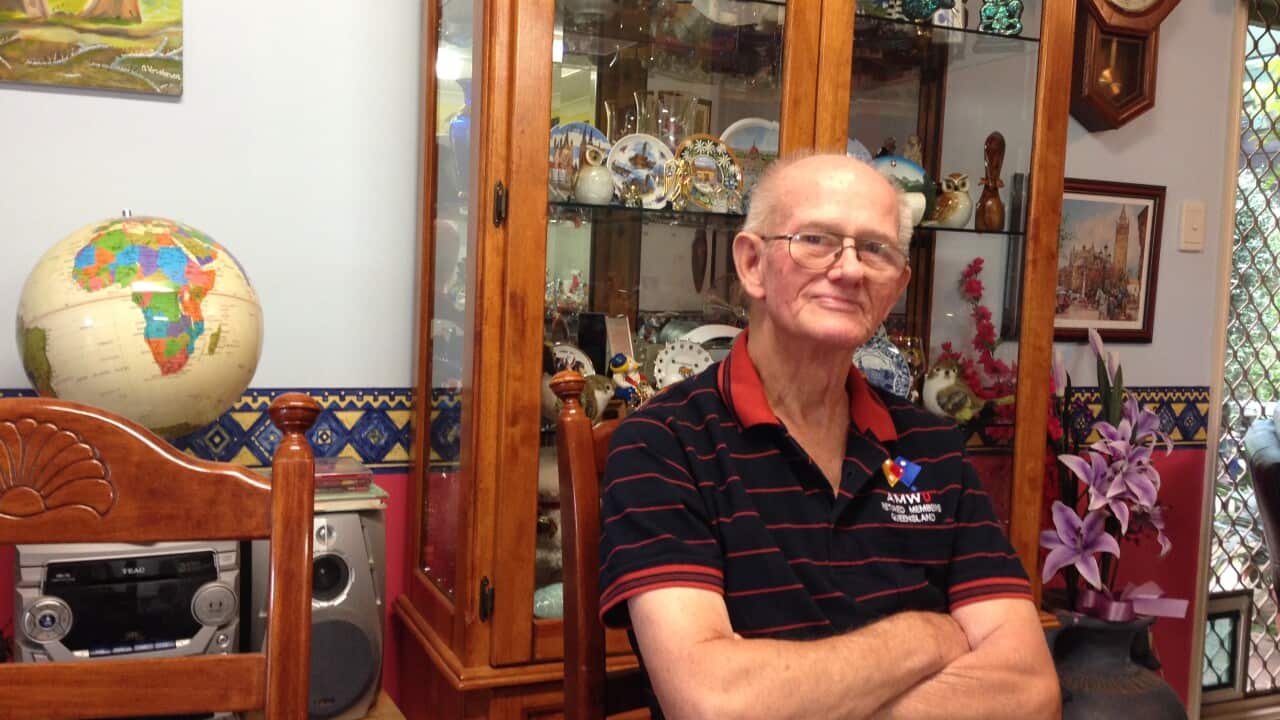
Abraham Johannes Vorstman was aged just seven when the Declaration was adopted, having been born in The Hague while the Netherlands was under Nazi German occupation in 1941.
News that makes sense
Your trusted source for staying up-to-date with the world around you. Get free daily news updates and analysis, straight to your inbox.
At the time of his emigration to Australia in 1963, Vorstman was aged 21, in good health, and single.
A Netherlands government "security officer" had certified that he had no criminal convictions, no record of "political delinquency" during the Nazi occupation between 1940 and 1945, and his "political reliability" was "good".
He'd worked as a boilermaker, an insurance company clerk, and most recently as a lift mechanic, as well as having completed two years of compulsory military service.
Under an assisted migration agreement between Australia and the Netherlands, he'd committed himself to stay for at least two years, and to take English lessons.
After disembarking from a ship in Melbourne, Vorstman found his way to Brisbane, where he began work as a boilermaker.
Finding that working life in Australia was not as not as rosy as he'd expected he increasingly became involved in trade union activity.
In February 1967 he married an Australian woman, Margaret, and they had a daughter.
Under a rule requiring a minimum of 5 years of residency, Vorstman couldn't apply for citizenship until 1968.
But to his surprise, he received a one-sentence letter signed by Immigration Department secretary PR Heydon in February 1969 advising him that the Minister, Billy Snedden, had decided his application was "not one for approval".
When Vorstman asked for an explanation, Heydon wrote back saying: "I am unable to reveal the grounds on which the Minister's decision is based."
It wasn't good enough for Vorstman - he'd assumed, correctly, that it was his recent decision to join the Communist Party that was the reason why he was an 'Unwanted Australian'.
"I had no criminal record. I had never committed a crime against Australia. It was purely on political grounds that I was targeted."
So began what would become a long saga for the Dutchman, with Snedden, then his successor, Phillip Lynch, accepting advice from ASIO that Vorstman's citizenship should be refused because he was a Communist.
Each time the case was revisited, it ran up against two simple Coalition government policies: no citizenship for anyone who ASIO advised was a Communist, and in such cases, no public explanation should be given.
In October 1969, Queensland federal Labor MP Bill Hayden gained no new information when he wrote to Snedden, saying he believed Vorstman had been refused citizenship solely because of his membership of the Communist Party.
"I understand that it is not an offence to be a member of the Communist Party and, indeed, many Australians belong to this party although, personally I would question their wisdom for doing so. Nonetheless, I do not deny their right to belong to such a party if this comes as a result of their free choice. In these circumstances, it seems quite wrong to reject Mr Vorstman's application for naturalisation on these grounds. His wife is an Australian-born citizen, as is his child. He has resided in this country for a number of years and I am informed he is a man of good character and an industrious worker."
The Queensland Trades and Labor Council also complained to the government, saying the refusal of citizenship to Vorstman on the grounds of Communist Party membership was "a complete denial of the principles enunciated in the Universal Declaration of Human Rights".
The following month, Vorstman took his case one step further, sensationally telling Brisbane's 'Courier Mail' newspaper that he'd been asked to be an ASIO informer, in return for favourable treatment of his citizenship application. He claimed that during an interview in Brisbane, an ASIO agent had suggested he could provide information about trade union activists and fellow members of the Communist Party.
Vorstman said the agent had told him the offer would be denied if he ever spoke about it, but he'd immediately rejected it, saying he wouldn't be a "pimp".
When Bill Hayden raised Vorstman's case in the House of Representatives, Immigration Minister Phillip Lynch said his claim of being asked to be an ASIO informer was "without foundation", while again refusing to disclose the reason for refusing him citizenship.
Vorstman decided to take his case to the United Nations, writing first to the Division of Human Rights and then to the Secretary General, U Thant, alleging a breach of his human rights.
"I felt it was necessary because I wanted to expose the Australian government at the time for what they were. They said they were a free democratic country but it was not the case that and there was no democracy whatsoever to refuse somebody that was a member of a recognized political party, not to give them citizenship. That's why I felt strongly and I wrote to the United Nations to put forward in a world forum about Australia's treatment of those migrants."
The Australian Embassy in New York sought advice on how to respond to an inquiry from the Secretary General about Vorstman.
The Immigration Department advised the External Affairs Department to tell U Thant that under Australia's Citizenship Act, granting of citizenship was a privilege at the discretion of governments, not a right.
It noted a provision of the Act that stated: "The Minister may grant or refuse an application made to him without assigning any reason."
And in cases like Vorstman's, it concluded, when applications were refused for undisclosed reasons, decisions were taken by the Minister "after personal study by him of the facts".
Soon after the election in December 1972 that brought the first Labor government to power in 23 years, Vorstman re-applied for citizenship.
Under the new Labor government, being a Communist was no longer grounds for refusal of citizenship, and his application was finally approved in October 1973.
To this day, however, he remains bitter about the way he was treated.
"They should make a statement in parliament that those sorts of things happened in the past and to make sure they'll never happen again. That should be a law unto itself that this will never happen again to migrants that come to this country."







