Washington has renewed its support for the territorial integrity of Yemen amid fears of a deepening split between the north and the south of the country.
The Gulf country, which used to be two nations, faces a power vacuum after US-backed President Abdrabuh Mansur Hadi announced his resignation amid a standoff with a Shi'ite militia.
State Department spokeswoman Jen Psaki insisted that Hadi remained the president, with parliament due to meet for emergency talks on Sunday to discuss the crisis.
"It's up to the Yemeni people to determine what the future is," she told reporters.
The Huthi militiamen, who hail from Yemen's northern highlands, are said to be backed by former president Ali Abdullah Saleh, ousted in 2012.
News that makes sense
Your trusted source for staying up-to-date with the world around you. Get free daily news updates and analysis, straight to your inbox.
Hadi is from Yemen's formerly independent south and in recent days southern officials have taken steps to back his rule, including closing the air and sea ports in the main city of Aden.
The security and military committee for four of south Yemen's provinces said late on Thursday it would not take orders from Sanaa following Hadi's resignation.
But Psaki said the US, which again reduced its embassy staffing on Thursday, was "encouraging a reduction in violence and abiding the constitution".
"We continue to support the unity of Yemen and Yemen's legitimate institutions. That's what we feel is in the interest of the Yemeni people," she said.
North and South Yemen were unified in 1990, and in 1994 northern troops defeated a bid for secession by the south.
The Shi'ite Huthi militia, also known as Ansarullah (Supporters of God), have long complained of marginalisation by Sanaa.
"The Huthis are a legitimate political constituency in Yemen and have a right to participate in affairs of the state. We urge them to be a part of a peaceful transition process," Psaki said.
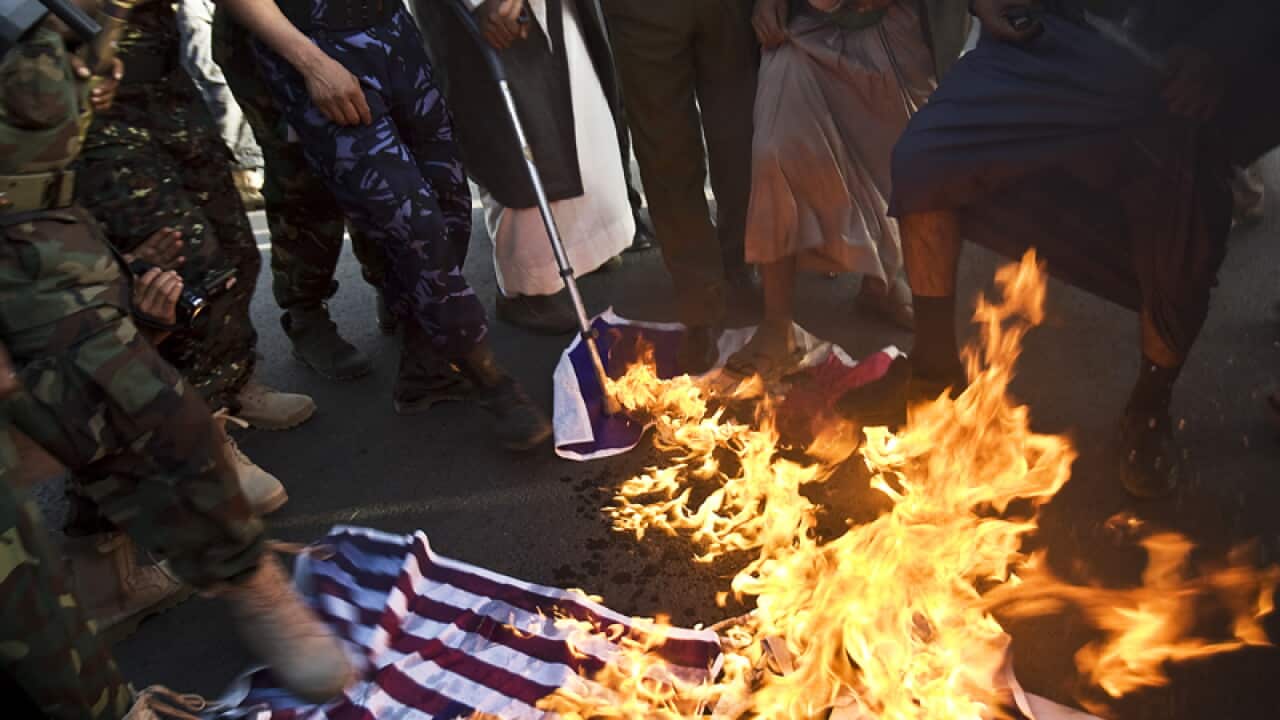
Even though members have chanted anti-American slogans, Psaki said no threats had been made by the Huthi against US personnel.
While the embassy staffing has been reduced, the mission remains open and operational, she said.
Ambassador Matthew Tueller, who had been on leave, is due back in Sanaa in the coming days, she said.
"We take security risks in that particular part of the world very seriously, and the combatant commander has resources and assets at his disposal should he need them," the Pentagon's Rear Admiral John Kirby told reporters.







