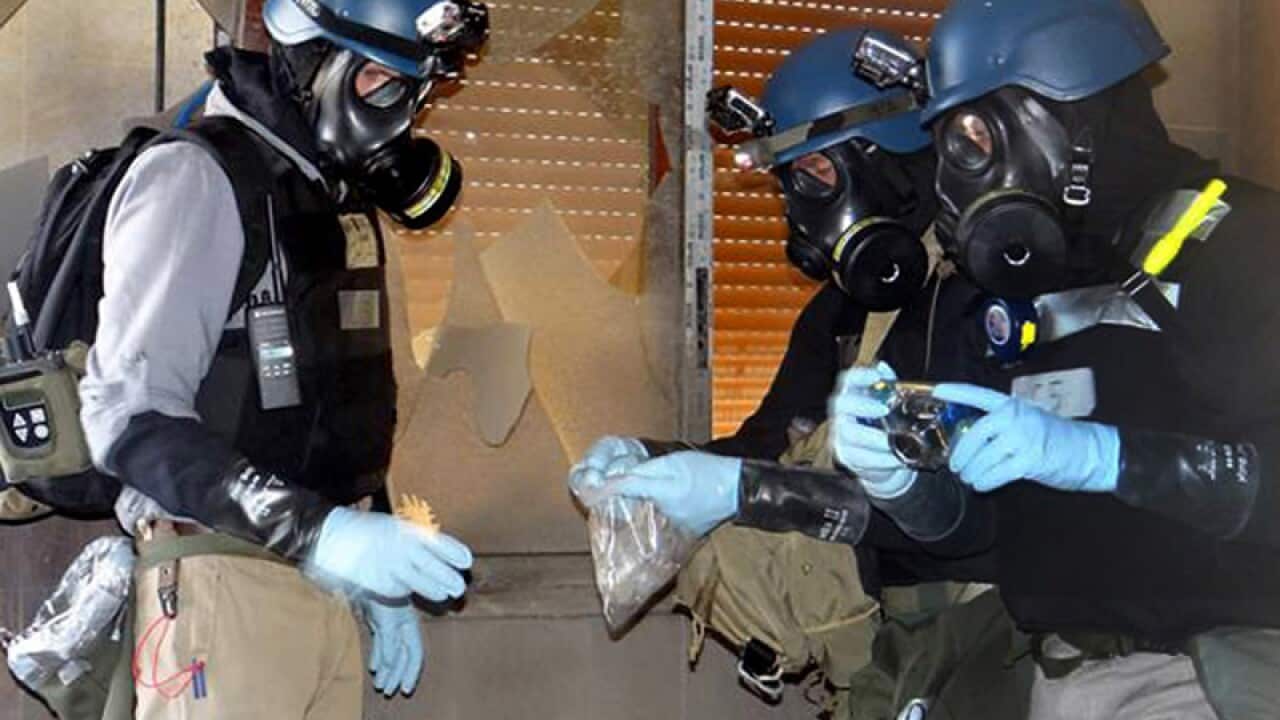
The Obama administration is offering to destroy some of Syria's deadliest chemical weapons in international waters aboard a US government-owned ship, US officials say.
The plan, still subject to final approval, would involve destroying the weapons, likely aboard the MV Cape Ray in the Mediterranean Sea, with US navy warships patrolling nearby.
This approach would avoid the vexing diplomatic, environmental and security problems posed by disposing of the materials on any country's soil.
The decision to proceed with the chemical disposal plan would be made by the Organisation for the Prohibition of Chemical Weapons, a global chemical weapons watchdog agency with 190 member states.
In a statement on Wednesday in the Netherlands, the watchdog agency said the effort to ship Syria's chemical arsenal out of the country "continues to pose challenges due to the security situation on the ground".
News that makes sense
Your trusted source for staying up-to-date with the world around you. Get free daily news updates and analysis, straight to your inbox.
No country has committed to disposing of the chemical weapons on its own soil, which is why the US offer to destroy the deadliest of the chemical components at sea is seen as a likely option.
The US officials who disclosed aspects of the US portion of the plan spoke on condition of anonymity because they were not authorised to talk about it by name.
The MV Cape Ray would host the destruction of some of the deadliest of Syria's chemical materials using a process developed by the Pentagon but never employed in an actual operation.
The US would use what it calls a mobile Field Deployable Hydrolysis System to neutralise the chemical material, making it unusable as weapons.
The system was developed by the Defense Threat Reduction Agency, which is an arm of the Pentagon.
The titanium reactor uses heated water and other chemicals to make the chemical warfare material inert.
According to several US officials, two of the hydrolysis units would be mounted on the Cape Ray.
It will take some time to retrofit the ship and conduct training to insure that the process can be done successfully at sea.
As of Wednesday, US officials said they are still trying to determine how the chemical warfare materials would be moved from Syria to the US ship.
They said they expect that another country will provide a ship for that part of the task.
Officials said they expect a final decision soon and the operation would begin by the end of the year.







