
The northeastern United States on Friday slowly emerged from the travel chaos sparked by heavy snows, but forecasters warned the weekend would bring record-breaking cold.
"Arctic air mass and dangerously cold wind chills expected across much of the eastern two-thirds of the country through this weekend," the National Weather Service said.
"Many daily temperature records may be broken."
Flights resumed from the region's bustling airports in Boston and New York, although 20 percent were again cancelled at John F. Kennedy airport and 30 percent from La Guardia, the FlightAware website said.
Boston's Logan airport also saw 30 percent of its flights axed.
On Thursday, heavy snowfall, glacial temperatures and high winds sparked by a "bomb cyclone" storm had combined to force the cancellation of some 4,300 flights, while another 3,500 were delayed.
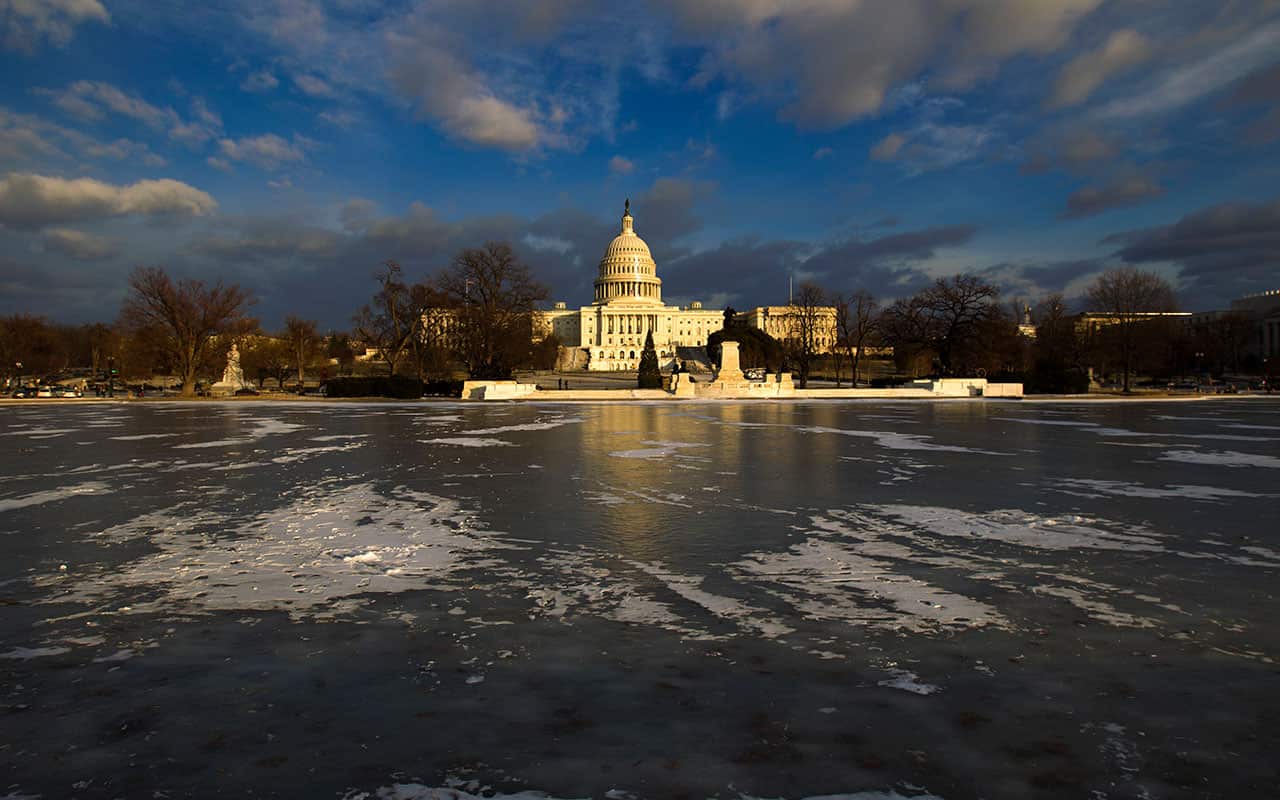
The US Capitol is seen with the frozen reflecting pool at sunset on Thursday, Jan. 4, 2018. Source: AAP
Parts of Connecticut, Maine, Massachusetts, New Hampshire, New Jersey, New York, North Carolina, Rhode Island, Vermont and Virginia got more than a foot (30 centimeters) of snow, according to NWS data.
Local authorities deployed thousands of snow plows to clear roads that had been blanketed.
In and around Boston, authorities raced to clear debris left behind by historic flooding, which was triggered by huge waves that accompanied the first major storm of the season.
Rescue services had to rush to the aid of people trapped by icy waters in their vehicles or forced from their homes by rising seawater, even in the historic area of the city, The Boston Globe said.
More than 10,000 people lost electricity across Massachusetts on Thursday, although almost all of them had their power restored by Friday, according to the National Grid website.
Frozen iguanas falling from trees in Florida
The cold wave has extended the length of the US east coast. In usually balmy Florida, iguanas were reported to be falling out of trees.
Experts urged the public not to worry, as it was more likely the iguanas were 'cold-stunned' rather than dead.
"We do not encourage members of the public to 'rescue' cold-stunned iguanas by taking them indoors or otherwise trying to warm them up." Sarah Lessard, a spokeswoman for the Florida Fish and Wildlife Conservation Commission, told AFP.
"They are wild animals and could try to defend themselves."
One resident said she was 'scared to death' after a frozen iguana fell from a tree during her morning walk.
Warmer weather on the way
As forecast, temperatures plunged on Friday -- despite sunny conditions, they were not expected to rise above 12 degrees Fahrenheit (minus 11 Celsius) in New York and Boston.
Later in the evening, the mercury was to drop ever lower across the region, and winds could gust as fast as 40 miles (60 kilometers) per hour, adding to the big chill.
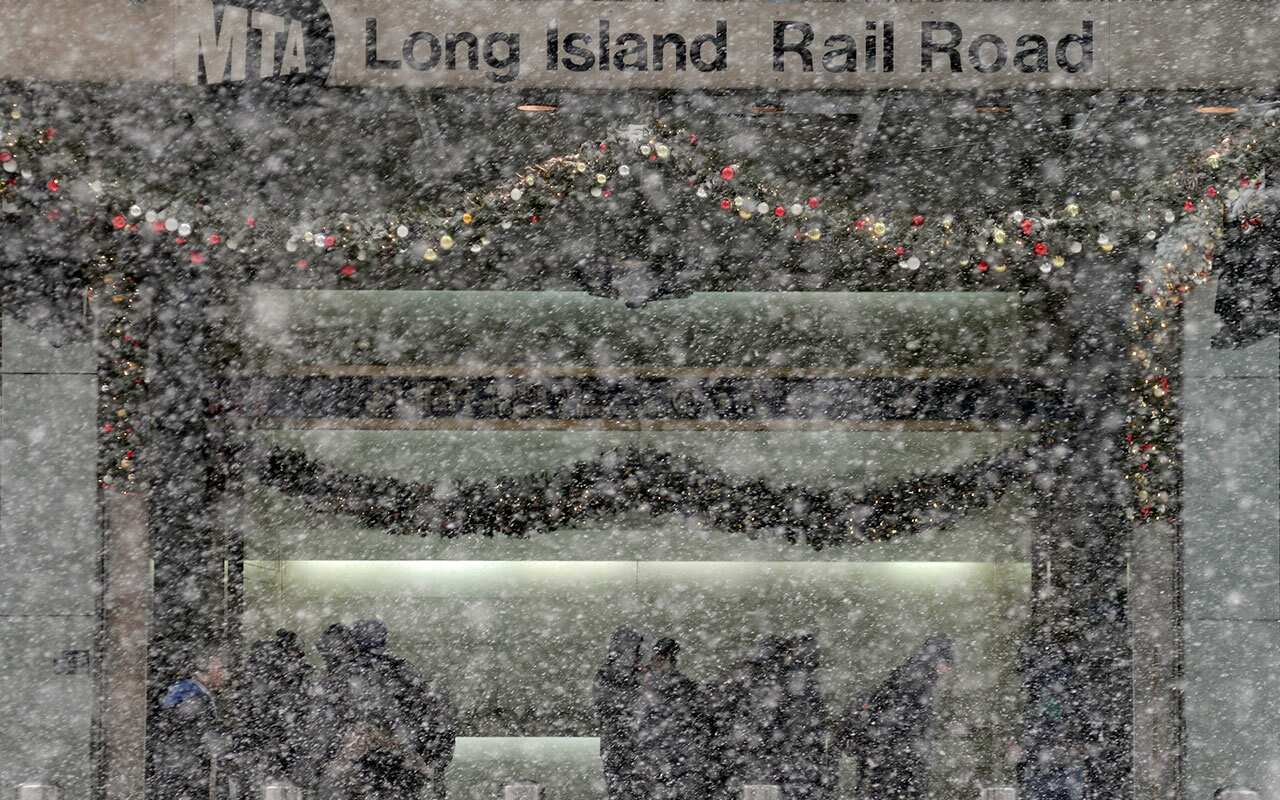
Pedestrians standing at the entrance of the Long Island Railroad are obscured by snow in New York, Thursday, Jan. 4, 2018. Source: AAP
But the NWS said that after the freezing blast that began just after Christmas, temperatures could rise to above the seasonal average next week.
For travellers who had escaped to warmer climates, there was also bad news: the tail end of the massive storm system had a chilling effect on tropical Central America, where temperatures sank from Guatemala to Costa Rica.
Two homeless men reportedly froze to death in Costa Rica's capital San Jose, where the mercury plunged as low as 10 degrees Celsius, well below the usual 25 degrees.
- Additional reporting by SBS News.
Share


