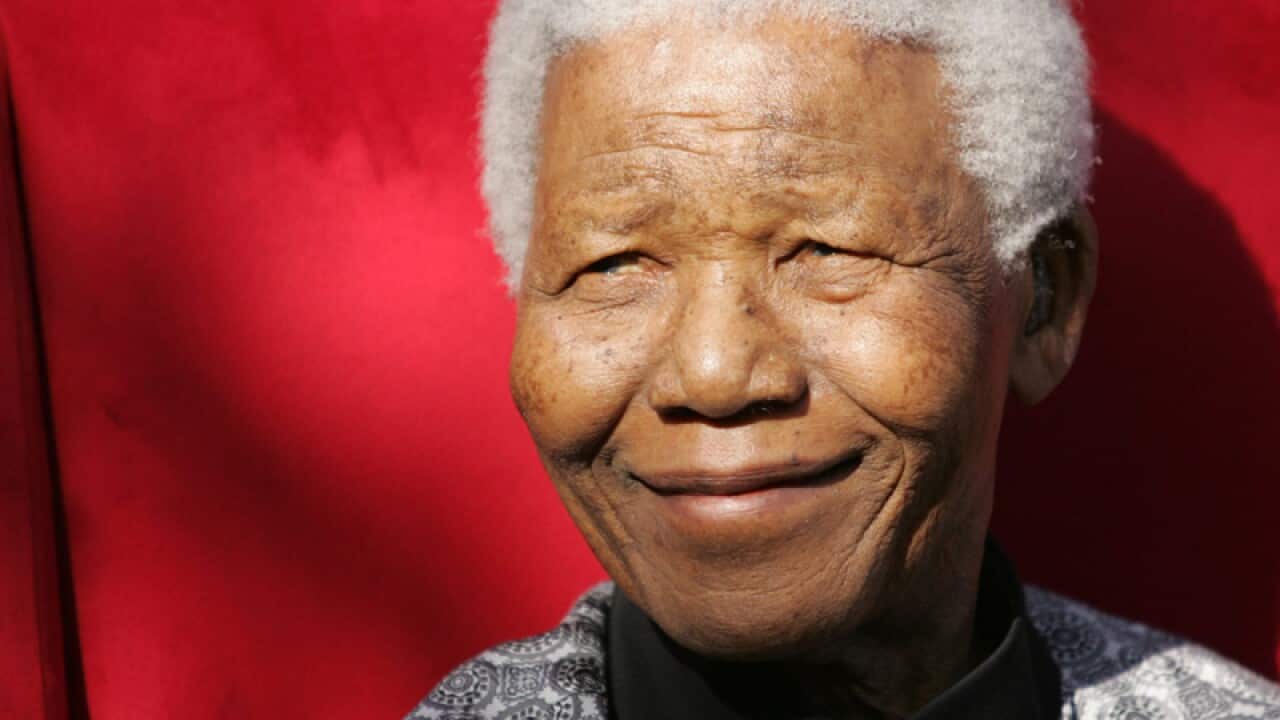
The Nelson Mandela eulogised to the world by President Barack Obama as "a giant of history" and the "last great liberator of the 20th century" seemed a different person from the one the United States held at arm's length, to put it diplomatically, for much of his life and career.
Even as presidents from John F Kennedy to Bill Clinton denounced apartheid as a racist, untenable system, successive administrations from the 1960s had friendly ties with South African governments and viewed Mandela with suspicion, if not outright hostility, through the prism of the Cold War.
And Mandela remained on a US terrorism watchlist from the 1970s until the late 2000s.
Even after his 1990 release from prison, his election as South Africa's first black president and the dismantling of apartheid, the US relationship with Mandela was an uneasy one, notably because of his harsh criticism of Israel, the Iraq war and the US embargo on Cuba.
But at Tuesday's memorial Obama said, Mandela was "a giant of history, who moved a nation toward justice and in the process moved billions around the world".
Yet Washington officialdom did not share such a sympathetic or charitable view over much of the past 50 years.
On August 5, 1962, on Obama's second birthday, South African authorities arrested Mandela at a hideout, reportedly with the help of a CIA informant.
And it is clear that the Kennedy-era CIA saw Mandela, then the leader of the National Action Coalition that organised demonstrations and strikes to protest over white rule, as a troublemaker and communist sympathiser at the very least.
"Mandela, a probable communist ... is believed to have been responsible for much of the NAC's success in seizing the initiative from anti-communist groups," the CIA said in its May 21, 1961, Current Intelligence Weekly Summary.
But while Mandela may have been on the American intelligence radar as early as 1961, policymakers in Washington don't seem to have paid any particular attention to him until his trial in 1964 and then only lightly.
The State Department's authoritative "Foreign Relations of the United States" volume dealing with Africa from 1961 to 1963 makes no mention of him. There are two brief references to Mandela's trial in the volume documenting Africa policy from 1964 to 1968.
While Mandela languished in prison, the US maintained a cordial relationship with Mandela's jailers, relying on the staunch anti-communism of South Africa's white leaders to try to blunt Soviet expansion on the continent.
In April 1976, Secretary of State Henry Kissinger outlined US strategy to Zambian President Kenneth Kaunda, telling him in effect that South Africa had to change, but it could wait.
Not even the Soweto uprising of June 1976 - during which nearly 200 people, many of them students, were killed while protesting against the required use of Afrikaans language in black schools - was enough to prompt anything more than slow and halting policy shifts from Washington.
Just two months later, Kissinger argued against expelling South Africa from the International Atomic Energy Agency as a punishment for the internationally condemned violence and did not see fit to mention the uprising at all in a meeting in Germany with South African Prime Minister John Vorster, according to State Department documents.
Carter's election in 1976, partly on a platform of protecting human rights, saw the introduction of the "constructive engagement" policy, which relied on limited sanctions aimed at quietly promoting reform in South Africa. Its impact is still debated, but Reagan's election in 1980 with a foreign policy focused on defeating communism initially saw South Africa reform drop off the White House priority list. As international calls for Mandela's release and apartheid's end skyrocketed and gained major popular momentum, Reagan resisted.
In 1983 and 1985, Congress passed targeted sanctions opposing International Monetary Fund assistance to South Africa and banning sales of all but humanitarian and medical supplies to its security forces.
In 1986, fuelled by the fiercely anti-apartheid Congressional Black Caucus and a spirited public relations campaign, Congress passed the Comprehensive Anti-Apartheid Act, overturning for the first time in 100 years a presidential veto on foreign policy legislation and barring future investment and loans. A year later, intelligence sharing with South Africa was banned and a growing divestment movement in individual states picked up steam.
US sanctions began to be eased in 1991 - after Mandela's prison release - but were not entirely lifted until after his election in 1994.
Yet in Washington, Mandela's past as a suspected communist and leader of what had been designated a terrorist organisation was not entirely forgotten.
In 2008, for instance, then-Secretary of State Condoleezza Rice told Congress that Mandela's continued presence on a US terror watchlist was "embarrassing" and should be changed.





