
The United States said it will ease restrictions on investment to Burma and quickly appoint an ambassador as it seeks to boost reformers who allowed landmark elections in the long-closed nation.
In its latest gestures under a three-year diplomatic drive on Burma, the United States said it would step up aid and allow select officials to visit but stopped short of easing the bulk of two decades worth of biting sanctions.
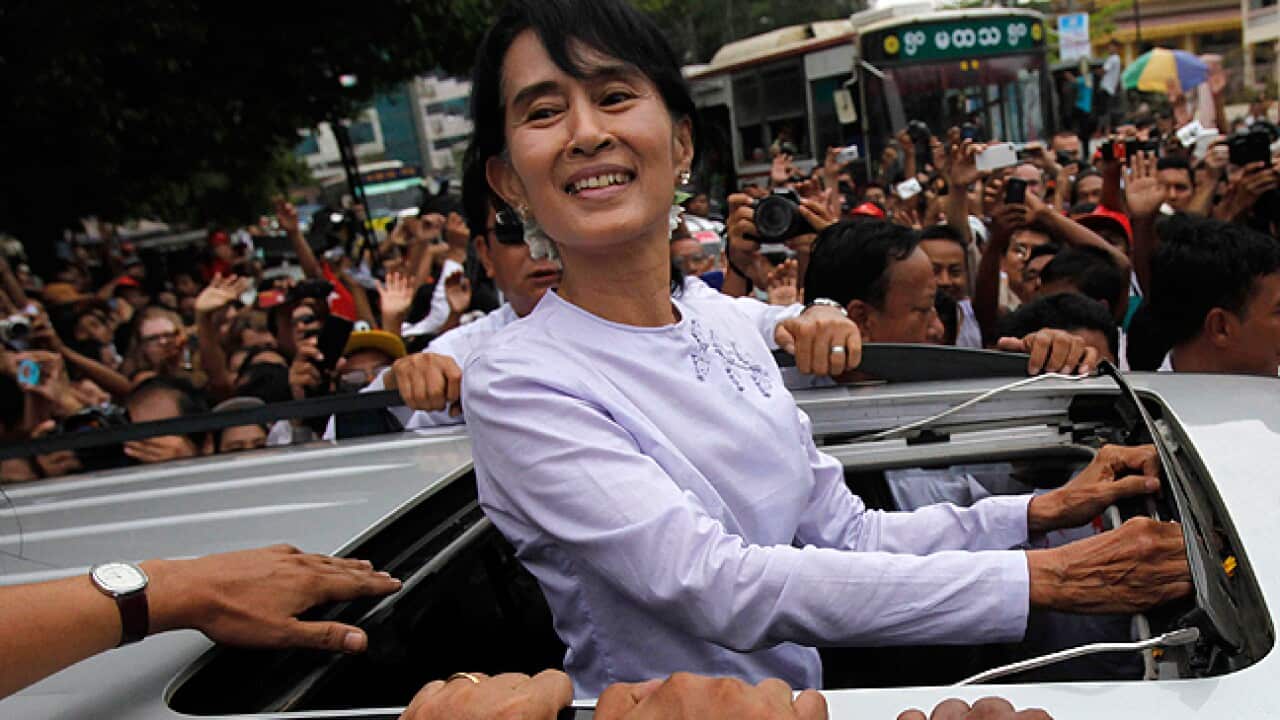
Secretary of State Hillary Clinton hailed the "leadership and courage" of President Thein Sein after the opposition swept Sunday's by-elections, giving Nobel laureate Aung San Suu Kyi her first seat in parliament.
"The United States will stand with the reformers and the democrats both inside the government and in the larger civil society as they work together for that more hopeful future that is the right of every single person," Clinton told reporters.
Clinton announced "the beginning of the process" of a "targeted easing of our ban on the export of US financial services and investment" to the country formerly known as Burma.
The easing of restrictions could relieve one of the headaches facing travelers to the long-closed nation - the inability to use credit cards.
Due to decades of US sanctions, major credit cards such as MasterCard, Visa and American Express have been absent in the country, obliging tourists and both local and foreign businesspeople to carry wads of cash.
She said the step on investment was "part of a broader effort to help accelerate economic modernization and political reform."
But she warned: "Sanctions and prohibitions will stay in place on individuals and institutions that remain on the wrong side of these historic reform efforts."
Clinton, who previously announced that the United States would restore full diplomatic relations with Burma for the first time in two decades, said the administration would complete formalities "in the coming days" and then formally nominate an ambassador to the Senate for confirmation.
The US Agency for International Development will set up a mission inside the country and the United States will support a similar normalization of work by the UN Development Program, Clinton said.
Clinton -- who paid a landmark visit to Burma in December -- said that the United States would allow private organizations to pursue a greater range of work inside Burma, including democracy promotion, health and education.
Washington will also let select officials and lawmakers from Burma to visit the United States, relaxing restrictions, Clinton said.
But the United States retains some tough sanctions on Burma including a ban on its exports such as jade, a key money-maker.
Clinton said the United States was still pressing for greater progress on key concerns including a release of all political prisoners and the end to any conditions on those recently released from jails in a major amnesty.
She also called for reconciliation with minority groups and the "verifiable termination" of any military cooperation between Burma and North Korea, an international pariah which plans to test a long-range missile this month.
The European Union has also been seeking to reward Burma and is leaning toward a "substantial" removal of sanctions, a senior EU diplomat told AFP on Tuesday in Brussels.
President Barack Obama's administration opened talks with Burma after taking office in 2009, concluding that years of Western efforts to isolate the then military leadership had failed.
Three years later, Burma is arguably a top showcase for Obama's foreign policy as he seeks reelection, with the rival Republican Party sharply criticizing his earlier outreach to other US foes such as Iran and Syria.
Thein Sein, a nominal civilian, took office last year to widespread skepticism from the United States and opposition. But he has surprised even many of his critics through his reforms including opening talks with Suu Kyi, who had spent most of the past two decades under house arrest.
Some US-based analysts attribute Burma's shift to a hesitation by the leadership at depending too much on China, which has an outsized economic and political influence in its strategically placed neighbor.