IN BRIEF
- The US and Iran have resumed trading strikes, with Trump imposing a renewed blockade on the Strait of Hormuz.
- Donald Trump has backed down on a threat to heavily tax ships passing through the strait.
United States forces carried out strikes against Iran for a fourth day in a row on Wednesday and reimposed a naval blockade to prevent ships from sailing to or from the country's ports.
The military action came after US President Donald Trump backed down on his threat to heavily tax ships passing through the Strait of Hormuz, saying Gulf countries had agreed to make major investments in the US.
US Central Command (CENTCOM) said the latest strikes were aimed at "degrading Iranian capabilities used to attack commercial shipping" in the strait, the key shipping channel for Gulf oil and gas where Iran has repeatedly carried out attacks on civilian vessels.
Iranian state media reported explosions near the port city of Bandar Abbas, on the Gulf island of Qeshm near the Strait of Hormuz, and other locations.
The renewed naval blockade came into force at 6am AEST on Wednesday — an hour after the US strikes began — with a senior Iranian official saying the move effectively wrecked a deal struck to pause the conflict to allow peace talks to take place.
News that makes sense
Your trusted source for staying up-to-date with the world around you. Get free daily news updates and analysis, straight to your inbox.
"There are currently more than 20 US Navy warships and hundreds of military aircraft operating across the Middle East," CENTCOM said in a post announcing the resumption of the blockade, adding: "American forces remain vigilant, lethal, and ready."
On Tuesday, Iran said a previous round of US strikes targeted Qeshm, while local authorities also said US forces struck "four points" in Bushehr — which hosts Iran's only civilian nuclear power plant — as well as an Iranian border area near Iraq and Kuwait.
Trump scraps levy on ships in Strait
Iran, in turn, hit two ships in the Strait of Hormuz, killing two crew members, according to the International Maritime Organisation.
A Norwegian tanker was also hit by an explosion caused by an unidentified device off the Omani coast on Tuesday, the crisis response company MTI Network said.
Kuwait said one of its naval vessels was struck during an Iranian missile and drone barrage, wounding four crew members.
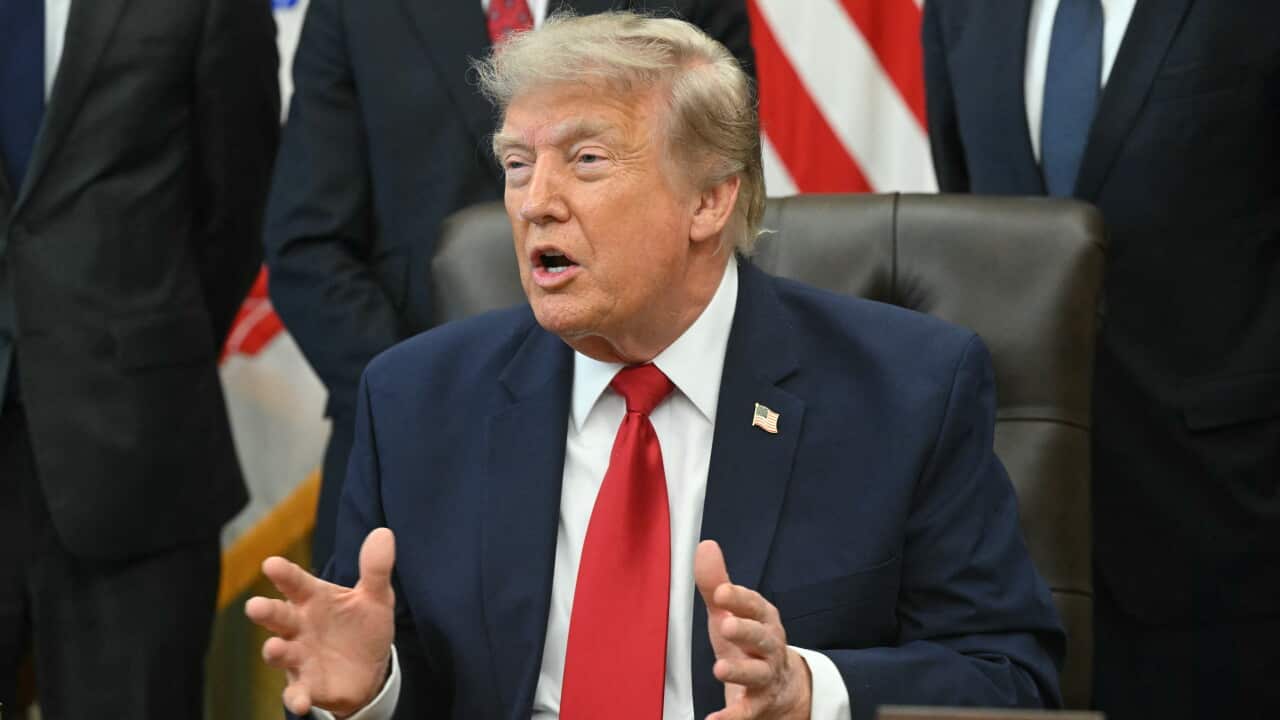
Trump, meanwhile, said he was scrapping a planned levy on ships passing through the Strait of Hormuz that he announced on Tuesday, replacing the fee with trade deals with Gulf allies.
"I have decided to replace the 20 per cent United States Reimbursement Fee with Trade and Investment Deals that the various Gulf States will be making into the United States," Trump said in a post on his Truth Social platform.
Since last week, renewed US attacks have killed at least 28 people in Iran, according to an AFP tally based on Iranian media and official announcements.
Iran's Revolutionary Guards announced on Tuesday that they had fired missiles and drones on Bahrain, targeting a residential building for US forces and other facilities.
Support of US considered 'act of war'
Bahrain said it had intercepted "several treacherous aerial attacks launched by Iran" and accused Iran of targeting civilians, after explosions and sirens were heard in Manama several times.
Iran started blocking the strait following US-Israel attacks in February, after which the US imposed a first blockade on Iran's ports that lasted from mid-April to mid-June.
Tehran also launched attacks on other US allies in the region, including Jordan, which said Tuesday that it had shot down four missiles from Iran.
Iran's Revolutionary Guards said their strikes targeted US forces at an air base and urged Jordanians to issue a "serious demand for the removal of the occupying American bases from the region".
Iran insists it only targets US interests, but its military command spokesman said any collaboration by Gulf countries with the US would be considered "an act of war".
Israeli Prime Minister Benjamin Netanyahu, a fierce opponent of Iran's alleged nuclear ambitions, warned Iranian leaders on Tuesday that Israel would deal a heavy blow if they launched an attack on his country.
Speaking from Dimona, a southern town widely believed to house Israel's undeclared nuclear arsenal, he told them: "Do not count on things remaining quiet if you attack us."
"The days are over when someone strikes us and we don't hit back with a decisive blow."
For the latest from SBS News, download our app and subscribe to our newsletter.







