The US military has praised Australia's contribution to the fight against Daesh and says we sit right at the bottom of a long list of those who should do more.
Colonel Steve Warren, US military spokesman for the Kuwait-based Combined Joint Task Force said Prime Minister Malcolm Turnbull was correct in saying there was a lot more room for other nations to increase their contribution.
Mr Turnbull specifically cited European nations as needing to up their contribution.
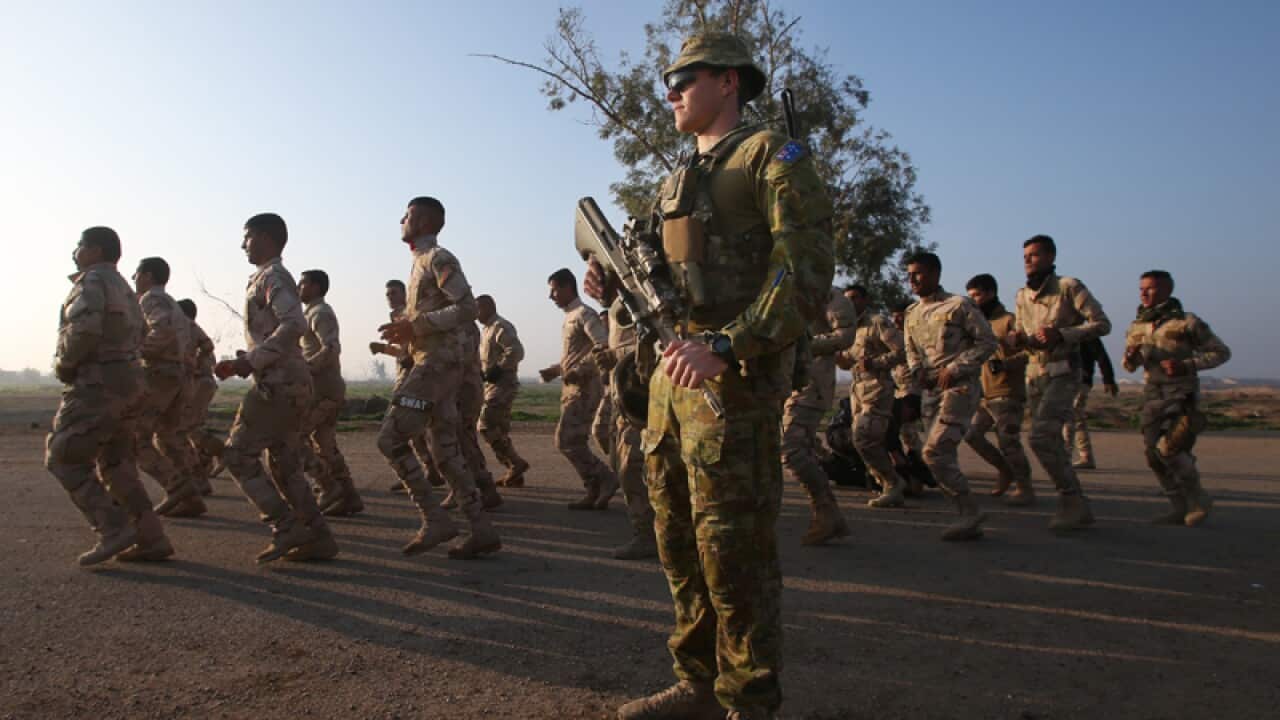
Australia is already providing 300 trainers, special forces in the advisory role plus the air task group which attacks Daesh targets in Iraq and Syria. The training team includes 100 New Zealanders.
"On the list of people who need to step up, they are at the bottom," he told Australian reporters in Iraq on Monday.
News that makes sense
Your trusted source for staying up-to-date with the world around you. Get free daily news updates and analysis, straight to your inbox.
With Daesh successfully evicted from the city of Ramadi just before the end of last year, the next major fight will be retaking the northern city of Mosul.
"They won't want to give it up. We believe they will fight tooth and nail to keep it," he said.
"An assault on Mosul potentially ... could turn out to be something akin to a last stand for them, at least here in Iraq." he said.
That fight will certainly involve units trained by the Australian and New Zealand team, as well as the elite Counter-Terrorism Service, advised by Australian special forces, which spearheaded the retaking of Ramadi.
The Iraqi government says Mosul can be retaken this year and Warren says that's possible.
"A lot of it has to do with the training. They have to get a few more brigades through training," he said.
"Mosul is too large and too complex a fight for only the CTS. Combat power will have to come from the regular army so they will play a key and critical role in liberating Mosul."
Warren said they were already seeing the difference in performance from units trained by Australia and New Zealand.
"Good training and being properly equipped has had an impact," he said.
This all means there's plenty of work ahead for the Australian and New Zealand trainers. As well RAAF F/A-18 Hornet strike-bombers, KC-30A refueling aircraft and Wedgetail airborne control aircraft will continue to play a significant role.
Warren said there was no indication the Russians would play a more useful role in Syria.
"The Russians' objective is preserve and support Bashar al-Assad which we believe is strategically short-sighted," he said.
"Their conduct of the air campaign has been both reckless and indiscriminate."







