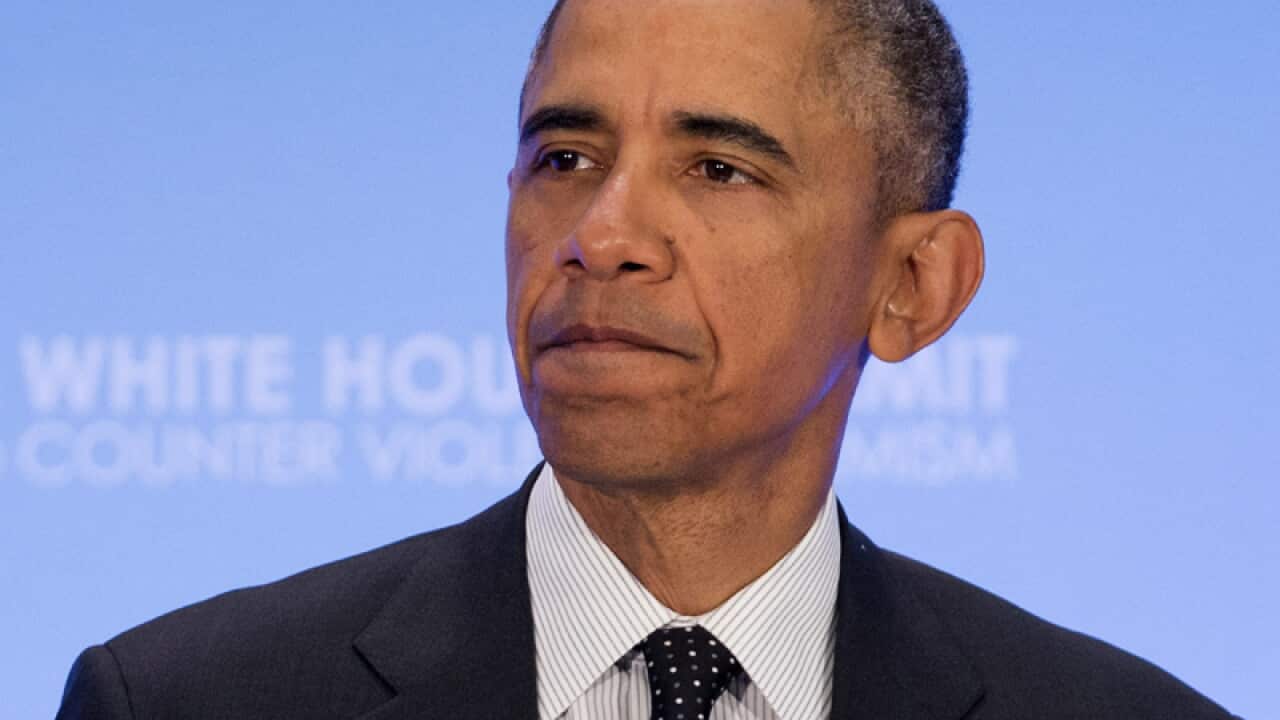
The United States sought to unite nations around a common vision for combating violent jihadist groups in three days of talks which ended long on words but short on concrete steps.
In the wake of shocking beheadings and murders by the Islamic State group, as well as a series of lone attacks in European cities, governments must remain "unwavering in our fight against terrorist organisations", President Barack Obama said.
He vowed to ministers from some 60 nations to continue to hunt down al Qaeda militants in places like Yemen and Somalia and to help shore up fragile nations to "prevent ungoverned spaces where terrorists find safe haven".
On the final day of his high-profile summit, Obama laid out some priorities to neutralise the "warped ideologies" espoused by extremist groups like IS, which has captured a swathe of territory in Iraq and Syria, by tackling the root causes driving recruitment to their ranks.
- Governments must deepen co-operation against foreign fighters.
News that makes sense
Your trusted source for staying up-to-date with the world around you. Get free daily news updates and analysis, straight to your inbox.
- Nations must seek to end sectarian tensions and conflicts, such as in Syria.
- Funding must be cut off to groups fuelling hatred.
- Economic and political grievances must be addressed to allow growth and development.
In a statement released at the end of the talks, the participants promised to "chart a path for progress" ahead of summit talks on the margins of the UN General Assembly in September.
Condemning the recent wave of attacks, the statement "underscored" a commitment to fighting extremist groups and highlighted the need to support local religious and community leaders.
But amid controversy over Obama's refusal to specify that the summit was aimed at confronting Islamic militants, the statement noted "the term 'violent extremism' like 'terrorism,' should not be associated with any religion, nationality, civilisation, or ethnic group."
"The notion that the West is at war with Islam is an ugly lie," Obama insisted.
The US administration said it would step up information-sharing to thwart would-be foreign fighters, and pledged to boost co-operation with Interpol.
Observers say some 20,000 foreign fighters have left their homelands to join extremist groups in the past few years - including an estimated 4,000 since 2012 from western Europe.







