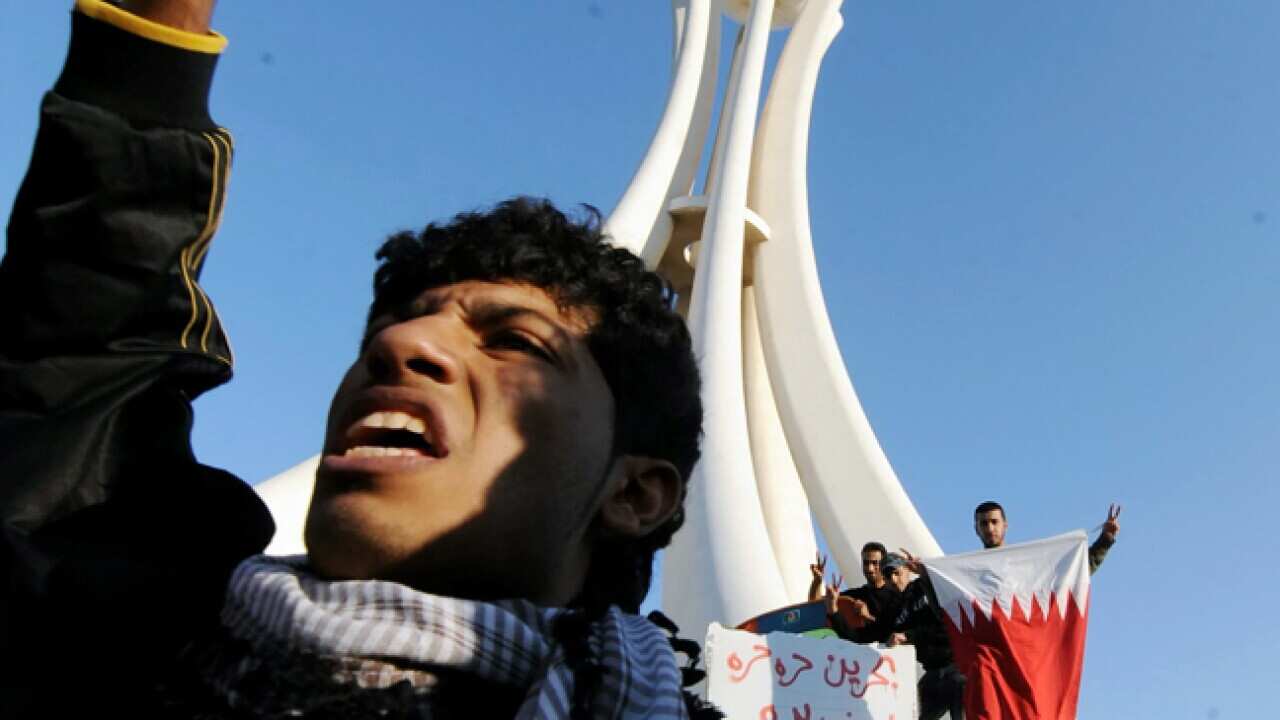
US Secretary of State Hillary Clinton urged Bahrain to show restraint, bolster reform efforts and "hold accountable" those who used deadly force against anti-government protesters.
The news came as analysts said Gulf states could go as far as using military intervention to prevent a regime change in Bahrain to block the tide of protests there from reaching their countries.
A spread of the Shiite protests in Bahrain into the rest of the energy-rich Gulf states would be a major strategic victory for neighbouring Shiite Iran, they said Thursday.
News that makes sense
Your trusted source for staying up-to-date with the world around you. Get free daily news updates and analysis, straight to your inbox.
Foreign ministers of the six-nation alliance of the Gulf Cooperation Council (GCC), of which Bahrain is a member, affirmed at a meeting in Manama on Thursday their political, economic, security and defence support" for Bahrain.
"Gulf states cannot accept a fundamental and radical change in Bahrain. The demand for constitutional monarchy cannot be imposed without (natural) political development that takes its due course," Saudi political analyst Dakheel al-Dakheel said.
"This will create a state of political and security confusion in Bahrain that opens the door for Iranian and non-Iranian interference, which will not be acceptable to Gulf states, especially Saudi Arabia," Dakheel told AFP.
US wants dialogue
Five people have been killed and scores wounded since Monday, when Bahraini security cracked down on protesters who have raised the ceiling of their demands by calling for the "downfall of the regime."
Inspired by protests that toppled presidents in Tunisia and Egypt, thousands of people have taken to Bahrain's streets to call for a change of regime and a "real constitutional monarchy" in the Sunni-led but Shiite-majority country.
Afterwards, Clinton delivered her message to Bahrain's foreign minister in the latest sign of growing administration anxiety over instability in the home of the US Fifth Fleet and neighbor of another leading US ally, oil-rich Saudi Arabia.
The chief US diplomat said she "directly conveyed" to her counterpart Sheikh Khaled bin Ahmad al-Khalifa "our deep concerns about the actions of the security forces" in deadly protests.
She also urged him to make sure that prayers and funerals on Friday "not be marred by violence."
She added: "I stressed the need to seriously engage all sectors of society in a constructive, consultative dialogue to meet the way forward in accordance with the aspirations of the people.
"And there have been reform steps taken which we want to see continued, we want to see strengthened," she said.
"We call on restraint from the government to keep its commitment to hold accountable those who have utilized excessive force against peaceful demonstrators," Clinton said.
"Demands for the downfall of the regime are highly provocative for the Gulf states, and the position of Saudi Arabia will be to solidly back the political regime in Bahrain and prevent its ouster," Dakheel said.
The lukewarm coverage of Qatar's Al-Jazeera news channel of the protests in Bahrain, unlike its enthusiasm reporting on Tunisian and Egyptian uprisings, reflects Doha's concern for its GCC partner despite a history of tense ties.
Besides Bahrain and Qatar, the GCC groups Kuwait, Oman, Saudi Arabia and the United Arab Emirates, which together sit on 45 percent of global crude reserves and just under a fifth of the world's oil supplies.
Saudi intervention possible
Analyst Ibrahim al-Khayyat believes that the "strong tribal alliance" among Gulf states could prompt a "Saudi military intervention" to help the Bahraini monarchy.
Khayyat said fear of instability in Bahrain is not limited to Gulf states, and that the United States will not accept undermining the regime in Bahrain, home of the US Navy's Fifth Fleet.
London-based analyst Abdulwahab Badrakhan said "any change in a Gulf state will encourage change in others which is not acceptable to regimes amid a global and Arab environment conducive to change."
"Gulf monarchies feel endangered by any protest demanding a change of regime or even a constitutional change because the regional situation, especially the standoff with Iran, will justify not bowing to demands," he said.
Badrakhan said Gulf states will "go too far to support the regime in Bahrain, the weak point in the region," because of its Shiite majority and limited resources.
Analysts believe the predominance of Shiites in the protests reduces their chance of achieving their goals.
"Shiites in Bahrain should not place their legitimate demands within a sectarian framework but in a national formula ... as this can take out (a perceived) Iranian factor in the protests," Dakheel said.
Although the Bahraini protests can affect Shiites in the neighbouring oil-rich Eastern province of Saudi Arabia "it will not affect the stability of the Saudi political system," he said.
The director of the Far East and Gulf Military Analysis, Riyadh Qahwaji, said the sectarian factor does not favour the protests in Bahrain, adding that the army, which is loyal to the regime, is capable of facing demonstrators.
"The sectarian factor will not aid the Bahraini protests because they are seen from the Iranian angle," Qahwaji said.
He said the Sunni-dominated Bahraini army is capable of facing the protests, unlike the case of Egypt and Tunisia, but OPEC kingpin Saudi Arabia must step in in to provide substantial aid to Manama.







