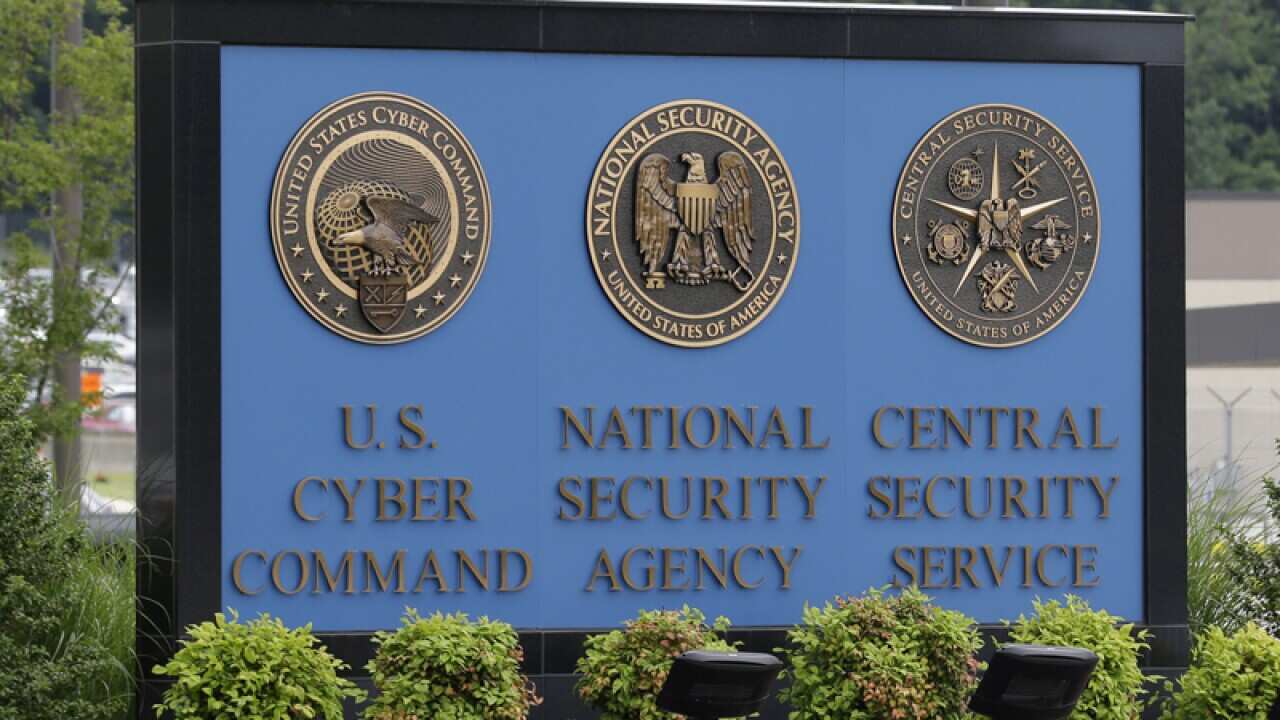
As the Abbott government proceeds with plans to collect the metadata of Australians, the US House of Representatives has voted to end the dragnet collection of the telephone data of millions of Americans.
Under reforms to the Patriot Act, the mass collection of telephone metadata - phone numbers, time and duration of calls - by the National Security Agency (NSA) - as well as electronic data such as emails and web addresses, would be explicitly prohibited.
The existence of the controversial NSA program, which was introduced after the September 11 attacks in the US, was revealed in 2013 by whistleblower and former security contractor Edward Snowden.
The amendments, which must still pass the US Senate, scrap the bulk collection detailed in Section 215 of the Patriot Act, replacing it with a targeted program that allows intelligence agencies to collect data from specific individuals or groups, but only with prior approval of the secret Foreign Intelligence Surveillance Court.
The Abbott government's data retention laws passed parliament in March with bipartisan support.
The Australian program means Telcos and ISPs will be required to store customers' metadata for two years, including the time and duration of phone calls, originating IP addresses, the mobile phone tower connected to when initiating a call and email records.
Content of communications and web-browsing history will not be collected.
Internet Society of Australia chief executive Laurie Patton said Australia had headed down the data retention path "despite a lack of clear evidence that these schemes are actually justified, especially when you consider the risks to privacy protection rights".
"We've adopted data retention at a time when around the world there is a trend away from this kind of mass surveillance," Mr Patton told AAP on Thursday.
Attorney-General George Brandis has said the metadata laws are needed to combat terrorism and other crime, and that it would be impractical for security agencies to have to get a warrant for every access request.
But Mr Snowden, speaking last week at a conference in Melbourne via satellite from Moscow, questioned the program's effectiveness at preventing terrorist attacks.
"Nine times out of 10 when you see someone on the news who's engaged in some sort of radical jihadist activity, these are people who had a long record," he said.
"The reason these attacks happened is not because we didn't have enough surveillance, it's because we had too much."
Mr Snowden, who has asylum in Russia, said the Australian laws breached privacy and were "dangerous".
"What this means is they are watching everybody all the time. They're collecting information and they're just putting it in buckets that they can then search through not only locally, not only in Australia, but they can then share this with foreign intelligences services."
Share


