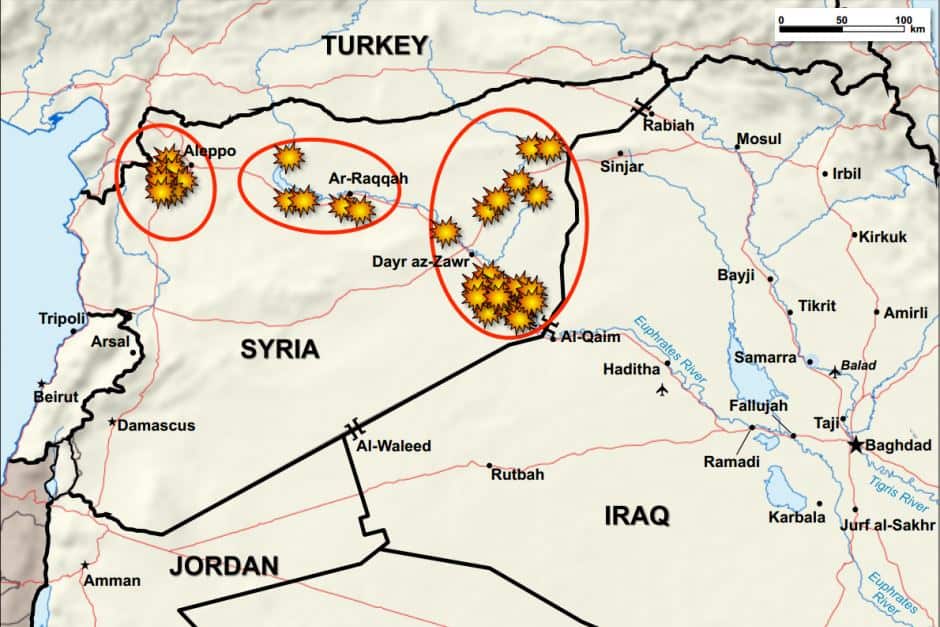
Five Arab nations joined the United States in carrying out the airstrikes in Syria on the bases of IS and the al-Qaeda linked group, Khorasun.
The attack marks an expansion of the US-led coalition's campaign against IS into Syria for the first time.
Most of the bombing focused on the IS stronghold of Raqqa, a city in northern Syria, which has been under the miltant group's control for more than a year.
News that makes sense
Your trusted source for staying up-to-date with the world around you. Get free daily news updates and analysis, straight to your inbox.
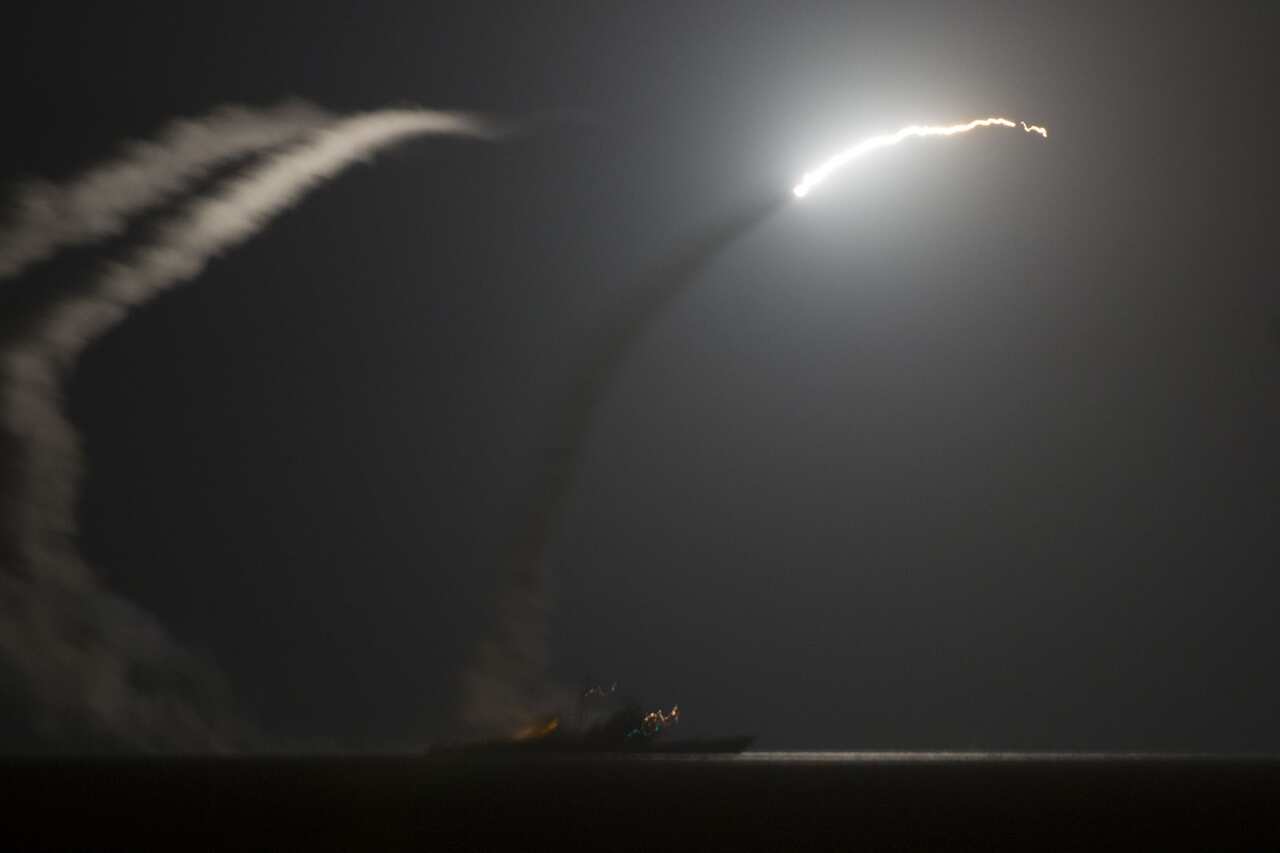
American military officials say fighter jets and missiles were fired from naval warships at targets including training compounds, headquarters and storage facilities.
The Pentagon said the decision to launch the strikes is justified because it thwarted a plot to attack Western targets by Khorasan.
“We have been watching this group for some time and we believe the Khorasan Group was nearing the execution phase of an attack, either in Europe or the (US) homeland," Lieutenant General William Mayville said.
“We know that the Khorasan Group has attempted to recruit Westerners to serve as operatives or to infiltrate back into their homelands.
“The Khorasan Group is clearly not focused on the Assad regime or the Syrian people - they are establishing roots in Syria in order to advance attacks against the West and the Homeland."
The US ambassador to the UN, Samantha Power, said the strikes were also legally justified under the principle of "collective self defence" outlined in the UN charter.
She cited Article 51 of the charter, saying it underlines the right of countries to self defence, even using force, on another country’s territory when that country is unwilling or unable to do so.
Ms Power said she informed UN secretary general Ban Ki-moon of the justification in a letter.
“The United States has initiated necessary and proportionate military actions in Syria in order to eliminate the ongoing ISIL threat to Iraq, including by protecting Iraqi citizens from further attacks and by enabling Iraqi forces to regain control of Iraq’s borders,” Ms Power said in the letter, released nearly 24 hours after the attacks were launched.
US President Obama officially authorised expanded airstirkes in a letter to Congress on Tuesday, invoking the Iraq War resolution.
In the letter, he writes that he is using his "constitutional and statutory authority as Commander in Chief" to authorise "a new comprehensive and sustained counterterrorism strategy to degrade, and ultimately defeat, ISIL".
He references the Iraq War Resolution using the Public Law number 107-243.
Battle against IS will be a 'multi-year' campaign
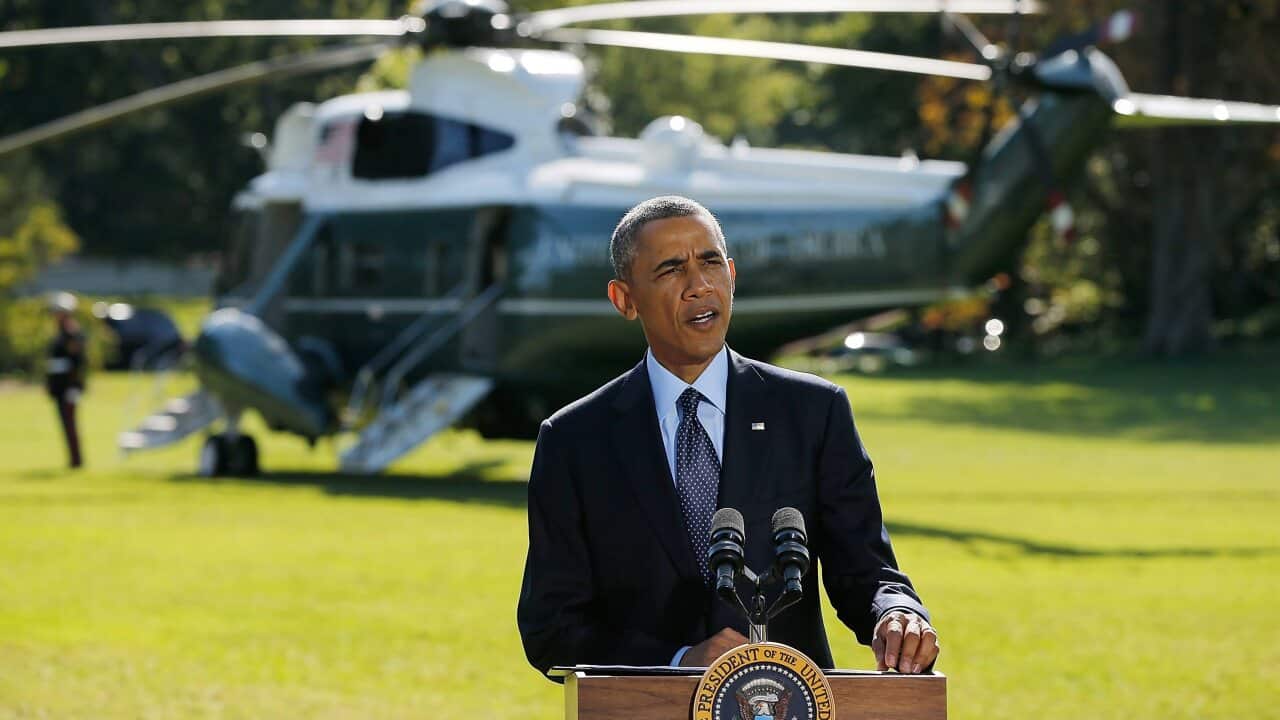
US President Barack Obama says the involvement of five Arab countries - Bahrain, Jordan, Qatar, Saudi Arabia and the United Arab Emirates - show the battle against IS is not America's fight alone.
"America is always stronger when we stand united. And that unity sends a powerful message to the world that we will do what is necessary to defend our country.
"The overall effort will take time. There will be challenges ahead but we're going to do what is necessary to take the fight to this terrorist group for the security of the country and the region and for the entire world."
The Syrian Observatory for Human Rights says at least 120 fighters from IS and Khorasun were killed in the attacks.
Lieutenant General William Mayville confirmed the campaign could last for years.
"Last night's strikes are the beginning of a credible and sustainable persistent campaign to degrade and ultimately destroy ISIL," he said.
Lieutenant General Mayville said no US troops would be sent to into Syria to direct strikes from the ground at hard-to-find targets.
Australia unlikely to participate in strikes in Syria: Bishop
Foreign Minister Julie Bishop said Australia supports the US-led airstrikes on Islamic State strongholds in Syria, but had not been asked to participate.
Prime Minister Tony Abbott previously refused to rule out contributing to a military campaign in Syria. Ms Bishop says that for now Australia's focus remains on Iraq.
Britain said it is considering involvement in future strikes. Turkish President Recep Tayyip Erdogan told reporters his country would increase its military and logistical support.
Prime Minister Tony Abbott will be joining world leaders at a special sitting of the UN Security Council hosted by Barack Obama on Wednesday evening, New York time.
The Prime Minister will personally address the Council and vote in favour of a US-drafted resolution that will mandate a global crackdown on foreign fighters.
Experts say some 12,000 fighters from at least 74 countries have travelled to Syria and Iraq to fight with extremist groups.







