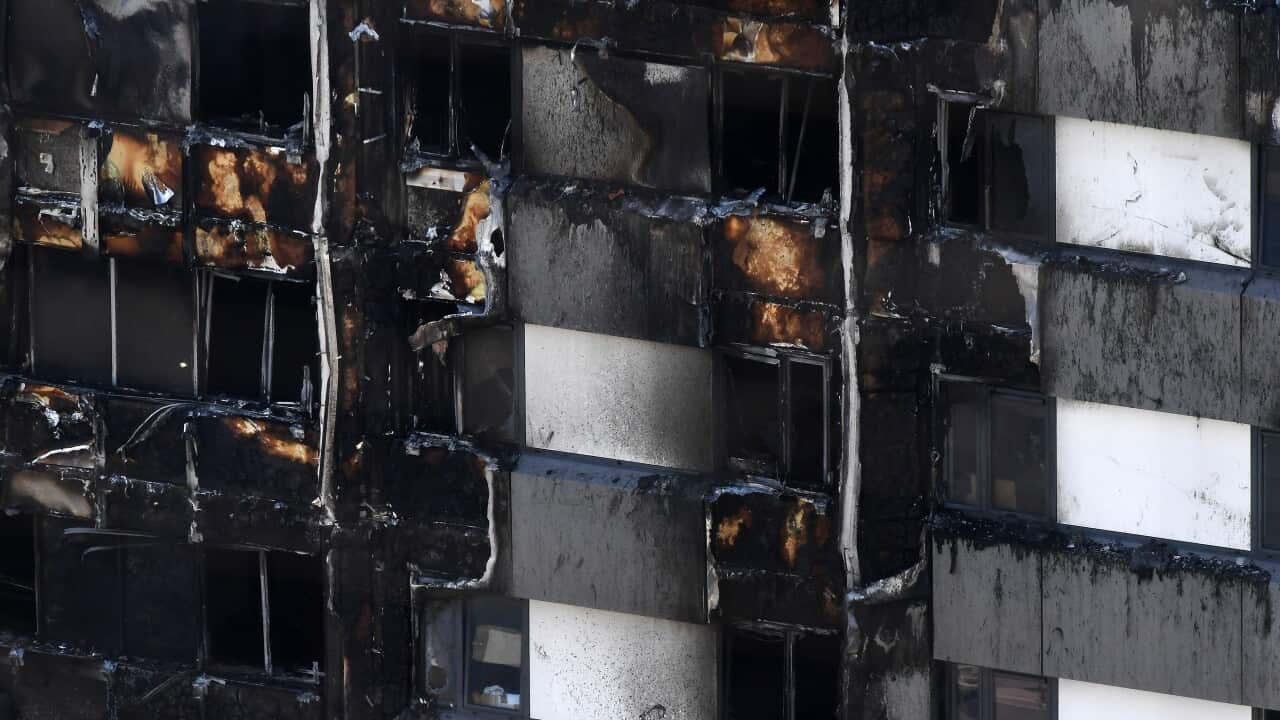
Victoria is cracking down on the use of potentially flammable cladding like that found in London's deadly Grenfell Tower blaze.
Aluminium cladding panels with a polyethylene core of more than 30 per cent, and expanded polystyrene panels will not be able to be used on buildings more than three storeys high, Planning Minister Richard Wynne says.
Dangerous cladding is already banned on these buildings but this has been difficult to enforce.
"This cladding is predominantly used on high-ruse buildings, and in that context we are making it very clear to the building industry and to building surveyors that this flammable product cannot be used in the future," Mr Wynne told reporters on Saturday.
Under renewed efforts to enforce the ban, building surveyors will no longer be able to issue permits unless they know dangerous cladding has not been used, the government said.
News that makes sense
Your trusted source for staying up-to-date with the world around you. Get free daily news updates and analysis, straight to your inbox.
A Victorian cladding task force last year identified 1369 buildings likely to have aluminium composite panels with a polyethylene core or expanded polystyrene panels.
But the government on Saturday said that figure was actually much lower.
Of the 1369 buildings identified, construction hasn't started on 609 and another 188 were half-built.
Almost 90 buildings with potentially dangerous cladding have so far been assessed.
What happens to them "depends on the nature of the building itself and what rectification work may be needed," Mr Wynne said.
"In some cases, it may mean some cladding has to come off."
The cladding audit was sparked by London's Grenfell Tower fire in June, which killed 71 people.
In 2014, aluminium cladding on the Lacrosse building in Melbourne's Docklands helped a fire sparked by a discarded cigarette climb rapidly up the facade.







