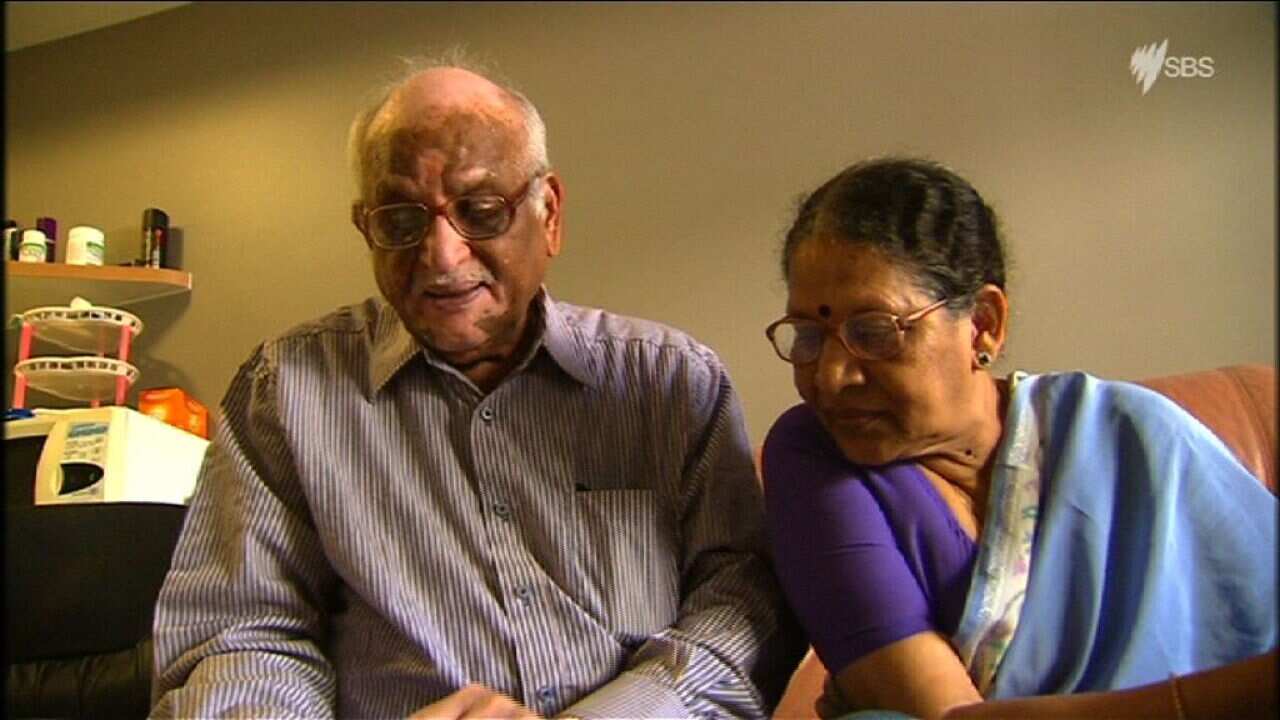
There are calls for improved access to affordable housing for elderly Australians from migrant and refugee backgrounds.
A joint report by the Ethnic Communities' Council of Victoria and the Housing for the Aged Action Group has found that certain groups of elderly people are at a greater risk of homelessness.
Gemma White from the support group, the Housing for the Aged Action Group told SBS News there was a lack of awareness about the challenge elderly migrant and refugee people face.
“It can be difficult to access services when a person doesn't speak English, so we're having to assist people to be able to access our services by letting them know they can use interpreters and giving them information in their language,” she said.'
News that makes sense
Your trusted source for staying up-to-date with the world around you. Get free daily news updates and analysis, straight to your inbox.
“People might be more likely to live with their family and if there is some family breakdown or there is some kind of conflict or elder abuse, then it can be difficult for people to find somewhere to live, or maybe people have sold their house overseas and have come to Australia and need somewhere to live and maybe they've wanted to live with their family and tried to find private rental and found it expensive.”
Currently 20 per cent are from non-English speaking backgrounds -- a figure expected to increase to about 43 per cent in 15 years.
Guruswamy Perumal and his wife Kokila moved to Australia from India seven years ago to assist their daughter who was undergoing intensive medical treatment.
The 78-year-old said due to cultural reasons he and his wife couldn't move-in with their daughter and it was difficult to find a permanent home forcing them to move between share-houses.
“We came during the time of the operation and then went back to Delhi and then after the operation we went back to Delhi and then she called me back for moral support, and as parents we [gave] up everything and we came here,” he told SBS News.
“One small kitchen, so many people are cooking at a time, and one small bathroom. People are arguing, After some time there is no hot water and normally it is very difficult to manage those things.
“Then also when we're told we had to leave because they have to demolish the building and we're going to construct a new building, so you have to leave this place.”
Victoria is moving to improve access to affordable housing for older people, including by way of new initiatives to support vulnerable individuals.
Eddie Micallef from the Ethnic Communities' Council of Victoria is urging other governments around the country to do the same.
"Victoria has a higher percentage of people from [overseas] - 50 per cent as against 40 per cent in other states,” he said.
“Obviously the need is higher, but that's not to denounce the fact that there is a need, especially in areas of New South Wales and Western Australia. Every state has its needs, but you know you just have to weigh up the priorities and I would hope that other governments in other states do likewise."







