
In brief
- Nearly half of Victoria's state road network is now rated poor or very poor.
- Experts say better funding and new technology are needed to identify damage before roads deteriorate.
The death of a motorcyclist on a country Victorian road has renewed scrutiny of the state's growing pothole problem and prompted fresh calls for urgent road repairs.
Peter Mason, 71, was killed after he struck a pothole and crashed on the Western Highway near Ballarat on Sunday.
Rob Salvatore, chair of the Victorian Motorcycle Council, said the tragedy highlighted the danger posed by poor road conditions, while Victorian Nationals leader Danny O'Brien said immediate repairs were needed to prevent more deaths.
The condition of Victorian roads has become a key issue ahead of the state election in November, with Premier Ben Carroll last month acknowledging the state's roads were "not good enough".
"We're putting lots and lots of money into fixing potholes. But let's be very clear, the system's not working. We need to do it better," he told ABC radio.
News that makes sense
Your trusted source for staying up-to-date with the world around you. Get free daily news updates and analysis, straight to your inbox.
On Tuesday, Carroll said the pothole believed to be responsible for Mason's death has been fixed.
According to a Victorian Auditor-General's report tabled in state parliament last week, nearly half of Victoria's more than 23,000km state road network was in poor or very poor condition in 2024 — up from 39 per cent in 2021.
A growing repair backlog, rising costs, under-investment, flooding and increased traffic and freight demand were among the key factors cited for the deterioration.
Defects are also outpacing maintenance, with the gap between identified and rectified problems more than doubling between January 2025 and June 2026.
According to the auditor-general, the transport department estimated it would cost more than $3 billion to maintain existing road pavements and replace age-expired roads, but only $1.04 billion was allocated for 2026-27.
What can be done?
Since becoming premier in July, Carroll has promised to return to the "basics", which includes fixing potholes.
He announced an extra $352 million to double the number of potholes fixed this year from 250,000 to 500,000 — bringing the total funding for road asset management to $1.39 billion.
The state Opposition's plan is to invest $5 billion — a 25 per cent increase on current funding — over four years to maintain and repair roads, including fixing one million potholes.
However, some experts say that is the wrong approach.
A 2023 Grattan Institute report found many councils — which manage more than 75 per cent of Australia's roads — operate under a "worst-first" scheme, meaning roads are only fixed when they become unusable.
The report says local government funding shortfalls have driven a reactive approach, despite major repairs costing five to 10 times more than preventive maintenance, referred to as a "stitch-in-time" approach.
Regional councils often lacked the funding and technical expertise to maintain their vast road networks, with the report recommending reforming grant distributions to prioritise areas of highest need and reducing local government red tape.
The report suggests a $600 million annual increase in financial assistance grants and $400 million for the Roads to Recovery program, both indexed to reflect cost changes and population growth.
An annual $200 million fund should also be established to assess and upgrade local roads identified as priority freight routes, in exchange for the council providing permit access to compliant heavy vehicles.
Ambarish Kulkarni, a road infrastructure expert at Swinburne University, says technology could play a growing role in helping authorities identify road damage before it becomes severe.
Potholes are often preceded by gradual deterioration, with "crocodile cracking", which resembles reptile scales, an early indicator.
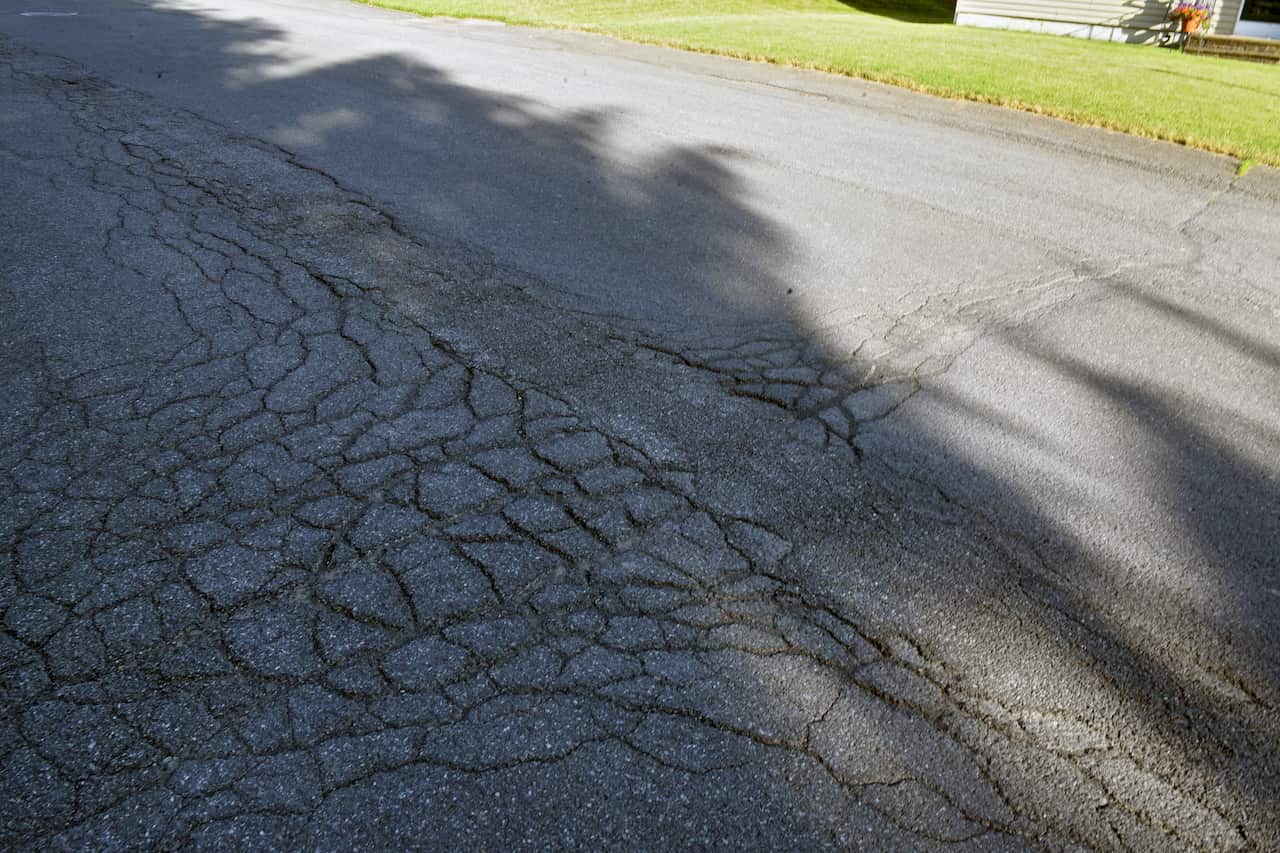
Other warning signs include rutting, where wheel paths wear into the road surface, cracks running parallel to the pavement edge, and water pooling after rain.
Kulkarni's research has explored the use of drones or vehicle-mounted cameras to create digital models of roads. Machine learning models can then be trained to detect early signs of deterioration.
"Potholes are certainly becoming increasingly visible across Victoria, particularly in Melbourne, and they are a significant concern for commuters," he said.
"The research demonstrated the potential to nearly halve monitoring and associated costs. More importantly, it shows how we can move from reactive maintenance, fixing potholes once they become obvious, towards predictive and preventative maintenance."
Calls for a national approach
While the Grattan Institute reported targeted funding for local road repairs, identifying the areas most in need can be difficult.
A 2023 federal parliamentary committee report into the impact of severe weather events on Australia's roads found the condition of the network was poorly understood due to data gaps and a lack of standardised data sharing between federal, state and local governments.
"It is critical that governments have access to high-quality, consistent data to inform evidence-based strategic investment and preventive maintenance regimes for both state and locally owned road assets," the report said.
State and territory governments generally oversee major highways, while local councils are responsible for local roads.
The report found the largest data gaps were among councils, many of which lack the funding and specialised equipment needed to carry out regular road condition surveys.
It called for a national approach, with all levels of government working in collaboration on road assessments and the implementation of standardised recording methods.
While official data gaps remain, figures from Snap Send Solve, an app that allows people to report issues such as potholes to local authorities, show that Victoria recorded the highest number of damaged-road reports.
In the 12 months to March 2026, there were 33,115 reports in Victoria, compared with 22,291 in NSW and 19,441 in Queensland.
For the latest from SBS News, download our app and subscribe to our newsletter.







