Hundreds of Sikhs, many dressed in traditional outfits, gathered outside the their Gurdwara, or temple, in Southall, west London, on Tuesday after earlier rumours circulated it was next on the looters' hitlist.
Around 200 locals in Enfield, the north London borough at the heart of previous attacks, strode through the area to "protect their streets", an AFP correspondent said.
News that makes sense
Your trusted source for staying up-to-date with the world around you. Get free daily news updates and analysis, straight to your inbox.
The group became involved in a "minor skirmish" with a group of youths which it accused of taking part in criminal activity, the Guardian reported.
Amateur video footage released Wednesday showed a group of around 100 men running down an Enfield street chanting "England, England, England".
A similar number of football fans congregated in the south-east suburb of Eltham, also rumoured to be a likely hot spot.
"This is a white working class area and we are here to protect our community," one man told the Guardian newspaper.
"We are here to help the police. My mum is terrified after what she saw on the television in the last three days and we decided that it's not going to happen here," he added.
Meanwhile, mainly Turkish shopkeepers in the north London districts of Hackney and Kentish Town sat outside their shops into the early hours, many with makeshift weapons by their side.
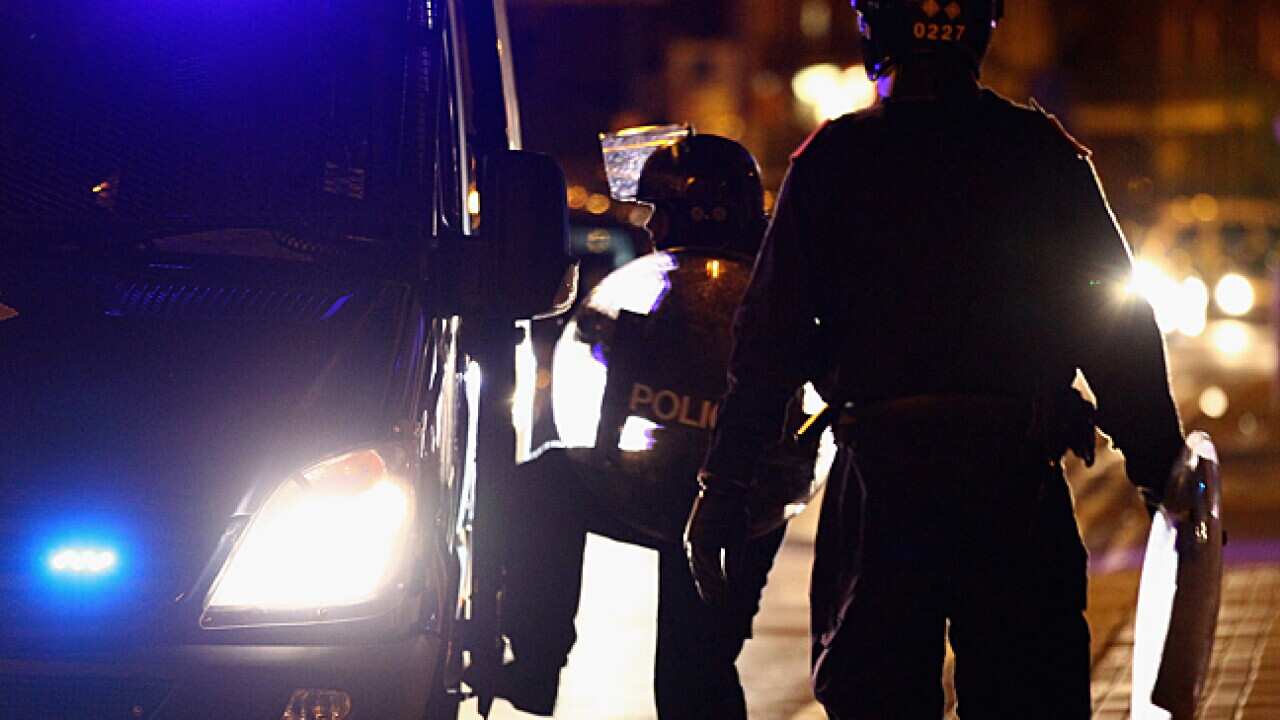
Britain's worst riots for decades raged into Wednesday as youths ran amok in Manchester and the industrial Midlands but London was quiet with 16,000 police swamping the streets to stem violence.
In Manchester, Britain's third-largest city, youths smashed shop windows and looted shops and chased photographers away from the scene in what police described as the city's worst violence in 30 years.
Elsewhere, hooded rioters set fire to buildings in West Bromwich and Wolverhampton in central England and a police station in nearby Nottingham was firebombed, although there were no reported injuries.
Looters also targeted shops in the second city of Birmingham for another night and 200 rioters pelted police with missiles in the north west city of Liverpool as the nation faced up to a fourth day of unrest.
Police were bracing for more trouble after what they said was the worst night of disorder in living memory in the British capital, and their numbers were ramped up from 6,000 to 16,000 on Tuesday night as Prime Minister David Cameron vowed to do "everything necessary to restore order to the streets".
Shops in many parts of London closed early and put down their shutters on the advice of the police.







