

(Transcript from SBS World News Radio)
It is a sobering statistic: Around 120 million girls worldwide have been raped or sexually assaulted before the age of 18.
That is just one of the facts presented by the United Nations Children's Fund in the largest ever look at violence against children around the world.
But there is also hope, with some strategies to reduce violence against children producing results.
Peggy Giakoumelos reports.
News that makes sense
Your trusted source for staying up-to-date with the world around you. Get free daily news updates and analysis, straight to your inbox.
(Click on the audio tab above to hear the full report)
"Every child has the right to survive, grow and be protected from all forms of violence. Yet for millions of children around the world, it's a terrible reality, and it doesn't discriminate. It cuts across boundaries of age, geography, religion, ethnicity and income bracket. I have no doubt that there's violence against children in some form at this moment within a few city blocks of this building. It takes many forms -- physical, sexual, emotional. It occurs in places where children should be safe -- their homes, schools and communities. Increasingly, it happens over the Internet."
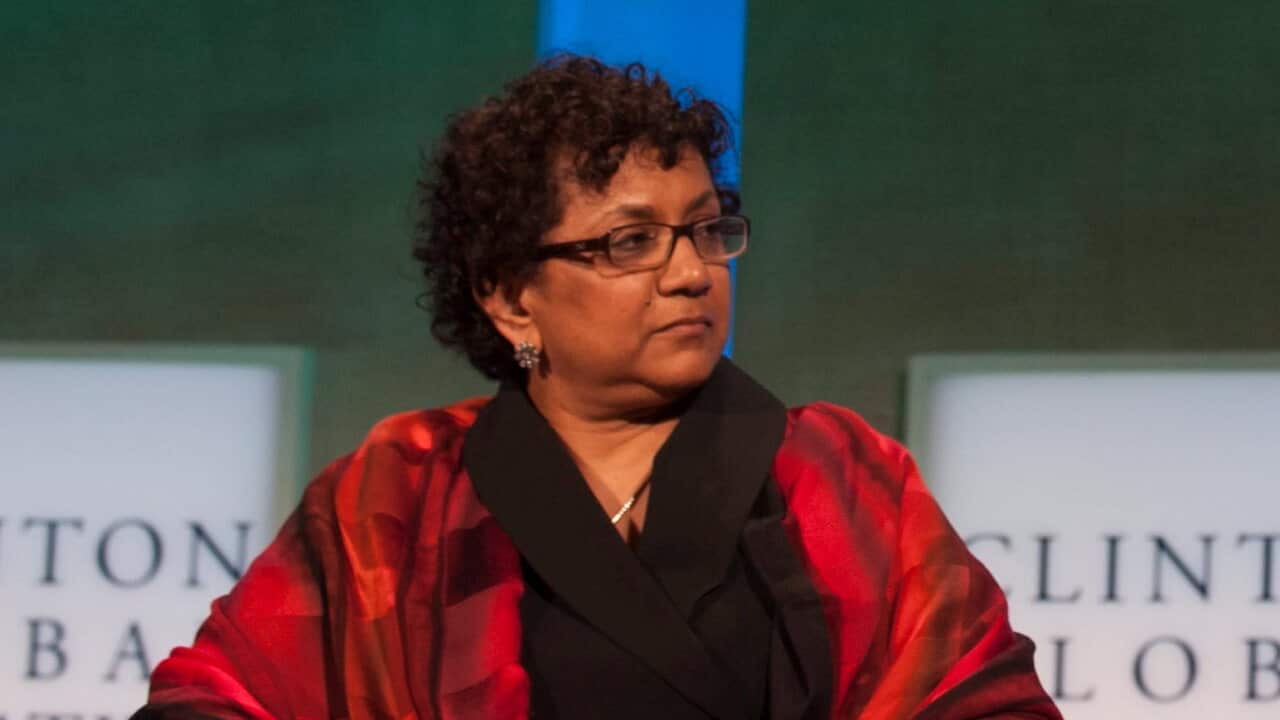
That is UNICEF deputy executive director Geeta Rao Gupta.
The violence she speaks of is perpetrated by family members, neighbours, teachers and other children.
Girls remain one of the most vulnerable groups.
Around 120 million girls worldwide under the age of 20 are reportedly subjected to forced sexual intercourse or other sexual acts at some point in their lives.
Young boys are also at risk, but UNICEF says there is not enough comparable data to provide a global estimate.
Report author Claudia Cappa says many people find it difficult to officially report violence, to either the police or other services.
"Seven out of 10 victims of physical or sexual violence, they never seek help, and half of them they never tell anyone. We asked girls, 'Who did you tell?' -- for those who have decided to disclose their experience. They don't tell services, they don't tell strangers -- those who might be able to help them. They tell friends, family members. And why they don't tell anyone, and why they don't seek help? They say it clearly in their responses: They didn't realise, in most cases, that what they had experienced was a form of abuse."
The report found about two in three children worldwide between ages 2 and 14 -- almost a billion -- are subjected to physical punishment by their caregivers on a regular basis.
And it is attitudes to violence which make it difficult for change to occur, with around one-third of adults worldwide thinking punishment is an essential part of raising a child.
But modern science can now show how early abuse affects the brains of children.
"The toll of such attitudes and actions on individuals and on nations is terrible. In early childhood, exposure to violence can hinder the development of a child's brain. When the nervous system is stressed to a very high level, known as toxic stress, it reduces the brain's ability to regulate and assist with health, with growth and with cognitive capacity. Violence against children, direct and indirect, can cause trauma, low self-esteem, bad health and poor school performance, and, in some cases, it can lead to depression, alcohol and drug abuse, self-harm and even suicide."
One of the biggest concerns is that violence often continues from one generation to the next.
Unicef Australia spokesman Tim O'Connor says early intervention programs in Australia for families at risk have shown some good results.
"In Australia, for instance, some of the work that's been done around sporting codes and encouraging better conduct of parents and better conduct of players is some of the best work that's been done in the world on this. There's also the nurse-family partnership, which is being piloted in the north of Queensland at the moment. It is being very successful in ensuring that a nurse, or a medical professional, is involved with a family that may be vulnerable right from when that women gets pregnant, right through until the child is two years old. And that enables that medical professional to be able to identify where there are risks, to support that family and then to, if reporting is required, actually go through and do that."







