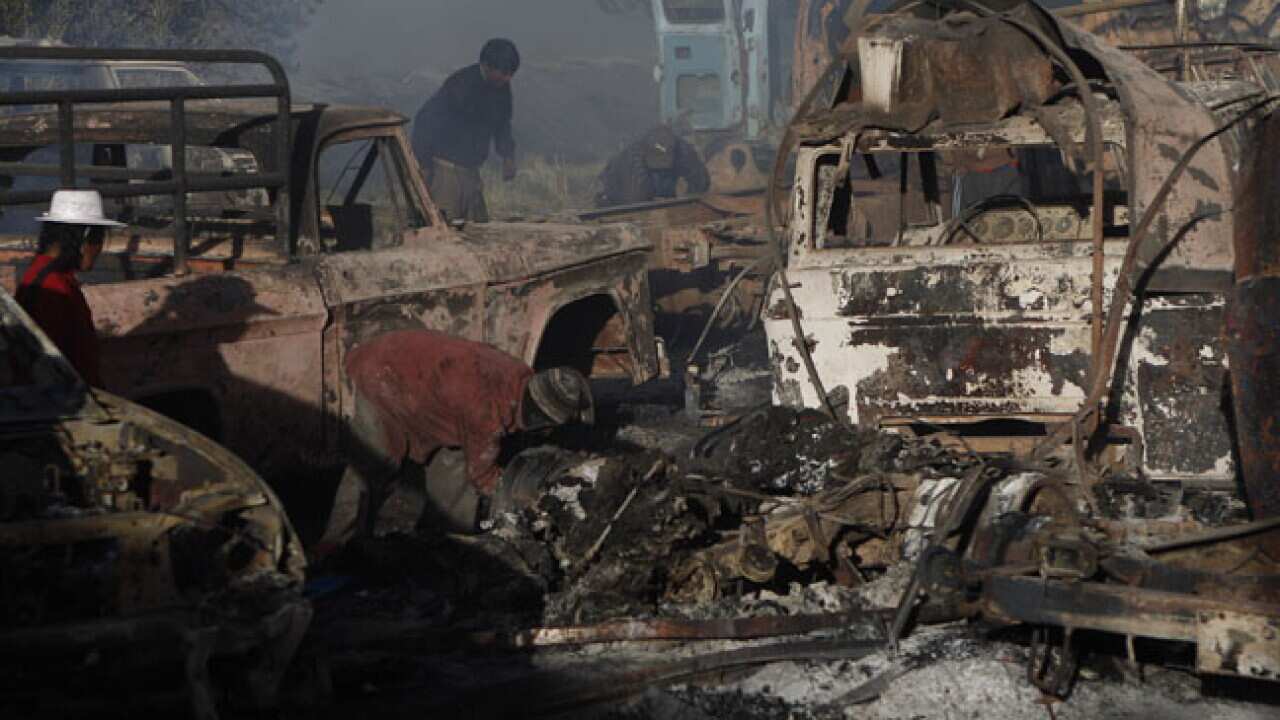
Demonstrators protesting a proposed silver mine set fire to a customs building Friday after a night of violence in which three government offices were looted less than 10 days before presidential elections.
A column of black smoke billowing from the customs building was visible from all points of this city of 120,000 on Lake Titicaca, some 1,300 kilometers (780 miles) southeast of Lima.
The violence came as Peru was in the final stretch of campaigning for a June 5 presidential election pitting a leftist populist Ollanta Humala and Keiko Fujimori, the daughter of former president Alberto Fujimori, imprisoned for crimes against humanity.
News that makes sense
Your trusted source for staying up-to-date with the world around you. Get free daily news updates and analysis, straight to your inbox.
Looters ransacked the town hall, a finance office and the customs building on Thursday night as the protests turned violent. On Friday, they returned to the customs building and set fire to it, police said.
Protest leaders blamed the violence on criminals who infiltrated their demonstrations.
Those responsible for looting the customs house had "nothing to do with the strike," said Walter Aduviri, one of the leaders of the group protesting a silver mine project by Bear Creek Company
The protesters, mostly Aymara Indians, are angry that the central government granted the Canada-based company a concession to open a silver mine in the community of Santa Ana, fearing it would pollute the water and leave few local benefits.
Some 15,000 protesters were blocking the main roads, the airport and the rail line. Hundreds of foreign tourists are trapped in the city, which sits next to Lake Titicaca, the highest navigable lake in the world, shared between Peru and Bolivia.
The demonstrations began more than two weeks ago but took a more serious turn Tuesday when protesters blocked all routes of access to the city.
On Thursday, some 400 people stormed the government offices after talks between local leaders and representatives of the government of outgoing President Alan Garcia collapsed.
"We will not surrender," said Aduvirir, while protesters behind him demanded that the government cancel all mining concessions and prevent any future oil exploration.
"If there is not a solution, there will not be elections June 5" in Puno, he added.
Peruvians go to the polls that day to vote in a presidential runoff between Humala and Fujimori.
Humala, who is anywhere from three to seven percentage points behind his rival, would be hit the hardest if the polls were shut down in Puno, where he has strong support.
A former military officer, Humala has asked the government to "resolve the situation and not leave the problem for later, because the wishes of the people will not be respected in the south of the country."
Garcia, who had planned to deploy the army to deal with the demonstrators, has instead asked the police to act "with extreme caution" and avoid the type of street battles that could lead one presidential candidate or the other to claim their supporters had been victimized.
"Local residents are angry because they cannot move and everything is shut down," Teresa Castillo, a Spanish filmmaker trapped in the city, told AFP. "The atmosphere is very tense. The city is more blockaded now than before," she said.







