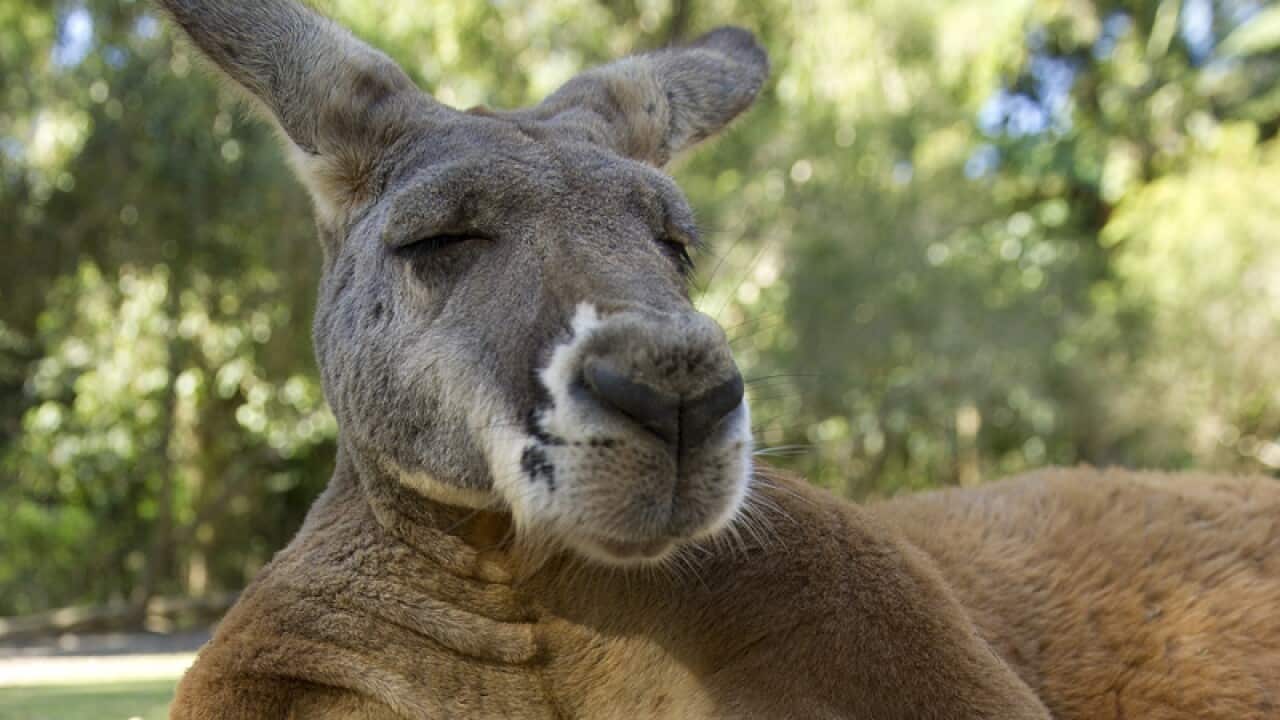
Safety experts from Volvo Cars are in Australia studying the "roadside behaviour" of kangaroos to develop the first-ever detection technology for the marsupials.
Kangaroo crashes are one of the most costly causes of traffic collisions in Australia.
The Australian National Roads and Motorists' Association estimates there are about 20,000 road collisions each year involving kangaroos, some causing serious injuries and costly repair bills.
Experts are studying the animals at Tidbinbilla Nature Reserve near Canberra.
The region is one of the hotspots for collisions between vehicles and kangaroos.
News that makes sense
Your trusted source for staying up-to-date with the world around you. Get free daily news updates and analysis, straight to your inbox.
Volvo says it is developing radar and camera technology to detect kangaroos.
So, if an accident is imminent, the car will brake automatically - reacting far faster than a human driver can.
It is based on Volvo Cars' City Safety technology used to detect pedestrians, cyclists, cars or animals.
"In Sweden we have done research involving larger, slower-moving animals like moose, reindeer and cows which are a serious threat on our roads," said Martin Magnusson, senior safety engineer at Volvo Cars.
"Kangaroos are smaller than these animals and their behaviour is more erratic.
"This is why it's important that we test and calibrate our technology on real kangaroos in their natural environment."
In City Safety, a radar sensor in the grille scans the road to detect moving objects.
An advanced light-sensitive, high-resolution camera in the windscreen works with the radar to detect which way the object is moving and helps the computer decide what action to take, if any.
Volvo said that when the object is detected, it takes 0.05 seconds for the computer system to react, compared with the human reaction time of about 1.2 seconds.







