
Voting unfolded smoothly in Myanmar on Sunday with no reports of violence to puncture a mood of jubilation marking the Southeast Asian nation's first free nationwide election in 25 years, its biggest stride yet in a journey to democracy from dictatorship.
The party of opposition leader Aung San Suu Kyi is expected to win the largest share of votes cast by an electorate of about 30 million, who chose from among thousands of candidates standing for parliament and regional assemblies.
But a legacy of military rule means she cannot become president after the election, even if her National League for Democracy (NLD) wins a landslide.
Concern arose about the fairness of the election after activists estimated that up to 4 million people may be unable to cast a ballot. And on the eve of the poll, the NLD said a suspiciously large number of extra voting tickets had been issued in some areas, with one family in Yangon getting 38.
Religious tension, fanned by Buddhist nationalists whose actions have intimidated Myanmar's Muslim minority, marred the election campaign.
News that makes sense
Your trusted source for staying up-to-date with the world around you. Get free daily news updates and analysis, straight to your inbox.
Still, there was a palpable sense of excitement among voters as they went to polling stations, many before dawn.
"I've done my bit for change, for the emergence of democracy," said 55-year-old former teacher Daw Myint after casting her vote for the NLD in Yangon.
In the capital, Naypyitaw, military Commander-in-Chief Min Aung Hlaing said on Sunday there would be no re-run of the last free vote in 1990, when Suu Kyi won but the army ignored the result. She spent most of the next 20 years under house arrest before her release in 2010.
Asked how he would feel if the NLD won this time, Min Aung Hlaing told reporters: "If the people choose them, there is no reason we would not accept it."
Suu Kyi casts vote
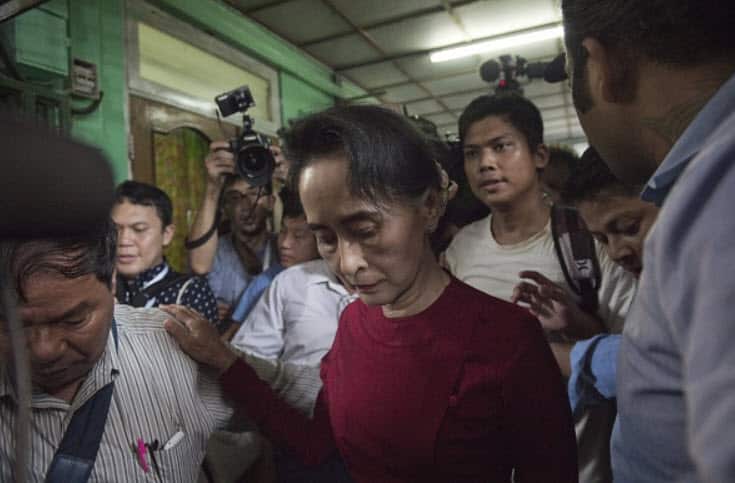
Myanmar's Aung San Suu Kyi, democracy hero and one-time political prisoner under military rule, arrived at a polling station in Yangon on Sunday to cast her vote in the country's first free election in 25 years.
Suu Kyi's car inched through a scrum of news photographers waiting outside the school building, and she was stony-faced as bodyguards shouted at people to move out of the way.
Most in the crowd of well-wishers gathered there were lucky to get a glimpse of the garland on Suu Kyi's hair as she went inside to vote without a smile or a wave.
Sydney based expats gather in show of support
While millions of people are voting in Myanmar's first openly contested election in 25 years Australia's Burmese community is showing its support for the party of opposition leader, Aung San Suu Kyi.
In Sydney, a group of Myanmar expatriates gathered in the Royal Botanic Gardens to show support for Ms Suu Kyi's National League for Democracy (NLD) party.
"This election is an historic election in Burma. It's an initial step forward to transition to democracy," said former NLD MP, Maung Maung Aye.
"It's an important day for us and for the Burmese people, because we want change. Most people have suffered a lot for 50 or 60 years. They're very poor and our political and economic state is very low," said Dr Amarcho Kyaw.
The ruling Union Solidarity Development Party (USDP) is also a frontrunner in the election.
President Thein Sein says he will accept whatever the people decide.
Clear results are not expected until Monday morning.
First free vote in almost 30 years
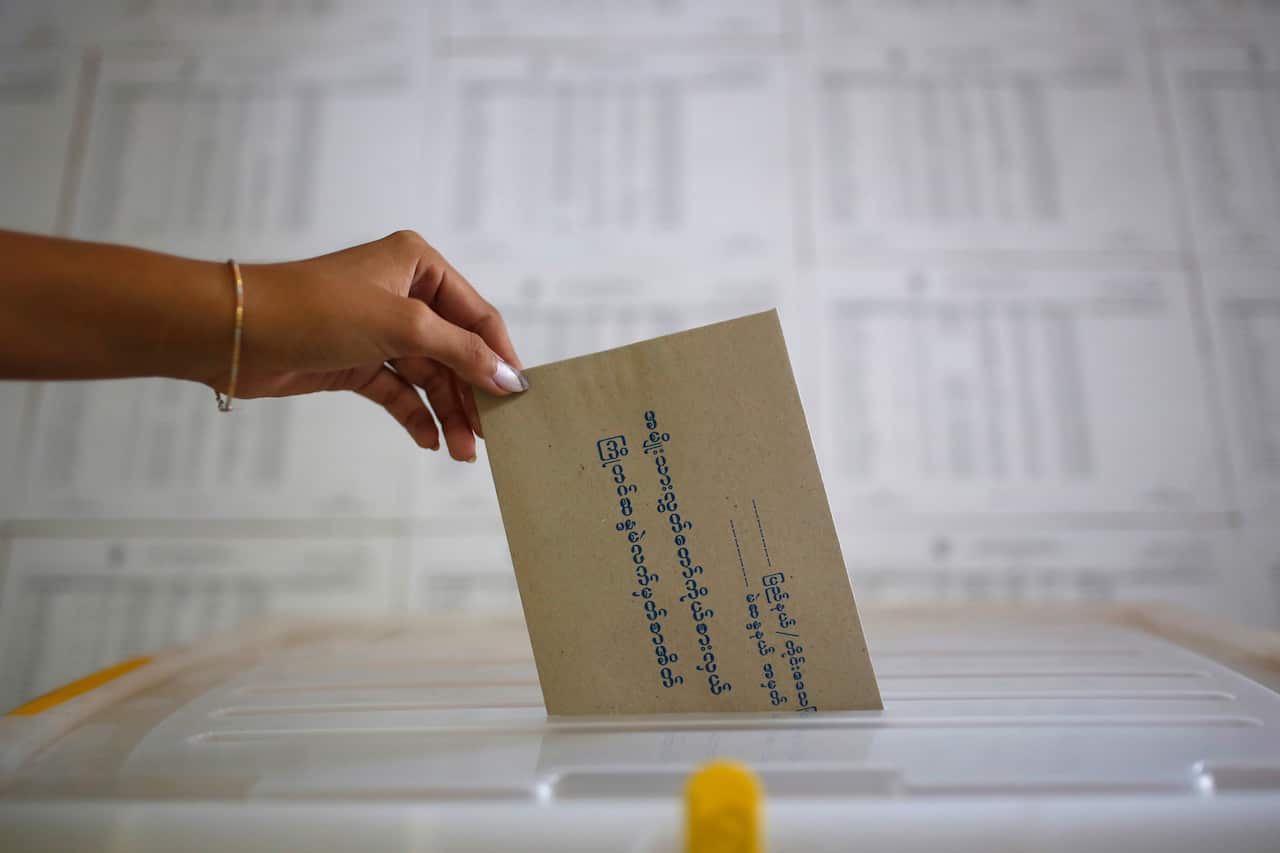
The sense of excitement in the Southeast Asian nation was palpable as around 30 million people began the process of voting in the first free nationwide poll in a quarter of a century.
"I really want change," said Zobai, a Muslim jade trader in the second-largest city of Mandalay who goes by one name. "I've been alive for 53 years and all I've seen is dictatorship."
Religious tensions marred the run-up to the election, fanned by Buddhist nationalists whose actions have intimidated Myanmar's Muslim minority.
Nobel peace laureate Suu Kyi won the last free vote in 1990, but the military ignored the result. She spent most of the next 20 years under house arrest before her release in 2010.
Her National League for Democracy (NLD) is expected to win again, but she is barred from taking the presidency herself under a constitution written by the junta to preserve its power.
If she wins a majority and is able to form Myanmar's first democratically elected government since the 1960s, Suu Kyi says she will be the power behind the new president regardless of a constitution she has derided as "very silly".
Suu Kyi starts the contest with a sizeable handicap in parliament: even if the vote is deemed free and fair, one-quarter of parliament's seats will still be held by unelected military officers.
To form a government and choose its own president, the NLD on its own or with allies must win more than two-thirds of all seats up for grabs. By contrast, the ruling Union Solidarity and Development Party (USDP) would need far fewer seats if it secured the backing of the military bloc in parliament.
However, voters are expected to spurn the USDP, created by the former junta and led by former military officers, because it is associated with the brutal dictatorship that installed President Thein Sein's nominally civilian government in 2011.
An inconclusive result could thrust parties representing Myanmar's myriad ethnic minorities into a king-maker role, bringing them closer to the center of power after years on the fringes.
'Time for change'
In Mandalay, a hotbed of Buddhist nationalism, men streaming out of the Joon Mosque on Saturday expressed admiration for Suu Kyi - but also apprehension about post-election politics.
"I feel like a student waiting for his exam results. I'm afraid we might lose," said Alaslam, 60, in the mosque's tiled courtyard.
Zobai, the jade trader, blamed the government and military for stoking anti-Muslim hatred in the majority Buddhist country, most recently via anonymous flyers and banners that said an NLD win would pave the way to a Muslim takeover of the country.
Until just a few years ago a pariah state, Myanmar has little experience organizing elections. Underlining the infancy of its democracy, a survey released on Saturday by the Mizzima media group showed that just 29 percent of voters were familiar with the candidates in their areas.
More worrying is the prospect of an unfair vote after it emerged that around 4 million people will be unable to cast a vote.
Thousands are missing from voter lists, millions abroad failed to register in time, and most of the 1.1 million persecuted Muslim Rohingya minority are barred from voting.
In a pre-election speech on Friday, President Thein Sein acknowledged that organizing the vote was a challenge and stressed the government's commitment to ensuring a credible vote, with more than 10,000 observers scrutinizing the process.
"People are really interested in the election and eager to vote," said Hla Myo, a poll volunteer in the country's largest city, Yangon. He said more "advance voting" forms had to be ordered at the last minute for people who would be unable to cast their ballots on the day.
Security has been tightened around the country, with 40,000 specially trained police dispatched to polling stations, and some Yangon restaurants and markets have been closed.
The president sought to dispel concern that the military or the government would reject the vote.
"I'd like to say again that the government and the military will respect and accept the results," he said. "I will accept the new government formed, based on the election result."
- with Reuters







