(Transcript from World News Australia Radio)
The state has the unenviable reputation of being the world's shark attack capital, with six fatal attacks in just two years.
But WA Minister Troy Buswell denies the new strategy is a poorly disguised cull.
"This does not, this response, does not represent what you would call a culling of sharks," WA MInister Troy Buswell told the media.
"It is our view that it is a targeted, localised hazard mitigation strategy. In other words, removing the shark hazard, or attempting to remove the shark hazard from where they present the greatest danger to the public."
News that makes sense
Your trusted source for staying up-to-date with the world around you. Get free daily news updates and analysis, straight to your inbox.
Mr Buswell, who lost the Fisheries portfolio after announcing the new strategy, says the West Australian government has a responsibility to act after six fatal shark attacks in two years.
The most recent, 35-year-old surfer Chris Boyd last month at a surf break near Gracetown in the state's south west.
It's a town that's become notorious for shark attacks, with surfers Nicholas Edwards taken in 2010 and Bradley Smith in 2004, in the same area.
Department of Fisheries officers used to hunt for the suspected shark after an attack.
Troy Buswell says under the new strategy, commercial fishermen will join future hunts.
"In the event of a shark attack we will be endeavouring to have more boats potentially available to attempt to catch the shark. Not just fisheries boats, or boats controlled by other government agencies and also possibly the contracted fishers that I referred to earlier. More set lines are to be deployed in the event of an attack and those setlines will be deployed for a longer period of time over a broader area."
Jeff Hansen from marine conservation group Sea Shepherd says his group will fight the WA government's new strategy.
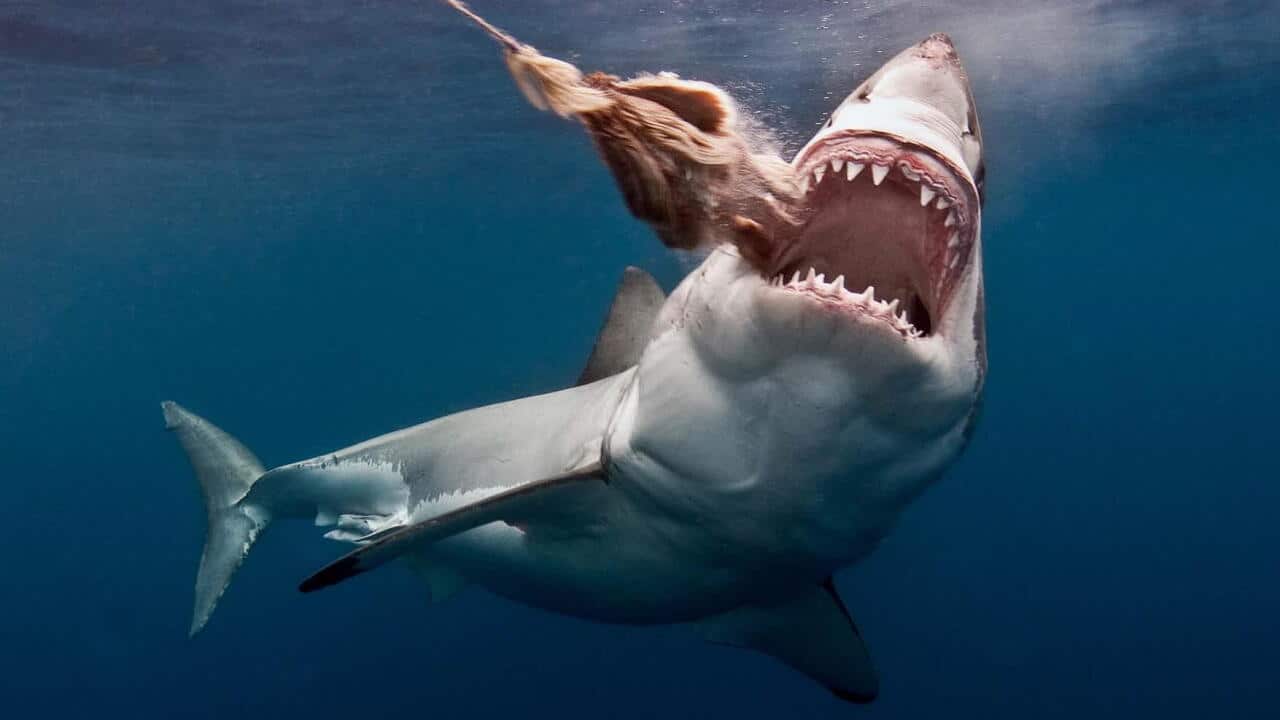
He says the group will also look at the legalities of killing Great White Sharks, which are a protected species.
"More and more of our oceans that we rely on for our survival, 80 per cent of every breath we take comes from the ocean. And more ecosystems around the world are collapsing because sharks have been removed from that environment as that top apex predator. They're a keystone species. Fishing industries like the scallop industry, in cases in the United States, have completed collapsed because sharks have been removed from that environment. The reality is an ocean without sharks is a planet without people. We need sharks for our survival and we need to give them the respect that they deserve for our kids and their kids."
Other measures in the government's plan include baited hooks set one kilometre off certain beaches.
Troy Buswell admits other marine life will be caught on the hooks.
So-called Marine Monitored Zones will also be established along the Perth metropolitan coast and parts of the South West of the state.
Any shark over three metres found one kilometre from the beach in the zones will be hunted by professional fishermen who will be paid by the state government.
They will also monitor the baited hooks every day.
Ross Weir from West Australians for Shark Conservation, or WASK, says his group approached the Premier Colin Barnett before the announcement was made.
He says there are opponents to the strategy who might take matters into their own hands and remove the baited hooks or interfere with shark hunts.
"WASK itself is not prepared to go out in the water and stop them, but there are some very effective conservation groups in our state who are prepared to take action such as that. I'm not going to name them. A good magician never unveils his tricks. Look as I said before we provided Mr Barnett with the feedback of the world's top five great white shark experts. All of which have advised him that this approach is not going to have any positive benefit for the beach goers or the sharks. It's going to be detrimental to both. It has been proven that taking individual great white sharks has a detrimental effect and serious effect on the recovery of this endangered species."
The government's new strategy also includes taking whale carcasses washed up on Perth beaches or floating off the coast further out to sea.
The government will also research seal populations, which surfers believe are increasing and could possibly attract more sharks to an area.
Troy Buswell says the government's actions will reduce the number of sharks along the coast, but insists it is not a cull.
Reporter: "Is it a passive cull? It's effectively like baiting wild horses instead of shooting them from a helicopter."
Buswell: "No, I don't agree with that. I've no doubt this will lead to the capture of sharks, but it is not a widespread, fear-driven hunt for predators. It's a localised hazard mitigation strategy."
Mr Buswell says he's also spoken to Federal Environment Minister Greg Hunt about allowing fishermen who catch smaller sharks to keep larger sharks like Great Whites who often end up in their nets.
Under federal law, fishermen have to release Great Whites.
The new shark strategies are expected to begin next month.







