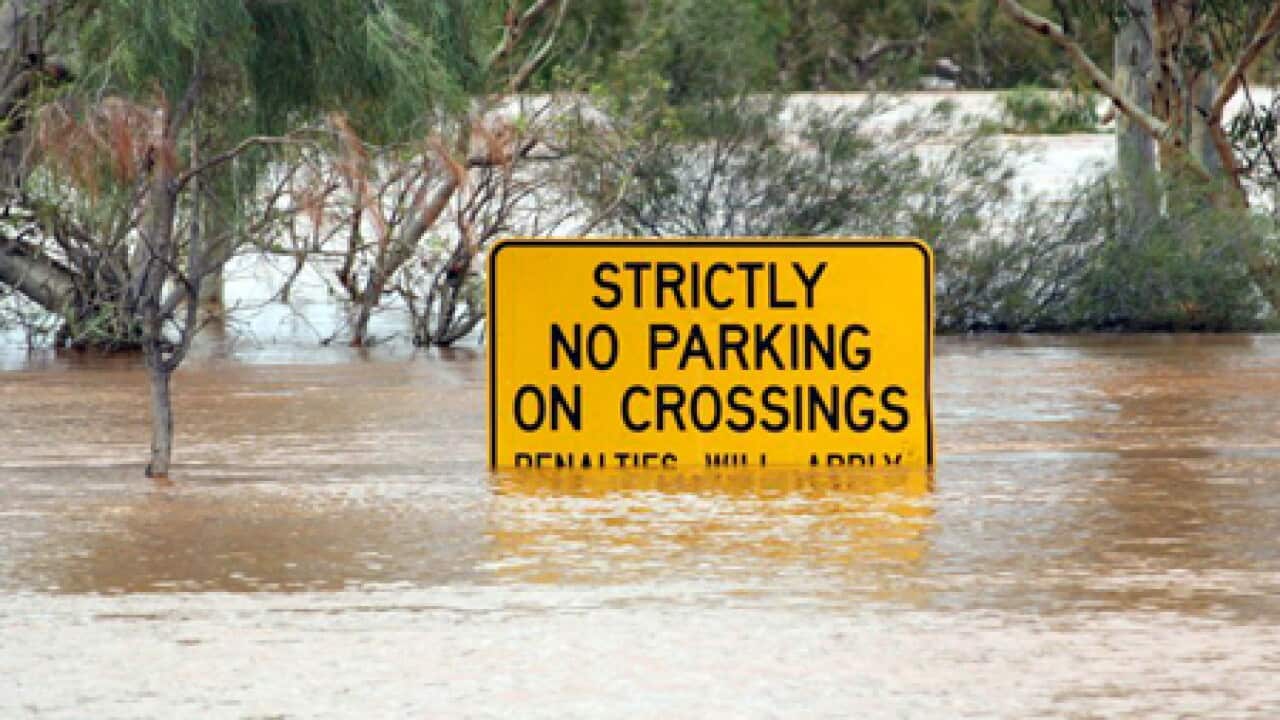
Residents devastated by the worst flood on record in Western Australia's Gascoyne region say they barely recognise their own country as some return home to begin the clean-up.
Reinforced levees prevented the overflowing Gascoyne River from swamping the town of Carnarvon but surrounding plantations and pastoral stations have suffered major livestock and crop losses.
At 1pm (WST) on Tuesday, the river level was down to 3.6 metres at Nine Mile Bridge after peaking at 7.8m early on Monday, WA's Bureau of Meteorology reported.
Shire president Dudley Maslen told AAP a few residents had begun to return to their homes but would likely be without power through Tuesday.
"There's been a lot of damage and everyone is devastated," Mr Maslen said.
News that makes sense
Your trusted source for staying up-to-date with the world around you. Get free daily news updates and analysis, straight to your inbox.
"Some people have said to me that they don't even recognise their own country because there are rivers where there never used to be."
Mr Maslen said the morale within the community was good but everyone was dealing with stress differently.
"Everyone was going through the adrenalin rush that you needed for survival and now we've got the hangover," he said.
Carnarvon, about 900km north of Perth, received its annual rainfall in 22 hours over the weekend.
Some people in outlying areas were rescued by helicopter after sitting it out on rooftops, while a caravan park in Carnarvon was evacuated after it was swamped late on Sunday.
About 150 people are now staying at Carnarvon's civic centre, which has been designated an evacuation centre.
Fire and Emergency Services Authority (FESA) spokesman Les Hayter told AAP that five planes had delivered food and water supplies to the region on Tuesday and more flights were planned for Wednesday.
"Those flights will probably continue for a few days because the roads are still impassable," Mr Hayter said.
"We've also now been in touch with most of the stations that we couldn't reach before, so we're quite happy with that."
On Monday, the WA government declared the area a disaster zone, making residents and local authorities eligible for financial assistance for clean-up and recovery.
The federal government has also pledged funds to help flood victims and assist local authorities to replace damaged public infrastructure.
Local growers of mangoes, melons, bananas and other fruits have been hard hit by the floods along with riverside cattle stations that look to have lost many hundreds of livestock.
It's feared many of the region's historic mud-brick pastoral homesteads could have been irreparably damaged after going under water.







