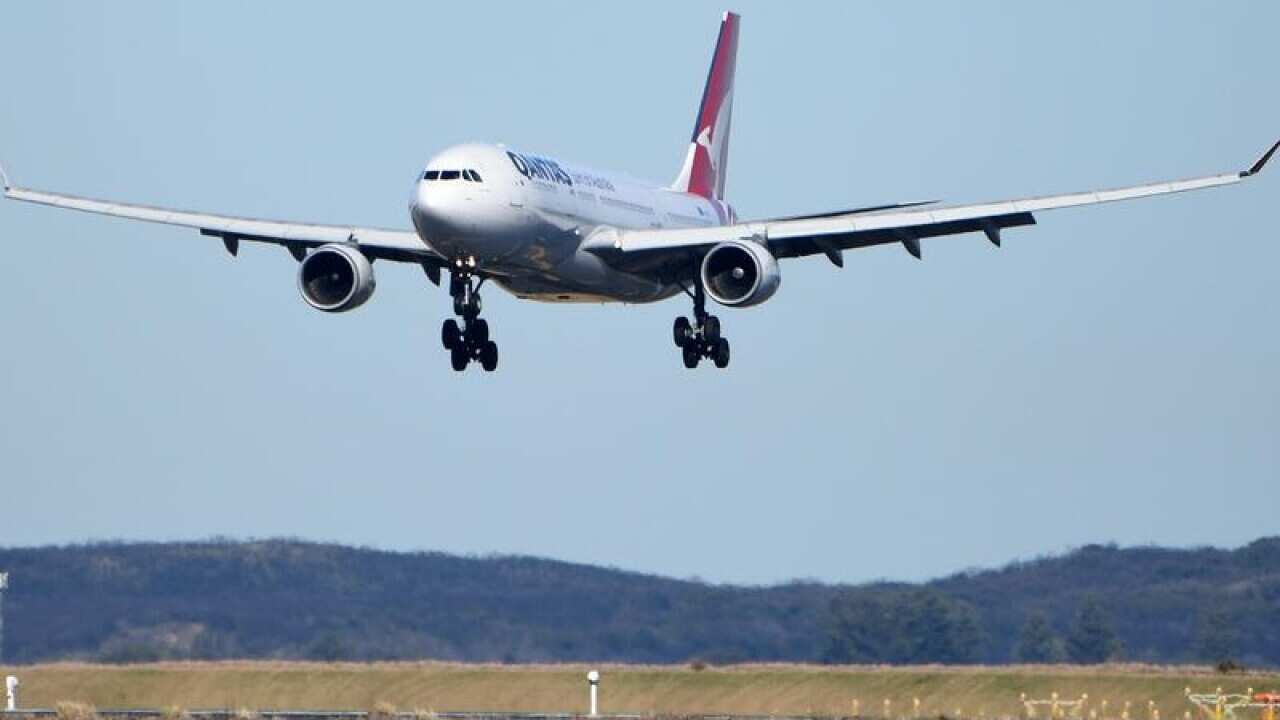
Sydney Airport is changing how planes land on its parallel runways after a safety report found the airport had more than 40 per cent of all "wake turbulence" events recorded Australia-wide.
An Australian Transport Safety Bureau report released on Friday found that 78 of 179 wake turbulence occurrences between 2012 and 2016 were at Sydney Airport.
Planes were more likely to have a missed approach or go-around, or a ground proximity alert or control issues following wake turbulence at Sydney Airport, the report states, while seven of eight minor injuries took place there.
"The investigation concluded there was a disproportionate rate and level of consequence of reported wake turbulence occurrences for aircraft arriving at Sydney Airport compared to other major Australian airports," the bureau's report states.
Wake turbulence is the result of "wake vortices" from a plan ahead combining with an aircraft's jet blast.
News that makes sense
Your trusted source for staying up-to-date with the world around you. Get free daily news updates and analysis, straight to your inbox.
It can affect the following plane in a similar way to flying through weather-related turbulence.
To minimise safety risks, planes are usually separated when taking off and landing by time or distance, but these standards don't apply to planes using Sydney's parallel runways because they're more than 760 metres apart.
But the ATSB says evidence suggests wake turbulence generated by an aircraft arriving on one runway can affect a plane arriving on the parallel runway - especially under certain wind conditions.
Wake turbulence was more likely for planes coming in behind the huge Airbus A380 aircraft.
The issue was linked to arrival densities of more than one aircraft per minute and winds from the west or northwest.
As a result, Airservices Australia is now advising operators using Sydney Airport of the injuries associated with wake turbulence.
It also recommends cabin crew - who normally remain unseated longer than passengers - buckle up earlier when approaching the airport.
Following further prompting from the safety bureau, Airservices will also implement additional safety measures.
It will caution aircraft approaching on a parallel runway of potential wake turbulence, increase certain separation distances and apply single-runway standards to the parallel runway when the leading aircraft is "super heavy" and the following plane is "light".







