

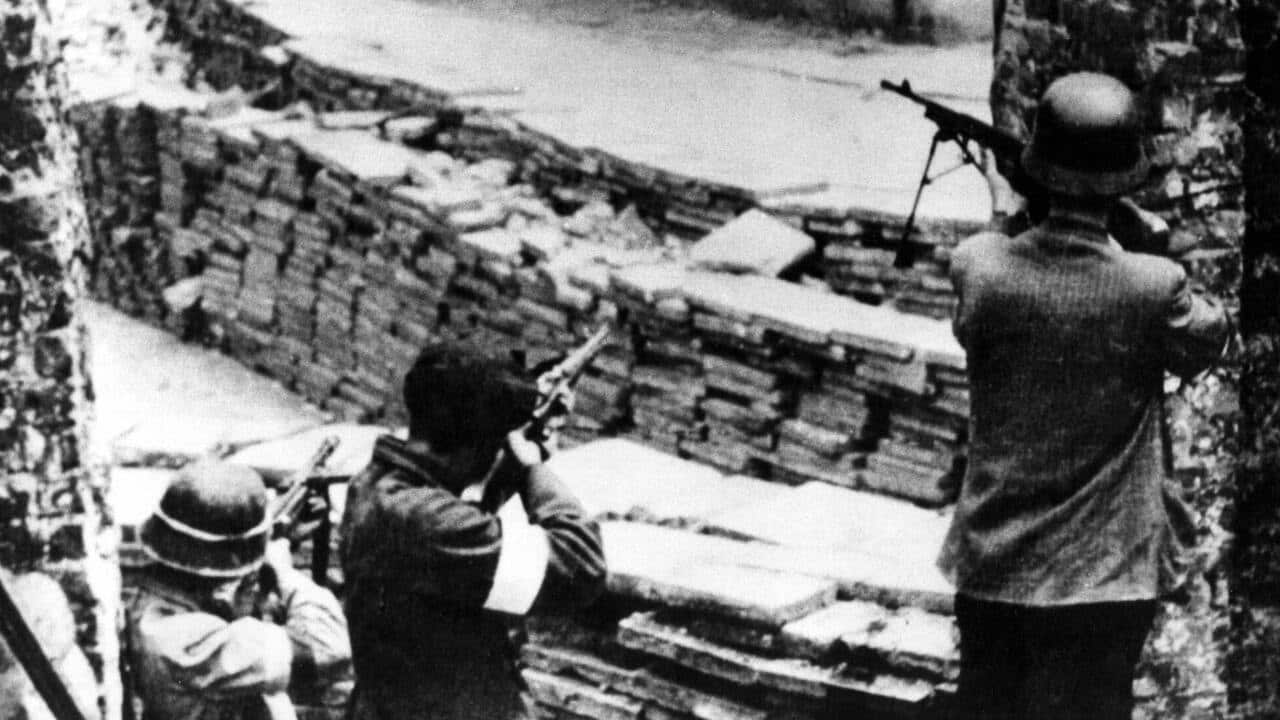
A new film on the 1944 Warsaw uprising has all the blood and gore of a Hollywood thriller but is entirely pieced together from real footage of the doomed anti-Nazi revolt.
The Warsaw Rising docu-fiction, which hit Polish screens on Friday, chronicles the country's 63-day insurrection against its Nazi German occupiers.
The remastered silent footage - enhanced by modern colouring and an audio track - brings to life the World War II rebellion that sparked bloody Nazi reprisals, destroyed much of Warsaw and left 200,000 of its residents dead.
The script revolves around two fictional cameramen, brothers Witold and Karol, who risked their lives to document a city mired in combat.
Their faces are never shown, but their narration guides the viewer through the events of the uprising, starting with the battles, the early victories, the enthusiasm of the insurgents and civilians.
News that makes sense
Your trusted source for staying up-to-date with the world around you. Get free daily news updates and analysis, straight to your inbox.
Then come the setbacks and the revolt's eventual failure, leaving Poland's occupied capital as little more than a smouldering heap of rubble.
The Warsaw uprising was launched by the Home Army on August 1, 1944.
About 50,000 insurgents in the city were secretly mobilised by the London-based Polish government set up in exile after the 1939 Nazi invasion.
Adding in the audio track of battle sounds and dialogue was "one of the great challenges of the film", said Jan Komasa, who penned the storyline.
Police experts pieced together the dialogue by reading the lips of the insurgents, civilians and German soldiers. Actors then dubbed it in.
"In the scene where the residents carry slabs of sidewalk to build or reinforce barricades, our actors actually did the same when recording the dialogue to convey the effort and emotions," Komasa said.
"We didn't just want to record it in a studio."
The insurgents hid the film reels after the war, as the Warsaw uprising was a taboo topic under Stalinist rule.
One of the fighters smuggled some of the 20-hour footage over to the West, but a good chunk of the remaining stash was confiscated and destroyed by the Communist regime.