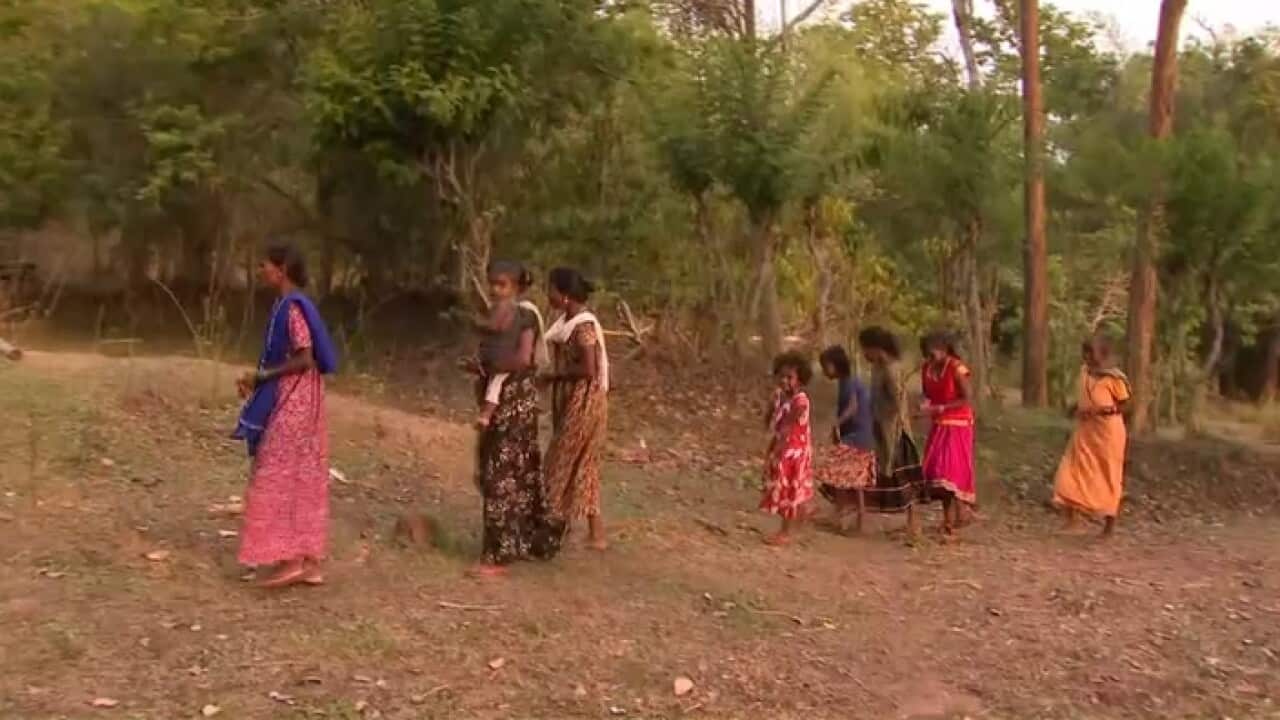
With phase three of voting in India's election underway, the country's adivasi - or tribal groups - have long said they have been ignored by mainstream politics.
Many of Kerala’s tribal communities in Wayanad struggle to get by, and when the floods hit last year, that made a bad situation even worse.
But now, an area no one was talking about is suddenly in the spotlight as a key constituency in the elections.
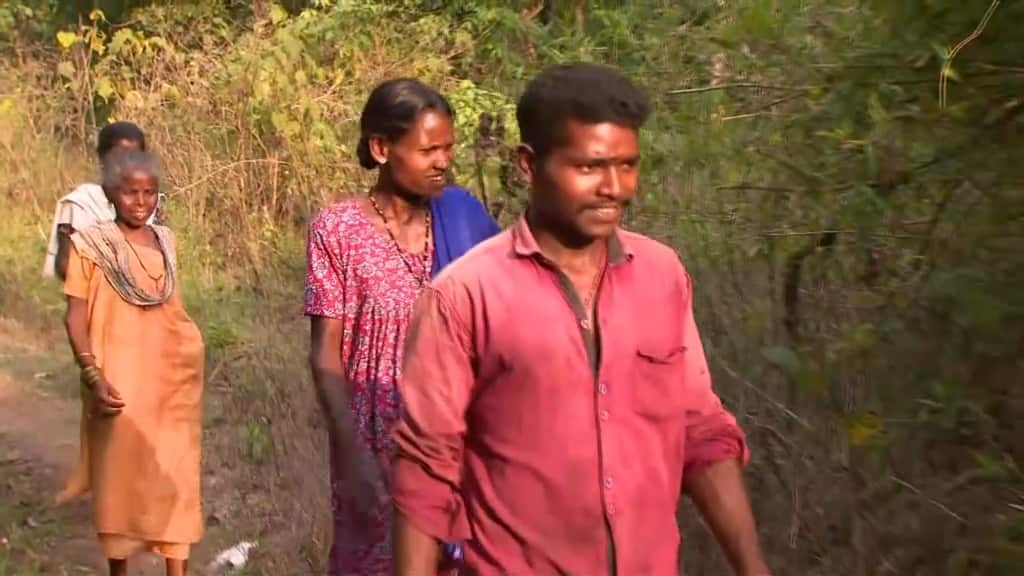
Deep in the forests of Pulpally, a small town in India’s south, the Karttunaykka women and children perform a traditional lullaby.
Their traditions are basically all they have left – their name translates to kings of the jungle – but far from royalty, they hardly have enough to get by.
"We are facing so many problems. We need a government which thinks of our needs," one woman said.
After striking for many decades over their landlessness, this community was finally allowed to stay in these homes within the forest.
But they have to travel kilometres to get water – something that puts them at risk of wild animal attacks.
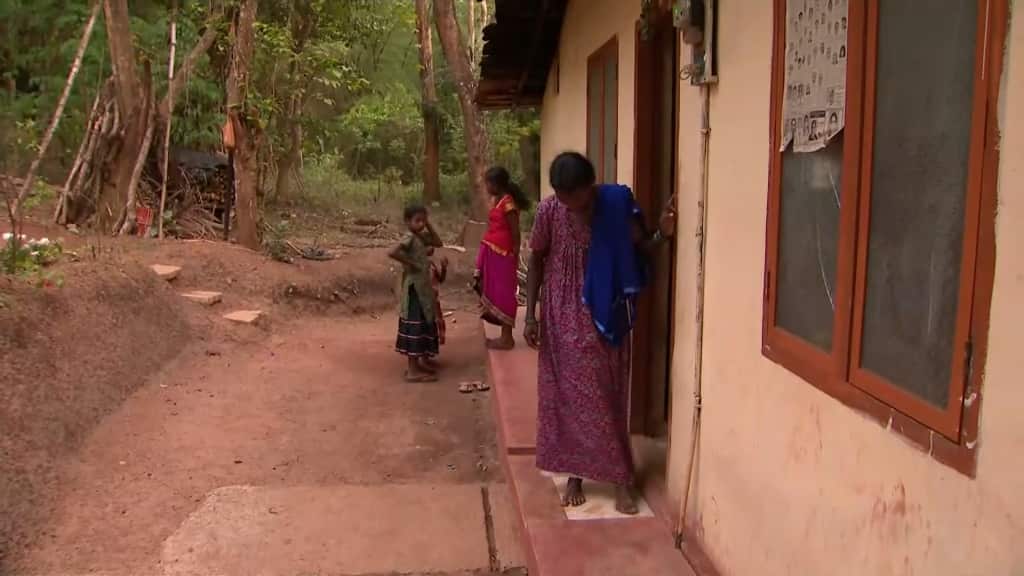
All the women work on farms far from their homes – but their income is not enough to buy food, and they can’t afford to move to an area with more jobs.
"As part of a national rural employment scheme, we get only 10 to 15 days work each month. It’s not enough for us to manage all our household affairs," one woman said.
Wayanad is the homeland of many diverse adivasi or tribal communities. Many have been forcibly evicted from their homelands in the name of environmental protection, to make way for sanctuaries.
They used to be able to make money from their own farming – but attacks by elephants and other wild animals made it impossible to keep doing so.
Living deep in remote parts of the forests – sometimes a deliberate move to avoid being moved on – these communities were among the worst affected by the devastating Kerala floods last year. Rescuers were unable to reach many of the victims.
'Second-class citizens'
"The government sees us as second-class citizens. There is no equality. We need a democratic, secular government," CK Janu said.
Many of Wayanad’s Adivasi communities have been protesting since Independence -over 70 years ago.
Still, most are unemployed and landless – only five per cent own their own land.
More often than not, their demands go ignored.
Some of the tribal communities around Wayanad set up illegal housing in tents around the forests – they are quickly moved on by authorities.
Wayanad itself is a place rarely in the spotlight – but suddenly it is one of the constituencies being keenly watched this election.
Across the city, in the forests, in farms and more – Rahul Gandhi’s face is plastered all over town.
Mr Gandhi is the leader of the Indian National Congress – the main national opposition party this election, and the party which has led India for most of its post-Independence history.
Suddenly, all eyes are on Wayanad – and on the communities which have never had their chance in the spotlight – until now.
"The candidateship of Rahul Gandhi helps as the discussion of our problems is now wider, especially in a national sense," CK Janu said
Indian Prime Minister Narendra Modi ridiculed Mr Gandhi’s decision to contest the elections from Wayanad – he said it is simply appeasement politics…
It’s almost guaranteed Mr Gandhi will win the seat – but for many who follow the situation closely, it’s not about Mr Gandhi himself, but rather the attention he brings with him.
"Because people are coming to Wayanad, they are understanding the issues related to Wayanad," Dr Girjian Gopi said.
Mr Gandhi is contesting the elections from a second constituency – if he wins both, he will have to give one up – and that could spell disappointment for Adivasi communities.





