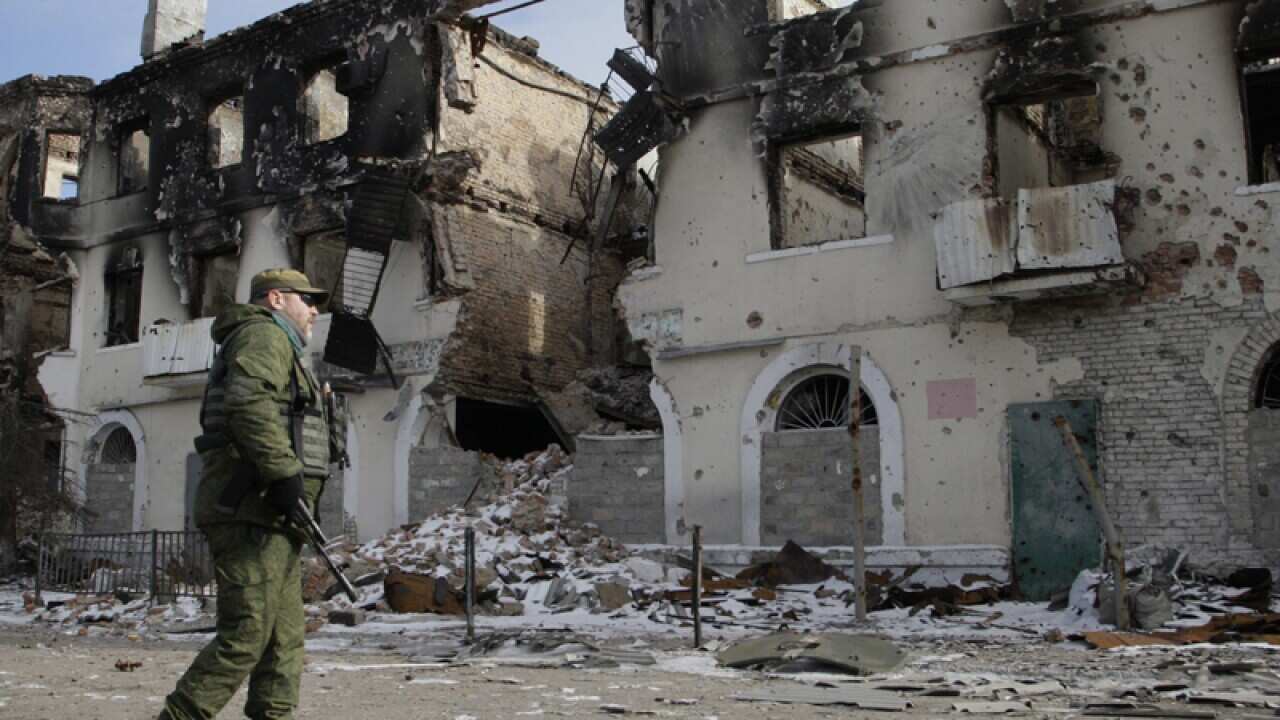
The West has sounded more forceful warnings over Ukraine's battered truce as fighting raged around the port city of Mariupol and the warring sides wrangled over withdrawing heavy weapons.
The volatility was underlined on Sunday by a bomb blast in the eastern Ukraine city of Kharkiv that killed two people during a pro-government march. Security officials said they had arrested four suspects linked to the "terrorist" attack.
Meanwhile, intensifying fighting around Mariupol, on the Avoz Sea, heightened concerns the pro-Russian rebels might be preparing a new offensive after storming the key town of Debaltseve in defiance of a week-old ceasefire.
Ukrainian defence spokesman Andriy Lysenko said "two tank attacks" were reported on Sunday near Mariupol and fighting was ongoing near the city.
Kiev claims Russia has dispatched 20 tanks and other vehicles and big guns to the area.
"An advance on Mariupol would clearly be in breach of the agreements" underpinning the truce brokered by Berlin and Paris, German Foreign Minister Frank-Walter Steinmeier said in an interview with his country's Bild newspaper.
France's European affairs minister Harlem Desir, who was in Kiev for a unity march marking the first anniversary of the overthrow of Ukraine's former pro-Kremlin president, told reporters the ceasefire "must absolutely be respected".
Otherwise, he said, Western sanctions on Russia would be maintained "and could even be strengthened".
EU president Donald Tusk, also in Kiev, said he would "begin consultations on Monday to increase some of the measures in connection with the aggression" in Ukraine, the Interfax-Ukraine news agency reported.
On Saturday, US Secretary of State John Kerry went further, declaring that if the ceasefire continued to be violated, "there will be further consequences including consequences that will place added strains on Russia's already troubled economy".
Moscow denies the accusations it is behind the insurgency. Russia has already been hit by successive rounds of Western sanctions that are savaging its economy, which is headed for recession because of a collapse in oil prices.
Share


