(Transcript from World News Australia Radio)
There are concerns a review of the national curriculum could re-ignite the so-called history wars about Australia's past.
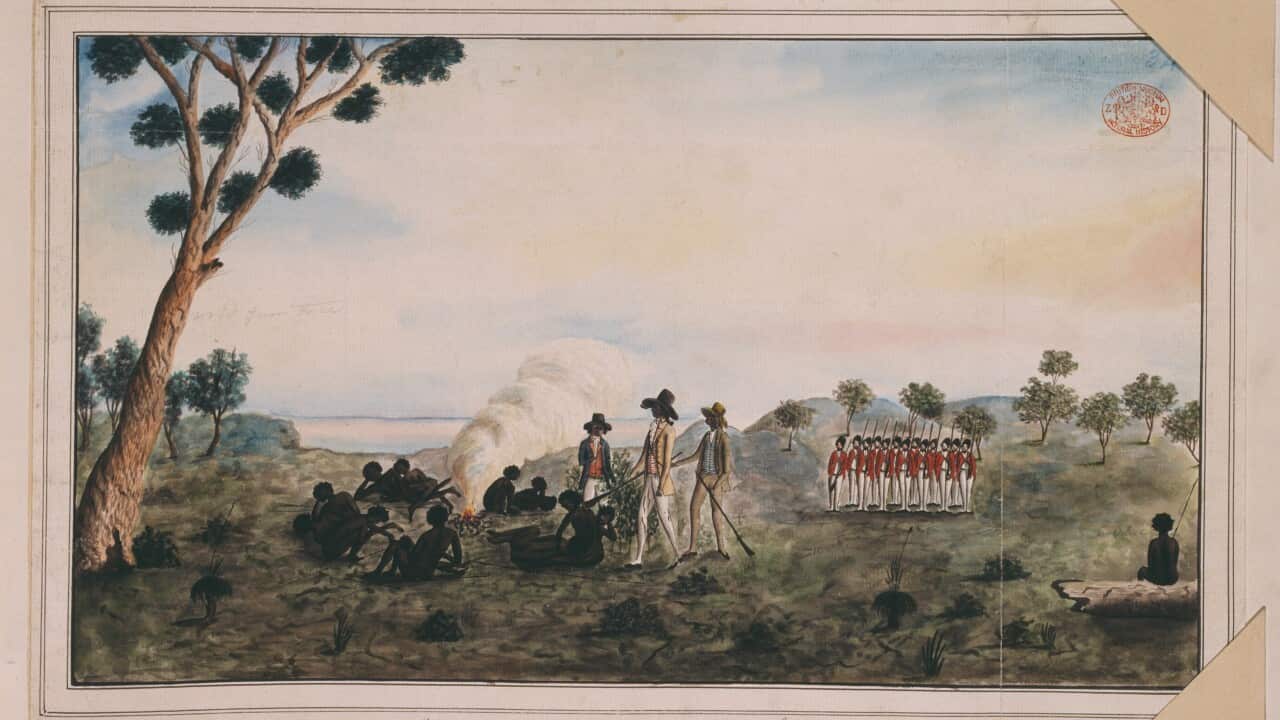
One particular area of contention is how Australian children should be taught about the early interaction - and often conflict - between Indigenous people and European settlers.
Thea Cowie reports.
(Click on audio tab above to listen to this item)
News that makes sense
Your trusted source for staying up-to-date with the world around you. Get free daily news updates and analysis, straight to your inbox.
The current curriculum has been five years in the making, based on 26-thousand submissions, and was signed off by Labor and Coalition jurisdictions.
Federal Education Minister Christopher Pyne says that work is not wasted, but needs to be reviewed - to ensure the curriculum is what he calls robust, independent and balanced.
In particular, Mr Pyne says the review will consider if there's a left-wing bias in the teaching about Indigenous Australians, and the culture of the Europeans who arrived after them.
"There are two aspects to Australia's history that are paramount. The first of course is our Indigenous history, because for thousands of years Indigenous Australians have lived on this continent. The second aspect of our history is our beginnings as a colony and, therefore, our Western civilisation, which is why we are the kind of country we are today. It's very important the truth be told in our history. So, yes, the truth of the way we've treated Indigenous Australians should be told in our curriculum. But also the truth about the benefits of Western civilisation should be taught in our curriculum."
A focus on Aboriginal and Torres Strait Islander histories and cultures is one of three cross-curriculum priorities in the syllabus developed under the previous Labor governments.
The other two are sustainability, and Asia and Australia's engagement with Asia.
But right-wing think tank the Institute of Public Affairs says there's too much focus on Indigenous history, and not enough on democracy, liberalism and freedom.
Spokesman James Paterson says the curriculum was developed to reflect Labor's world-view.
"It's been hijacked in a couple of ways. The previous Labor government selected the kind of people that it wanted to write the kind of history and the kind of curriculum that it wanted. So for example they selected Stewart McIntyre to be one of the lead writers of the curriculum - who's an academic from Melbourne University. Now he's a very particularly strong left-wing view of history. They did it by setting the cross curriculum priorities - the first was Indigenous and Torres Strait Islander history and culture, the second was sustainability and the third was Asian culture and history. Now they are all very good important things to teach but they've been singled out as the three most important things in our whole curriculum."
The Abbott government's review of the national curriculum is being led by two critics of the current curriculum - former teacher and ex-Liberal staffer Kevin Donnelly and University of Queensland Professor Ken Wiltshire.
Cindy Berwick is the president of the New South Wales Aboriginal Education Consultative Group.
She says if anything, there's not enough focus on First Australians in the national curriculum.
"I'm surprised that they actually consider that there's a strong Aboriginal perspective in it. We fought very hard when the national curriculum was actually announced to get any Aboriginal content or history in it. It was a long battle to actually get some recognition for Aboriginal people."
Mr Berwick says she's also surprised the curriculum is being reviewed so soon - given that it's still being rolled out in stages across the country.
Co-ordinator of Indigenous Education and Leadership at Monash University Dr Zane Ma Rhea says schools have changed drastically since the politicians fighting over the curriculum were copying notes from black-boards.
She says even if the curriculum is unbalanced, students these days are unlikely to be manipulated.
"They're quite turned off by dogmatism. I think they're more nuanced than we give them credit for. These political debates seem not to give students credit for the fact that they're very critical in the classroom and they're highly demanding of their teachers. What you're dealing with in a classroom now is kids who are highly information rich and they can go onto the internet and find out this information themselves. They gather the information that they want and they turn it around very very quickly. What a teacher needs to do now is you're not just broadening the amount of information that you're staking into their little heads what you're doing is that you're trying to get them to have some discernment. How you would have critical discernment is you have them exploring a topic from multiple perspectives for example."
Reconciliation Australia CEO Leah Armstrong believes the current curriculum has the balance just right.
She says it would be a terrible step backwards if Indigenous perspectives on clashes with the first European settlers, and the Stolen Generation, were removed from the curriculum.
"We actually have to accept and acknowledge our history before we can move forward in identifying how we can work together and build stronger relationships. So for Reconciliation Australia it's breaking down the ignorance and knowing about the truth so that we don't repeat that history again."
Education Minister Christopher Pyne says he'd like to see curriculum changes implemented in 2015.







