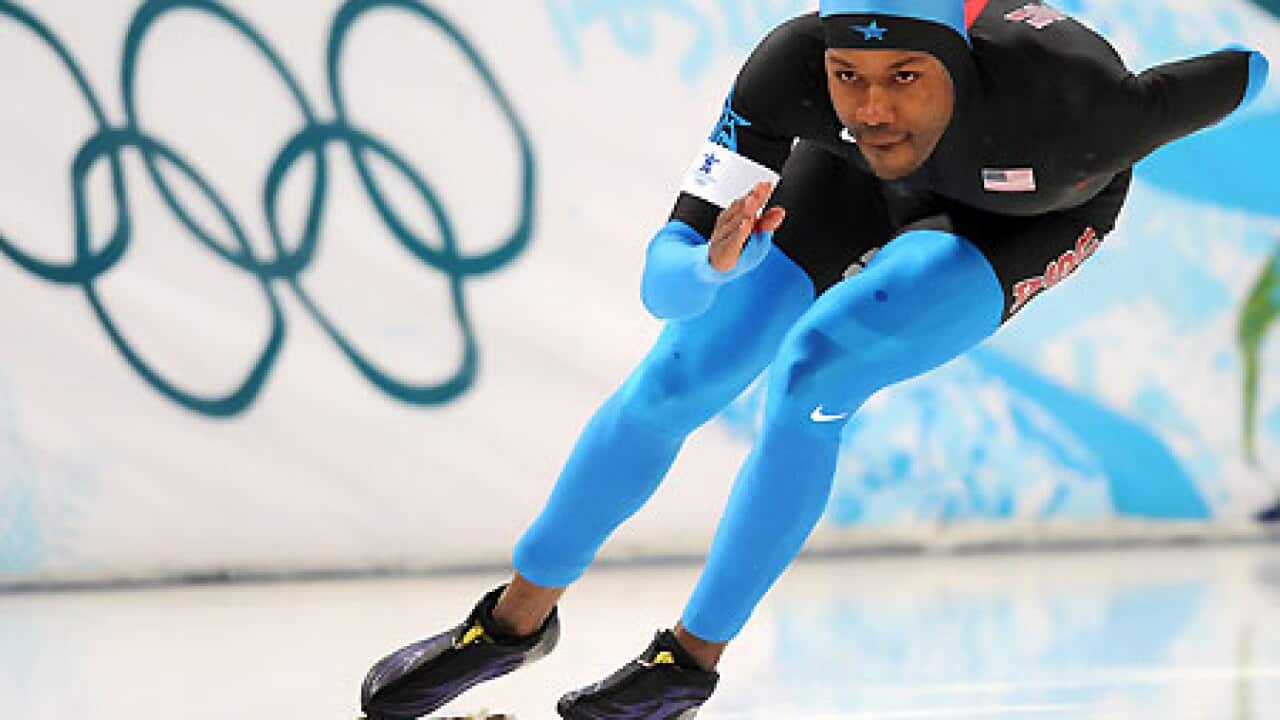
"Is speedskating like track and field, except with ice and skates?"
- Yes and no. There's a 400-metre oval-shaped ice rink but with only two competition lanes of at least four metres width, with skaters crossing between the inner and outer lanes during races. There are safety pads at the ends in case skaters slip and slide off course.
Skaters compete in pairs and against the clock. Fastest still wins. Just not with heats trimming the field until the final.
News that makes sense
Your trusted source for staying up-to-date with the world around you. Get free daily news updates and analysis, straight to your inbox.
"That makes the start crucial, doesn't it?"
- Yes. The starter has a microphone with speakers at the line. He says, "Go to the start," and skaters enter the two-metre area behind the line. Each takes a stable position and the starter says, "Ready." That's when they take their start positions and stay in them until the starting shot is fired, which is supposed to be between 1.0 and 1.5 seconds later. Woe to those who mess with the pattern by not getting stable or taking too long to fire the gun.
"How do false starts work?"
- If one skater goes before the gun, breaks his mark too early causing the other to follow or is slow to take a starting position. A second shot and red flag stop signal are used to halt the heat. One false start is a warning. Two and you are disqualified.
"What are the events?"
- Men and women each skate 500, 1,000, 1,500 and 5,000 metres plus the team pursuit. Women also have a 3,000 metres and men also have a 10,000 metres.
"When did this become a sport?"
- According to the International Skating Union, the first modern competition came in 1863 in Norway and the first major international race was in Hamburg in 1885. The first world championships were in Amsterdam in 1889.
Speedskating was part of the 1924 inaugural Winter Olympics at Chamonix, France, at least for men. Women speedskaters had to wait until 1936 for worlds and 1960 for the Olympics.
"How do they decide in what order to skate?"
- Generally it's fastest last within groups by lot. The top eight qualifiers based on times from such things as the World Cup events are placed in the last four groups, so expect the podium standers to come from there no matter how many heats there are. Then come the next eight divded by lot over four heats and so forth. In longest races, women's 5,000 and men's 10,000, it's fastest four in last two groups.
"What happens if somebody wipes out the other skater or they collide at the crossing?"
- Bad things. Generally at the transition area, the skater going from inner to outer should not hinder the one coming from outer to inner. The skater leaving the inner lane is responsible unless the rival is trying to obstruct. Note they do not change at the first straight in 1,000 and 1,500.
They do have re-runs after 30 minutes rest for those who are wiped out through no fault of their own.
"What's the difference between this sport and short-track speedskating?"
- It's like five-day Test cricket and the one-day version or rugby sevens and rugby union or beach volleyball and sepak takraw. Change the subject and back away quickly.







