This audio is voiced by AI and may occasionally mispronounce words.
Share your feedback and help us improve this feature. Read more about how we use AI at SBS here.
Mohamed Zeed watches the sun dip below the horizon, signalling iftar — the breaking of the fast. It's a quiet moment of introspection for the sailor, standing at the stern of a busy ship, with an unobstructed view of the Indian Ocean.
For much of his adult life, Zeed has spent the holy month of Ramadan away from his family home in Melbourne.
Seven Ramadans have been aboard a naval ship, where the days aren't marked by familiar rhythms.
To observe five obligatory prayers each day, he relies on the Officer of the Watch, who charts time by "astronomy and calculating when the sun is at a particular time", asking: "When's first light, when's sunrise, when's the middle of the day?"
He also relies on officers to help him locate Mecca, the holiest city in Islam, so he can face it while in prayer.
News that makes sense
Your trusted source for staying up-to-date with the world around you. Get free daily news updates and analysis, straight to your inbox.
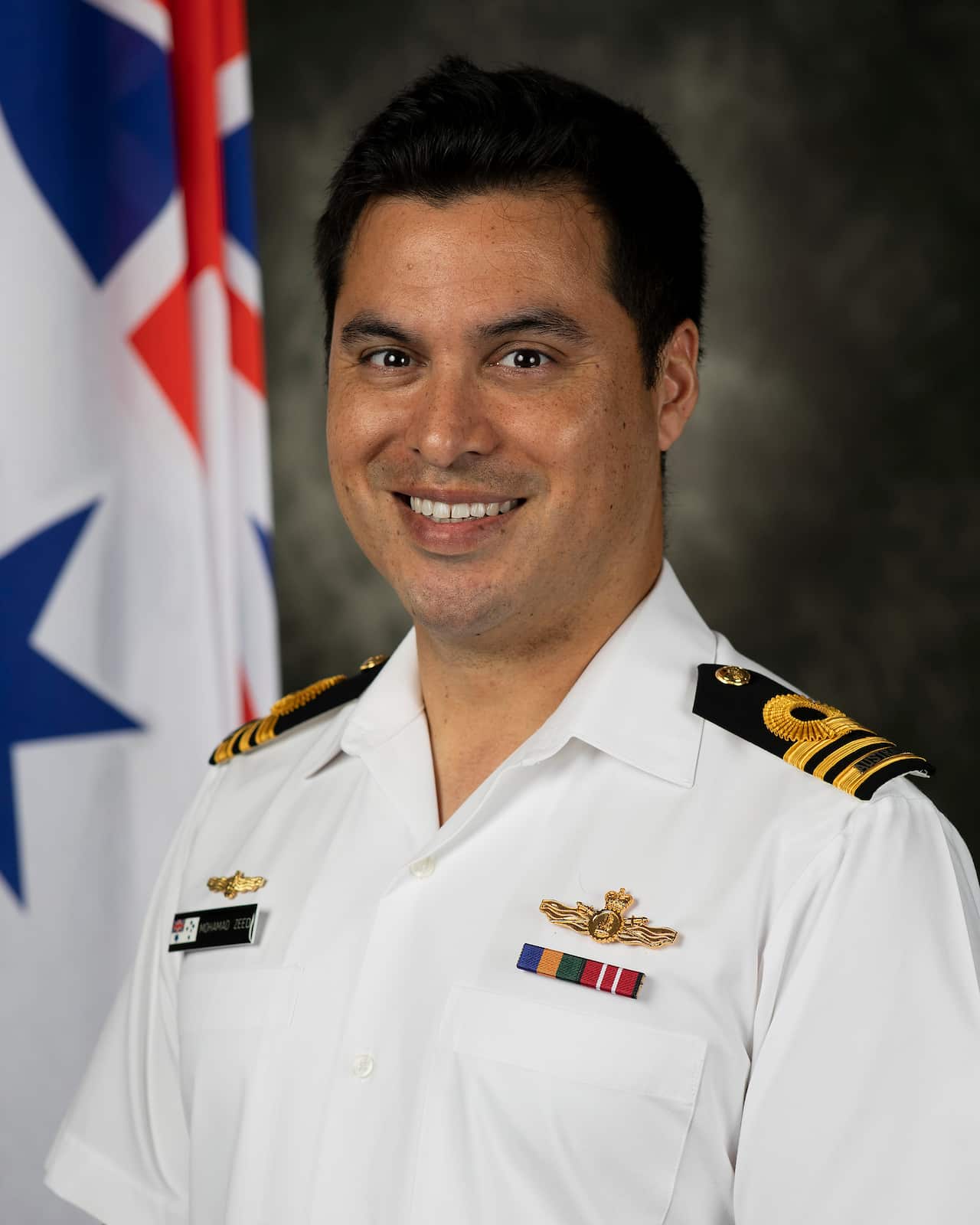
Zeed is a marine engineering officer in the Royal Australian Navy, responsible for all the mechanisms that power a ship.
"From the hull of the ship, to the engines, to the fuel, to making water — anything that makes the ship float, stay warm."
He is one of three Muslim Australians SBS News has spoken with ahead of Ramadan about how they juggle work in high-stakes environments during the holy month.
The 38-year-old says Ramadan is about "a sense of community" — something "you really miss at sea".
Over his 16-year career in the navy, he has never encountered another Muslim.
"The connections that you make with the Muslim community; that's one thing I really miss," Zeed says, describing being isolated from the traditions of breaking fast with others, and the familiar dishes of his Egyptian and Indonesian heritage.
"Foul [mashed fava beans] in the morning … that would take you right through the day."
On board, there is no such abundance to sustain his daytime fasting during the holy month.
"You fall into what the ship eats," he says.
After months at sea, meals shift from fresh produce and meats to "the fried stuff" — whatever can last in the ship's stores.
Still, Ramadan aboard a naval vessel creates its own kind of traditions.
"I usually have one or two sailors that would join me and would adhere to Ramadan for one or two days," he says.
It's really rewarding when you can see that you're making a personal impact on them.
This year, for the first time in his naval career, Zeed will spend Ramadan with his family. He recently married and now has a newborn baby.
"For me, it's always about reconnecting with my religion … and no matter where I am, I'm always trying to be a better Muslim — to myself, and to the people in the community that I interact with," he says.
The body adapts: Fasting safely while working
Ramadan involves abstaining from food and water — a fast known as Sawm — from dawn until sunset, for a full month in the Islamic calendar.
This year, it will be observed from the evening of 18 February to 19 March, which aligns with the first sighting of a crescent moon.
Each day begins with a pre-dawn meal called suhoor and ends with iftar — a meal traditionally started with dates and water before a larger, communal feast.
For those working in unpredictable environments, such as Zeed, the ritual fasting of Ramadan can be a challenge.
But Ella Ayoub, a senior dietitian at Amplar Health, says the physical effects of fasting across a Ramadan day are "normal and predictable metabolic shifts".
"The body will use up the glucose from that last meal as its main energy source throughout the day," she says, explaining that when suhoor includes slow-digesting carbohydrates, protein, and fats, blood sugar levels "tend to remain quite stable".
Hydration is often the more significant challenge, Ayoub says.
"Without fluid intake during daylight hours, dehydration can occur … especially when it's this hot or even just warm weather, but also with physical exertion."
"This can contribute to things like headaches, fatigue, reduced concentration … [but for] healthy adults, it is manageable with good hydration practices outside of fasting hours."
Ayoub says many misconceptions persist about Ramadan and work.
"Healthy adults can fast safely while continuing to do daily activities, including work and moderate exercise," she says, while noting that those with medical conditions such as type 2 diabetes should consult a doctor before starting.
Many Western wellness trends — intermittent fasting, time-restricted eating, metabolic reset diets — mirror practices that have long existed in religious fasting traditions.
"The key difference is intention: Ramadan fasting isn't just about physical health, it's about discipline, reflection and spirituality."
Where new life arrives: A midwife's Ramadan
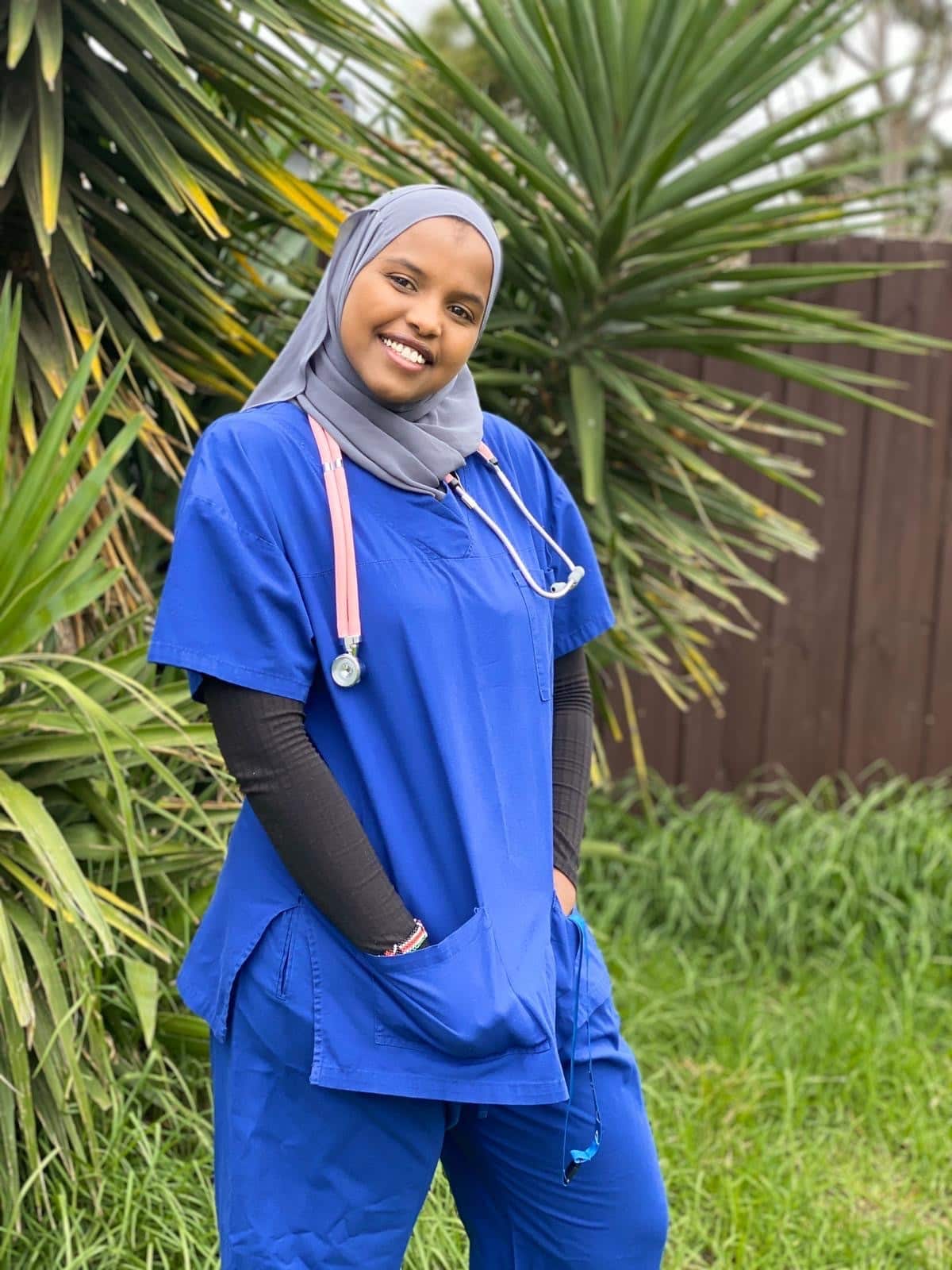
Fatumo Elmi is a registered nurse and midwife in Melbourne.
Born in Kenya to Somali parents, she came to Australia with her father as a child, carrying an early grief that quietly shaped her path: her mother died while pregnant with twins when she was just six years old.
The life of a midwife, she says, is intense and intimate — marked by long hours of shift-work attentively spent beside women as they labour.
"You're allocated to a specific room and a specific woman, and you basically look after that woman through the whole labour care, from start to end," Elmi says.
A shift can stretch 10 hours, spent monitoring pain and trying to honour a birth plan while knowing "you can't predict what can happen".
Some days, she says, there are few breaks at all.
Her ward is constantly moving; a steady tide of new lives arriving on waves of exhaustion and adrenaline. Over the past two years, the hospital has delivered more than 5,000 babies — 35 of them personally by Elmi.
During Ramadan, the pace does not ease.
"The first week … it's a bit challenging," she admits.
You're going to feel hungry; you're going to feel thirsty a lot.
But she has learned how to steady herself by turning her attention outward.
"Rather than hindering my work, the discipline of Ramadan enhances my commitment to providing calm and compassionate care to women and families," she says.
And sometimes, in the minutes before sunset, kindness arrives.
"Hey, breaking the fast is like five minutes," she recalls a colleague telling her. "Go and break your fast while I look after the patient."
At home, Ramadan is loud with family. Elmi is one of 14 siblings; all but one are in Melbourne. They gather in different houses, cooking together, waiting for iftar.
"It doesn't feel like Ramadan if we don't have … sambusa," she says, referring to a traditional Somali deep-fried pastry.
"We kind of just cook as much as we can, and we just eat and break our fast together."
Fasting in the red furnace: Ramadan on the mine site
Nabil Omar is a leading hand scaffolder from Perth. His Lebanese family has been in Australia for several generations, and he comes from a long lineage of tradesmen.
He describes working on remote mine sites as a family tradition, of sorts — though it keeps him far from home for long stretches.
For the last six Ramadans, Omar has been on FIFO mining contracts, moving between shutdowns and projects across remote parts of Western Australia.
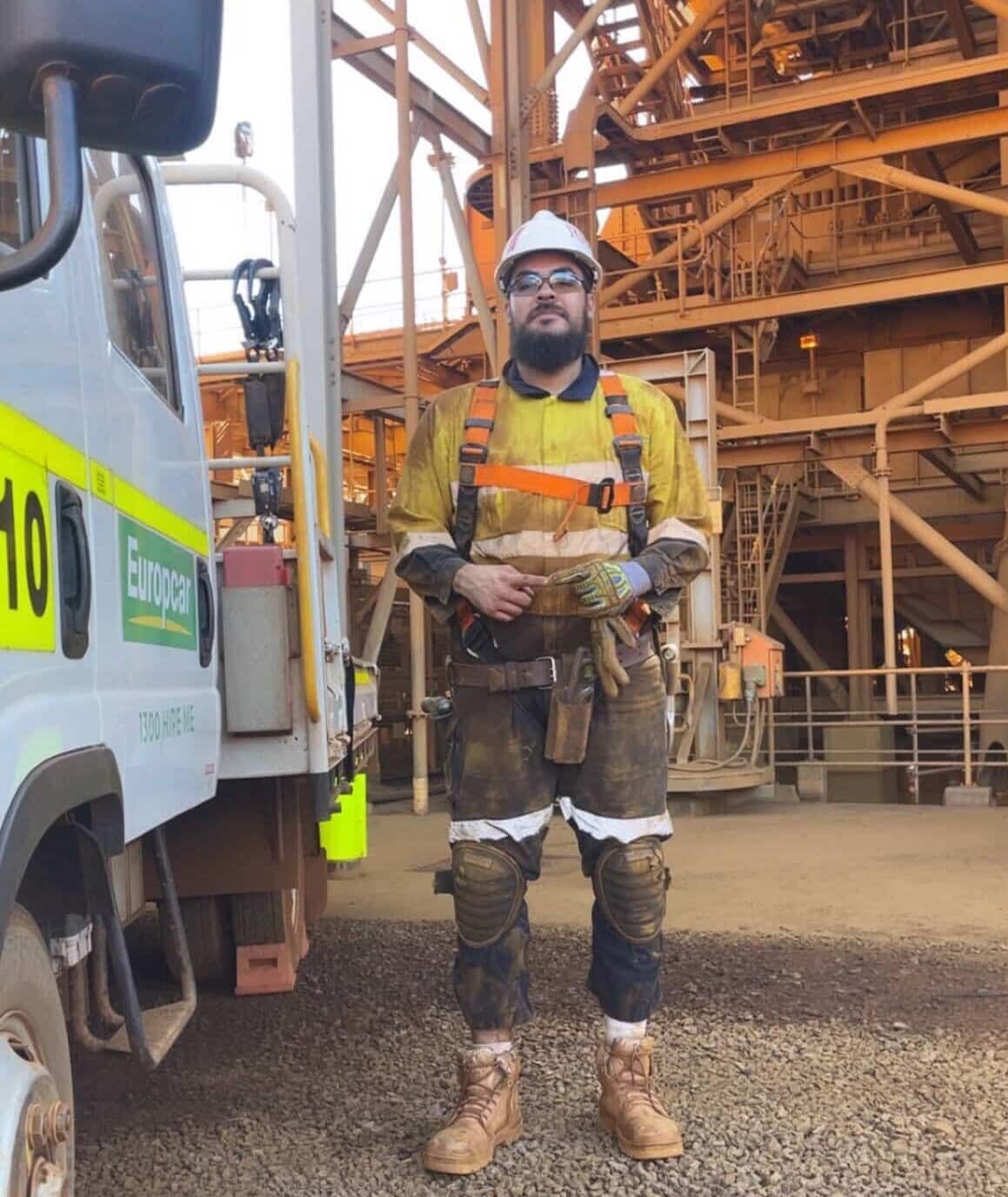
On site, his day shift begins during suhoor. Even at 5.30am, temperatures in WA's red desert sit close to 30C, and quickly escalate beyond 40C as daylight arrives.
Omar's work includes building machinery access points — a process that involves assembling heavy steel in confined spaces, inside chutes or underground.
"You start to feel it," he says, watching co-workers "smashing down water" while he can't drink.
Some days, the dizziness comes sharply: "You can even feel like passing out."
There's no lying down … you have to push yourself to get through.
On night shift, fasting doesn't always end neatly at sunset. Sometimes, Omar misses iftar by "an hour or two", simply because a scheduled smoke break fails to align.
In small ways, some sites try to make space for observance: a prayer room set aside from the clanging of machinery, a few woven mats, a tiny sink for wudu (ritual purification).
"It is a nice feeling to know … they're being inclusive," Omar says.
Still, Ramadan on site can feel solitary. "You are still quite isolated," he says. "It is rare that you get … four, five other Muslims" on a job.
He returns often to the perspective the month demands, thinking of "kids in Palestine, Gaza, Sudan … who haven't had food or water for days", and reminding himself that his situation is "not as bad as others".
"It's a conscious sacrifice we choose to make during Ramadan. It's part of the discipline and personal commitment involved, even in environments where the conditions are extreme."
Each year, Ramadan returns as "a good reset", he says — even far from the family table where his mother would "cook up a storm".
For the latest from SBS News, download our app and subscribe to our newsletter.







