In brief
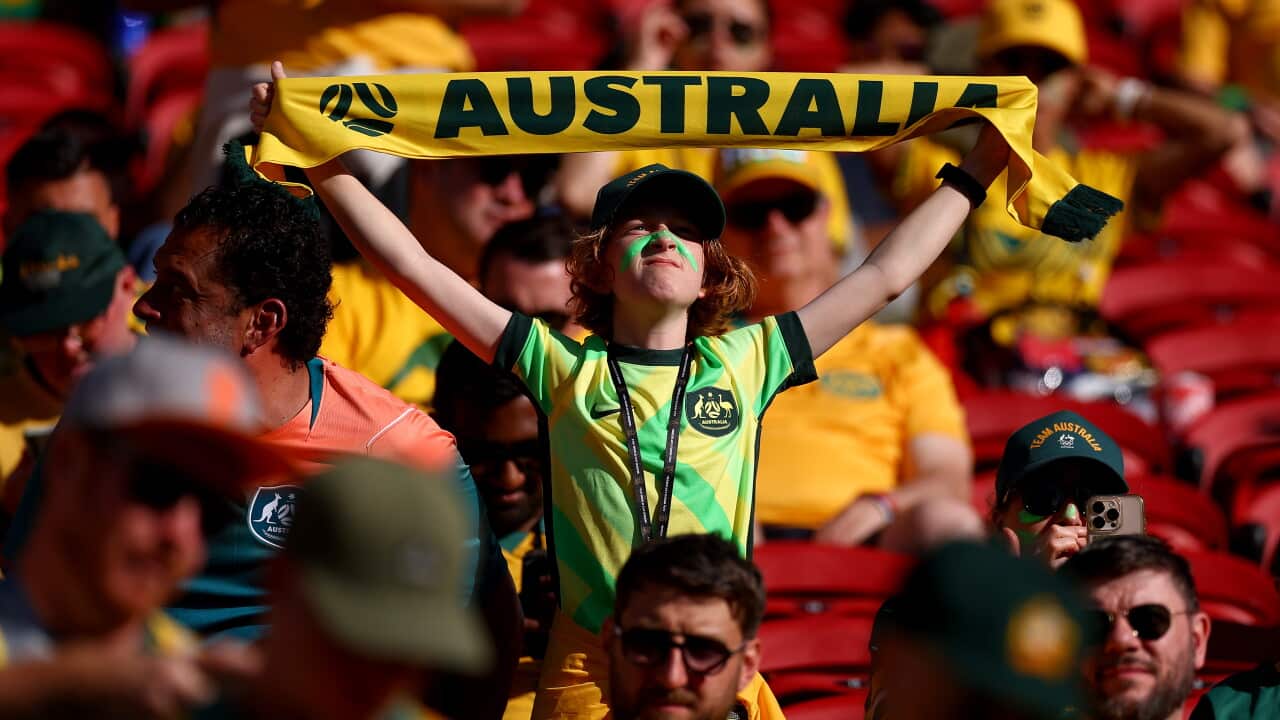
- Football fever is sweeping Australia, but a men's World Cup on home soil remains a distant prospect.
- Experts say cost, infrastructure and political appetite remain major hurdles to a future bid.
This year's FIFA World Cup is proving to be a hit.
A record number of Australians have tuned in to get behind the Socceroos, while football fever has swept across North America, producing plenty of viral fan moments and fairy-tale stories, showing once again why the tournament remains the world's premier sporting event.
In the lead-up to the tournament, there were concerns about soaring ticket prices, geopolitical tensions and security issues, but much of that noise has faded into the background.
"Like any World Cup, as soon as the football starts, it takes over," Monash University sport lecturer Tom Heenan told SBS News.
For Australia, a sport-obsessed nation, it raises the question: Will we ever host a men's FIFA World Cup?
News that makes sense
Your trusted source for staying up-to-date with the world around you. Get free daily news updates and analysis, straight to your inbox.
Unfortunately, the answer is probably not anytime soon.
Australia has hosted a World Cup before — the 2023 Women's World Cup, which it co-hosted with New Zealand. The tournament was a resounding success, elevating women's sport and showcasing Australia's credentials as a World Cup host.
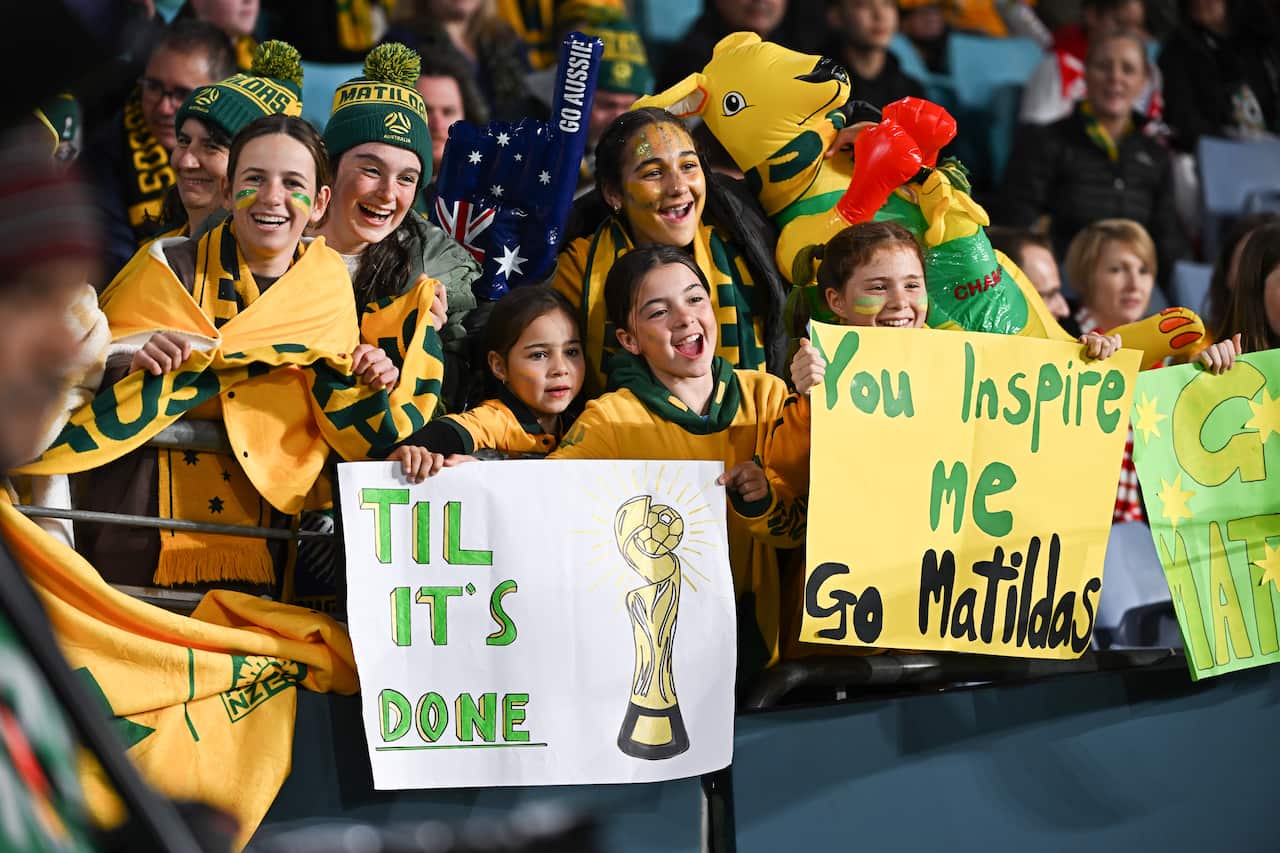
The Matildas' semi-final against England drew an average television audience of 7.13 million viewers, while 11.15 million people tuned in at one point during the match, making it the most-watched television broadcast in Australian history.
But there are several reasons why Australia is unlikely to host the men's tournament in the near future.
For starters, the next two hosts of the men's World Cup have already been chosen.
The 2030 tournament — the event's 100th anniversary — will be held across three continents. Uruguay, Argentina and Paraguay will host the opening matches before the tournament moves to Spain, Portugal and Morocco for the remainder of the competition.
The 2034 World Cup will then be staged in Saudi Arabia, marking a return to the Middle East and the Asian Football Confederation (AFC), following Qatar 2022.
- All the FIFA World Cup 2026 coverage on our World Cup page
- How to watch the FIFA World Cup 2026 on SBS
- Watch all 104 matches of the FIFA World Cup 2026 at our On Demand hub
- How to favourite your FIFA World Cup 2026 team and never miss a single moment of the action
That creates an obstacle for Australia.
Under FIFA's confederation rotation principle, the AFC — of which Australia is a part — could be ineligible to host until at least 2046, although FIFA has not formally confirmed the bidding rules beyond 2034.
With hosts typically chosen seven to 10 years before the tournament, it is far too early to know whether Australia will bid for 2046 or an earlier edition if FIFA changes the rules.
But there's several hurdles in the way before Australia would consider another bid.
Political appetite has cooled
Australia's most recent experience bidding for the men's World Cup left a bitter taste, likely cooling political appetite for another attempt.
The country's $46 million taxpayer-funded bid for the 2022 tournament was widely viewed as a disaster after it received just a single vote when FIFA controversially awarded hosting rights to Qatar in 2010.
Five years later, investigations by the US Department of Justice and the FBI exposed widespread corruption within FIFA, leading to dozens of convictions, including officials involved in the 2022 selection process, and the resignation of then-president Sepp Blatter.
The selection of Qatar came under intense scrutiny during those investigations, although it was ultimately cleared of wrongdoing.
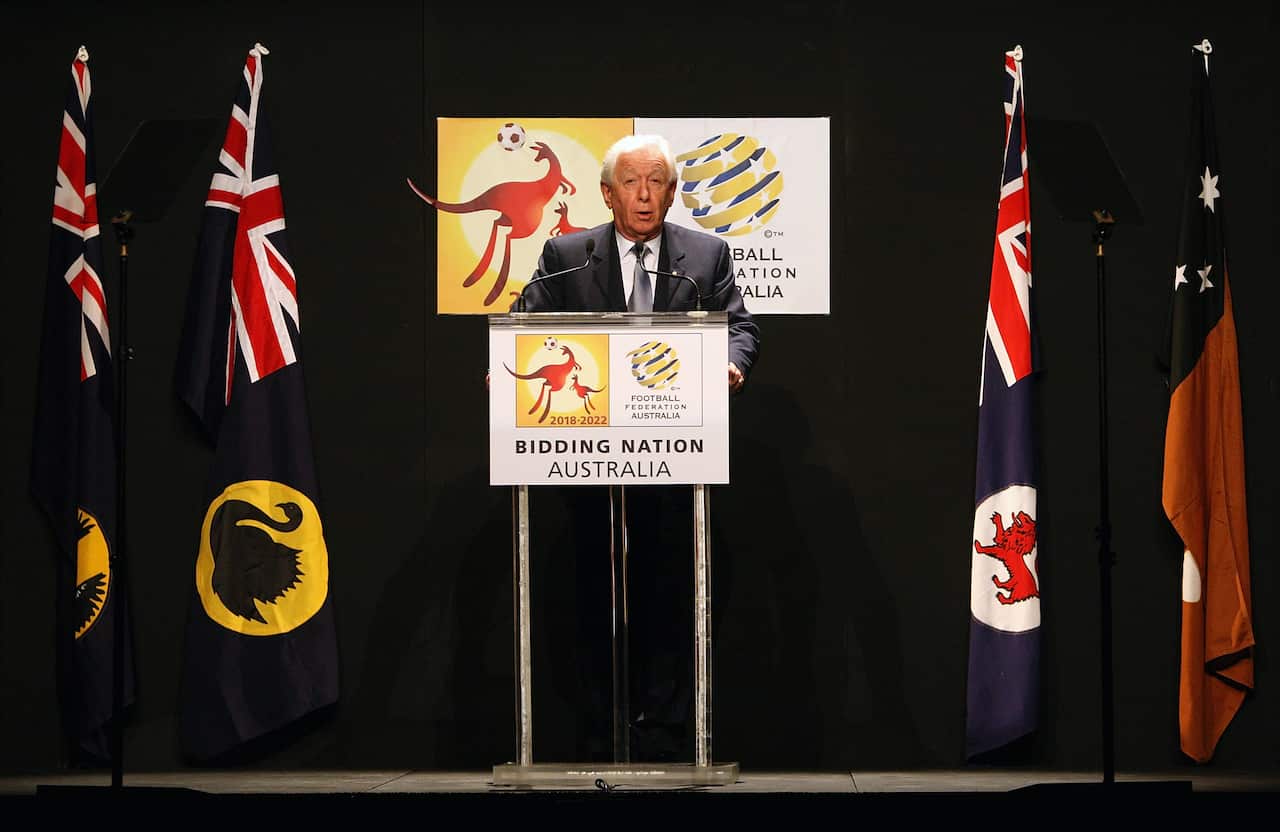
When the corruption scandal emerged, independent Senator Nick Xenophon said Australia had been "treated like a mug" and deserved a refund over its 2022 bid.
Then Football Federation Australia chief Frank Lowy said Australia ran a "clean bid" but wasn't on "a level playing field".
"I will always be bitterly disappointed about the outcome," he said.
FIFA later introduced governance reforms, including greater financial transparency and independent oversight.
Even so, the scandal left a long shadow, and Heenan urged the federal government to be cautious about any future bid.
"I can't see that FIFA has made any real reforms [since then]," he said.
The cost of hosting
Then there is the price tag.
According to Reuters, Qatar spent about US$229 billion (around $333 billion) on infrastructure upgrades in the 11 years leading up to the tournament, including a new rail network, airport expansion and seven new stadiums.
Australia would not need to spend anything close to that amount, but significant investment would still be required.
FIFA requires stadiums with capacities of at least 40,000 for group matches, 60,000 for semi-finals and 80,000 for the final.
With the tournament now expanded to 48 teams and 104 matches, FIFA requires 14 stadiums capable of hosting games, while only 11 stadiums in Australia meet the capacity requirements.
Many of Australia's largest stadiums are also oval-shaped venues primarily used for AFL, while FIFA generally prefers rectangular football stadiums.
"The major grounds in the south of the country are not made for a World Cup and would need major renovations," Heenan said.
"This creates the problem … how are you going to fill those stadiums in the future?
"[You risk] having white elephants."
The AFL and NRL factor
World Cups are usually played in the northern hemisphere summer — our winter — and this would put a tournament here in direct competition with Australia's dominant winter competitions — the AFL, NRL and Super Rugby.
"You're going to have pushbacks from the major codes," Heenan said, noting former AFL chief Andrew Demetriou in 2010 said the league would "not accept second place for Australian football".
A more realistic option may be a joint bid. New Zealand, Indonesia and Singapore have been floated as potential partners.
Co-hosting would spread costs and reflect FIFA's recent preference for multi-nation tournaments, with both the 2026 and 2030 World Cups being shared across multiple countries.
In 2023, the Indonesian football association expressed interest in a joint bid with Australia for the 2034 tournament, though a bid was never made, paving the way for Saudi Arabia to become the sole bidder.
The time zone problem
Australia's location presents another challenge.
Matches played in Australia would be at unfavourable times for audiences in Europe and South America, which remain two of FIFA's most valuable television markets.
Fewer viewers can mean less lucrative broadcast revenues, something FIFA considers when choosing a host.
Former FIFA president Sepp Blatter was quoted as saying Australia's 2022 bid "had no chance" because of its time zone, according to former Football Federation Australia executive Bonita Mersiades' book Whatever It Takes: The Inside Story of the FIFA Way.
But Australia's position could become an advantage if FIFA prioritises growth in Asia.
"If the major television audiences become China and Japan, Australia is in the right region," Heenan said.
Regardless, as the Matildas showed in 2023 and the Socceroos have again this year, the World Cup offers something money can’t buy.
Heenan said he believed a future Australian World Cup would bring the country together.
"I suspect the benefits would be the promotion of social cohesion," he said.
"The Australian soccer team is far more representative of contemporary Australian society and culture than any other sporting team in the country.
"This would be the one event that would bring it all together, because of what it reflects about the world, about societies like the US and Australia that have been based on migration."
Dr Steve Georgakis, a senior lecturer in sport at the University of Sydney, said sport is part of Australia's cultural makeup, meaning there will always be an appetite to host events.
"Clearly, there is an atmosphere in our Australian society that, yes, we should invest in mega sporting events," he told SBS News.
"But no, we shouldn't do it at any other cost."
You can watch all 104 matches of the FIFA World Cup 2026™ live, free and exclusive on SBS, SBS VICELAND and SBS On Demand.
For the latest from SBS News, download our app and subscribe to our newsletter.







