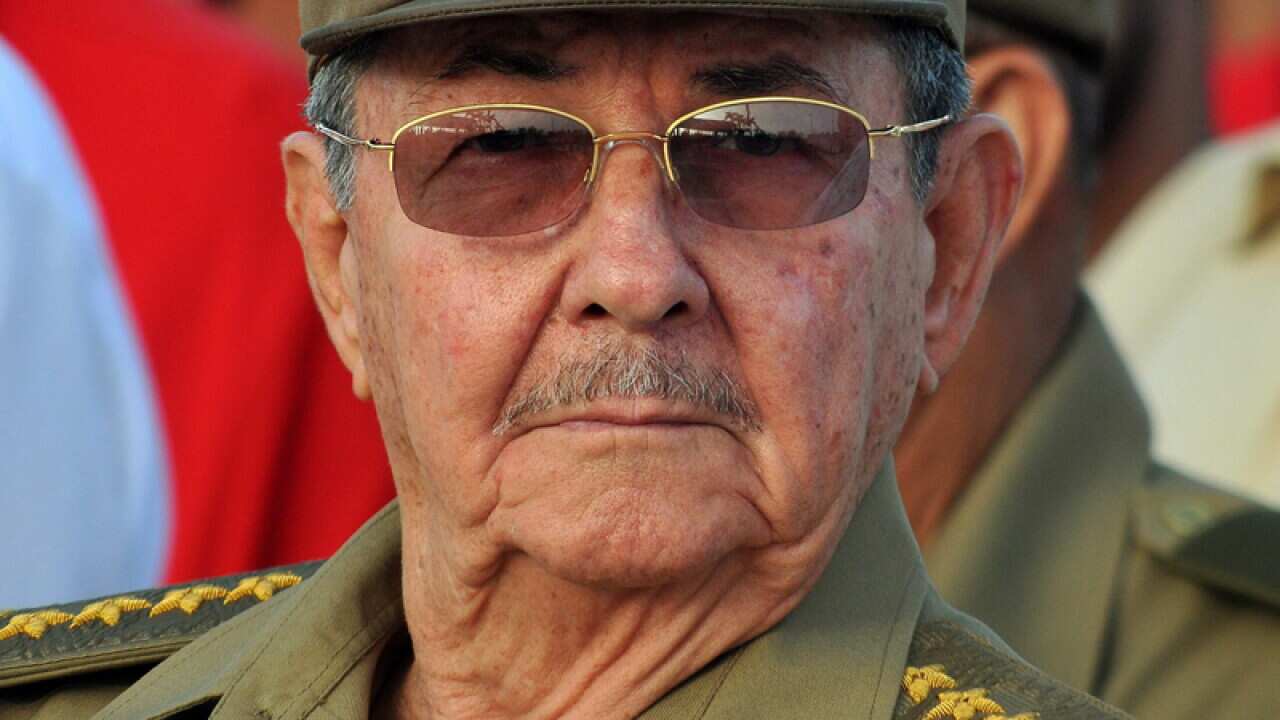
A US visit by Cuban President Raul Castro is not out of the question, the White House says a day after he and US President Barack Obama announced a historic bilateral rapprochement.
With developments proceeding apace, a high-level US diplomat, Assistant Secretary of State Roberta Jacobson, revealed she will travel to Havana in late January for the first direct talks to "begin the process of restoration of diplomatic relations."
But amid celebrations on Havana's streets and plaudits ringing out from China to Chile over the prospects of burying a final vestige of the Cold War, American lawmakers smothered prospects of any rapid roll-back of the trade embargo at the heart of the dispute.
Obama, who said Washington will move to "end an outdated approach that for decades has failed to advance our interests," on Wednesday raised the previously unthinkable possibility of his visiting the island.
When reporters on Thursday broached the subject of a Castro visit to the United States, White House spokesman Josh Earnest said: "I wouldn't rule out a visit from President Castro."
News that makes sense
Your trusted source for staying up-to-date with the world around you. Get free daily news updates and analysis, straight to your inbox.
Earnest cited Obama's trips to China and Myanmar (Burma), and the visits by those nations' leaders to Washington, to argue that engaging with such figures "can actually serve as a useful way to shine a spotlight on the shortcomings of other country's records as it relates to human rights."
Experts agree that, in addition to government agencies signing off on rolling back the embargo, congressional legislation would be needed to repeal laws like the Helms-Burton Act of 1996, which tightened prohibitions on US trade with Cuba.
Obama said he would urge Congress to lift the embargo imposed in 1960, while using his presidential authority to advance diplomatic and travel links and ease restrictions on finance.
But the Republicans take full control of Congress in January and, with anger still pulsing over Obama's unilateral immigration action last month, a swift repeal of the embargo is unlikely.
The US embassy in Havana was closed in 1961, two years after rebels led by Fidel Castro ousted president Fulgencio Batista, although a large US interests section still operates.
Funding to re-open an embassy in Havana would require congressional appropriation.
The Cuba breakthrough came after Havana released jailed US contractor Alan Gross and a Cuban who had been held for 20 years for spying for Washington.
Havana also agreed to release 53 political prisoners.
The United States in turn freed three Cuban spies, and Obama said he had instructed the State Department to re-examine its designation of Cuba as a state sponsor of terrorism.







