(Transcript from World News Radio)
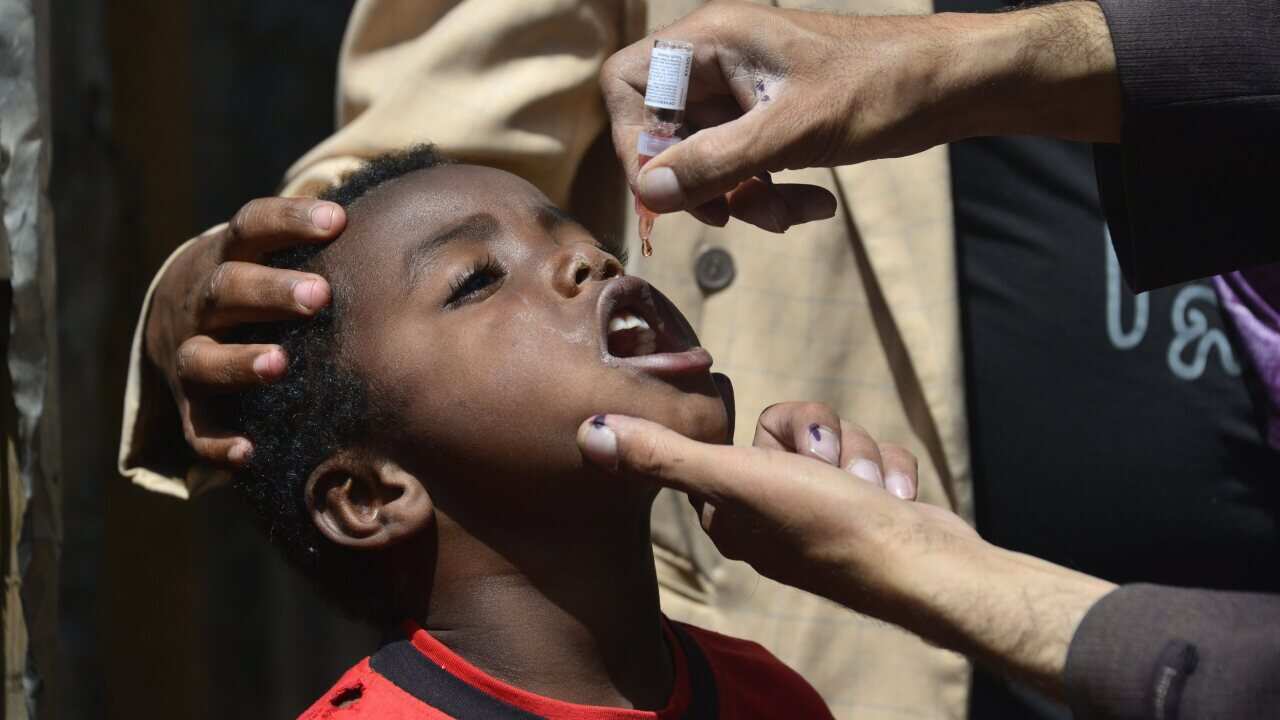
The World Health Organization says polio has re-emerged as a public health emergency.
The comments come after new cases of the crippling and potentially fatal disease began surfacing and spreading across borders.
Sarah Abo reports.
Between January and April this year new importations of the virus were detected, from Pakistan to Afghanistan, Syria to Iraq and Cameroon to Equatorial Guinea.
News that makes sense
Your trusted source for staying up-to-date with the world around you. Get free daily news updates and analysis, straight to your inbox.
The UN health agency convened emergency talks last week amid concern that the virus, which currently affects 10 countries worldwide, was spreading.
WHO assistant director general Bruce Aylward says a global response is needed.
"The international spread of polio to date in 2014 constitutes an extraordinary event and a public health risk to other states for which a co-ordinated international response is essential."
Polio is a viral disease that mainly affects children under the age of five.
It has come close to being beaten as the result of a 25-year effort.
In 1988, the disease was endemic in 125 countries, and 350,000 cases were recorded worldwide.
Today, the virus is considered endemic in only three countries: Afghanistan, Nigeria and Pakistan, with only 417 cases detected last year.
But Bruce Aylward says if the new outbreaks go unchecked, the world could see a re-emergence of one of the world's most serious vaccine-preventable diseases.
"This is a disease slated for eradication and it was a clear concern of the emergency committee that if this situation right now is not addressed one of the deadliest diseases in history has the opportunity to resurge and we could lose forever the opportunity to eradicate this disease."
But the United Nations Children's agency, UNICEF, says gaining access to regions experiencing conflict is providing an obstacle to the roll-out of polio immunisations.
UNICEF Australia CEO Norman Gillespie says politics need to be put aside to ensure the virus isn't left to spread.
"We need everyone to recognise this is a threat, this is a threat way beyond the borders of these countries and all govenrment should put pressure to allow as much access as possible. There are of course some cultural issues we have to deal with as well but again we have to pursuasive we have to say what will happen if we don't. We know how to fix it, we have the vaccines we have the will we need the access."
Dr Gillespie says Australians who aren't immunised could pick up the virus overseas.
"People are saying well you know it's all developing countries. We're polio free. We don't need this anymore. You actually do. It just takes some traveller to go to the country, pick up the virus and so yes it can be reintroduced back into developed countries so we're saying yes this is a serious thing. We're just coming out of the era of remembering when we had polio in the 1950s it can reoccur it will reoccur unless every child is immunised."







