IN BRIEF
- Australia is campaigning for a seat on the UN body responsible for international peace and security.
- A seat would give Australia a vote and role in key negotiations, but not the veto held by five permanent members.
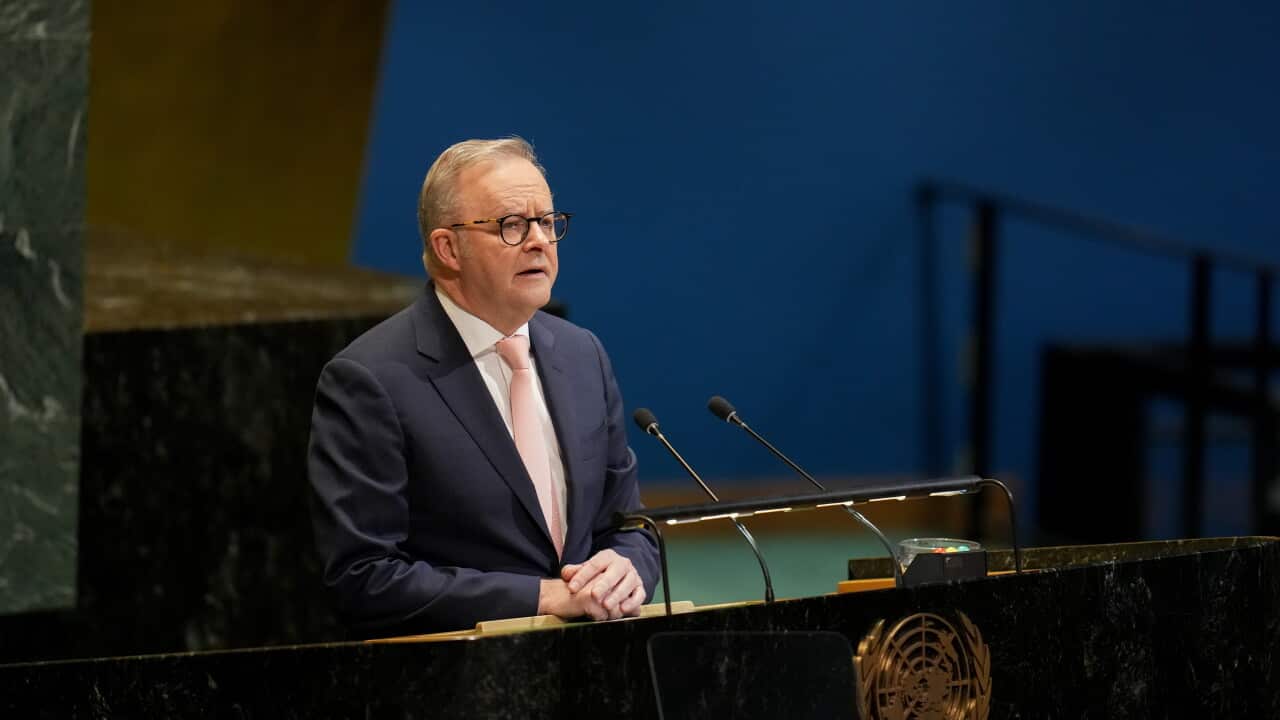
Prime Minister Anthony Albanese is heading to New York with a diplomatic pitch that has been more than a decade in the making: Putting Australia back on the United Nations Security Council.
Australia is campaigning for a non-permanent seat on the council for 2029-30, which would mark its first stint on the powerful UN body since 2014.
The government says a seat would give Australia a stronger voice on decisions affecting the country and the region.
Australia's campaign is expected to focus on issues including artificial intelligence, cyber threats and online safety, as well as climate action, international law and support for Pacific nations.
But what exactly does the UN Security Council do, and what would Australia gain by being on it?
News that makes sense
Your trusted source for staying up-to-date with the world around you. Get free daily news updates and analysis, straight to your inbox.
What is the UN Security Council?
The Security Council is one of the six main bodies of the United Nations and has primary responsibility for maintaining international peace and security.
It is made up of 15 countries, each with one vote.
Five of them — China, France, Russia, the United Kingdom and the United States — are permanent members, while another 10 countries are elected by the UN General Assembly to serve two-year terms.
Unlike most other UN bodies, the Security Council can make decisions that member states are obligated to implement.
It can impose sanctions, establish peacekeeping operations and, in some circumstances, authorise the use of force. It can also investigate disputes, call for peaceful settlements and make recommendations aimed at maintaining or restoring international peace and security.
For a substantive resolution to pass, it needs at least nine votes.
And there is an important catch — each of the five permanent members has veto power, meaning a negative vote from any one of them can block a substantive resolution even if it otherwise has enough support.
Australia would not gain that veto power if elected, as it belongs exclusively to the five permanent members of the Security Council.
Non-permanent members such as Australia have the same single vote on council decisions, but cannot unilaterally block a substantive resolution.
So what would Australia actually gain?
While a non-permanent seat does not come with a veto, it gives countries a direct role in decisions they would otherwise largely have to influence from outside the council.
Australia would have a vote on Security Council decisions and be involved in negotiating resolutions and other outcomes on conflicts and security crises around the world.
It would also take part in closed meetings and consultations between council members and could chair subsidiary bodies, including sanctions committees.
Every member also takes a turn holding the presidency of the Security Council for one calendar month, allowing them to preside over meetings and help shape the council's program of work.
Australia's previous term shows the practical difference membership can make.
During 2013-14, Australia participated in hundreds of council meetings, including closed meetings available only to members, and was closely involved in negotiating dozens of resolutions and presidential statements.
Its seat became particularly significant following the downing of Malaysia Airlines flight MH17 over eastern Ukraine in July 2014, which killed 298 people, including 38 Australian citizens and residents.
Australia authored and led negotiations on Security Council Resolution 2166, which was unanimously adopted four days after the crash.
The resolution condemned the downing of the plane, called for a full and independent investigation and demanded access to the crash site.
Australia also used its term to work on humanitarian access in Syria, counter-terrorism, small arms and the protection of civilians.
Why does Australia want a seat again?
The government argues that Australia's security and prosperity depend on an international system in which countries follow agreed rules and work collectively on global problems.
Foreign Minister Penny Wong has said a seat would give Australia "a stronger voice in the decisions that affect us and our region", describing the country as an active middle power with a role to play in international peace and security.
The bid is also increasingly focused on what Australia argues will be emerging security challenges by the time it takes up the seat.
Technology is expected to be central to the campaign, with the government arguing that artificial intelligence, cyber threats and online safety will increasingly intersect with international peace and security.
Speaking at a Security Council debate last year, Wong said AI had the potential to transform conflict and diplomacy and argued the council should play a role in developing international rules and norms around its use.
She said Australia's experience in digital infrastructure and technology partnerships would form part of what it could bring to the council.
Australia's broader foreign policy priorities, including the Pacific, climate change, protecting civilians and supporting international law, are also expected to feature in the campaign.
How does Australia get elected?
Australia cannot simply nominate itself and take a seat.
The 10 non-permanent positions are distributed between regional groupings, with five seats coming up for election each year.
Australia belongs to the Western European and Others Group, or WEOG, and is seeking one of the group's two seats available for the 2029-30 term.
So far, Australia and Finland are the only candidates for those two positions, meaning the positions are currently uncontested.
But Australia must still win the support of two-thirds of UN General Assembly members present and voting when the election is held in June 2028.
If all 193 UN member states were present and voted, that would mean securing around 129 votes.
It helps explain why the government is campaigning years before Australia would actually take its seat.
The bid itself is not new. It was first announced in 2015 under the former Coalition government, following Australia's previous stint on the council.
Australia has served five terms on the Security Council since the UN was established, most recently in 2013-14.
A sixth term would not give Australia the power enjoyed by the council's five permanent members.
But for two years, it would give Australia something it otherwise does not have: a seat, a vote and a direct role in negotiations at the UN body responsible for some of the world's most consequential decisions on peace and security.
For the latest from SBS News, download our app and subscribe to our newsletter.







