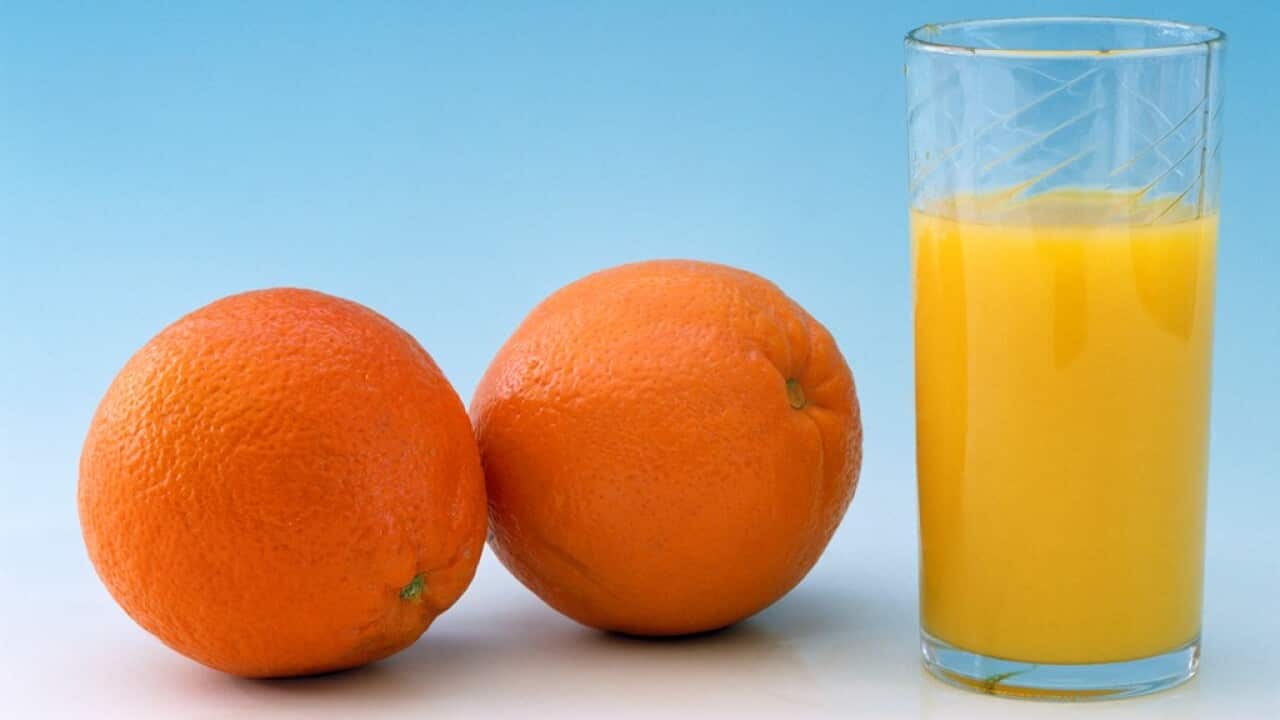
The toothpaste-orange-juice combo is a well-known taste-bud explosion of blech. But what makes these two familiar morning flavors, both perfectly pleasant on their own, so gross when combined?
According to a video produced by the American Chemical Society, you should blame it on sodium lauryl sulfate (SLS), which is added to your toothpaste to give your mouth that bubbly, fake-clean feeling even though it doesn't actually do anything to clean your teeth. SLS is found in all kinds of personal-care and cleaning products (though plenty of sulfate-free products exist, largely because of health and environmentalconcerns some have associated with the chemical).
The compound seems to suppress your tongue’s sweetness taste receptors, so after brushing you have a harder time registering the juicy-sweetness of the OJ. At the same time, SLS blocks taste receptors called phospholipids, which inhibit the taste of bitter. In other words, SLS tamps down your ability to taste sweet things while, at the same time, amping up your ability to taste bitter things.While scientists aren’t sure exactly why, or how, this happens, this is the most agreed-upon explanation of the toothpaste-OJ question. The science of coffee breath, however, remains a question for another day.
This article originally appeared on Science of Us: Why Does Toothpaste Make Orange Juice Taste So Weird. © 2014 All Rights Reserved. Distributed by Tribune Content Agency.