
On a quiet weekday morning, people enter an unassuming building down a side street in Darlinghurst.
Before it opens to the public at 10am, there are towels that need drying, floors that need mopping and beds that need wiping.
It's all part of an important daily ritual at this gay sauna: the deep clean.
Glenn McNamara, owner and manager of Sauna X by 357, tells SBS' Queer Renegades podcast, "laundry is really one of the most important things".
"But there's lots of moving parts. One thing stops and I stop everything until something's fixed," he says.
News that makes sense
Your trusted source for staying up-to-date with the world around you. Get free daily news updates and analysis, straight to your inbox.
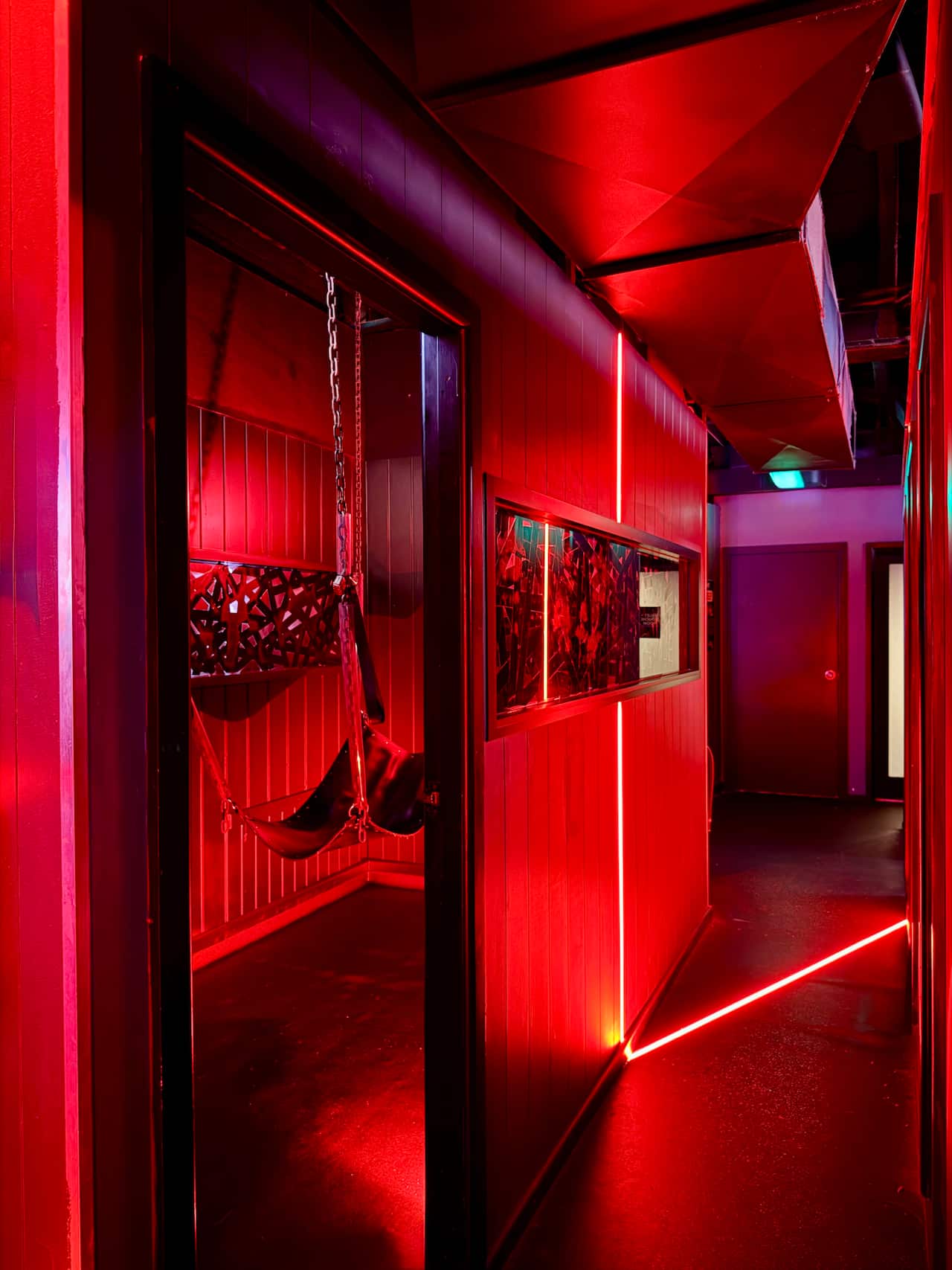
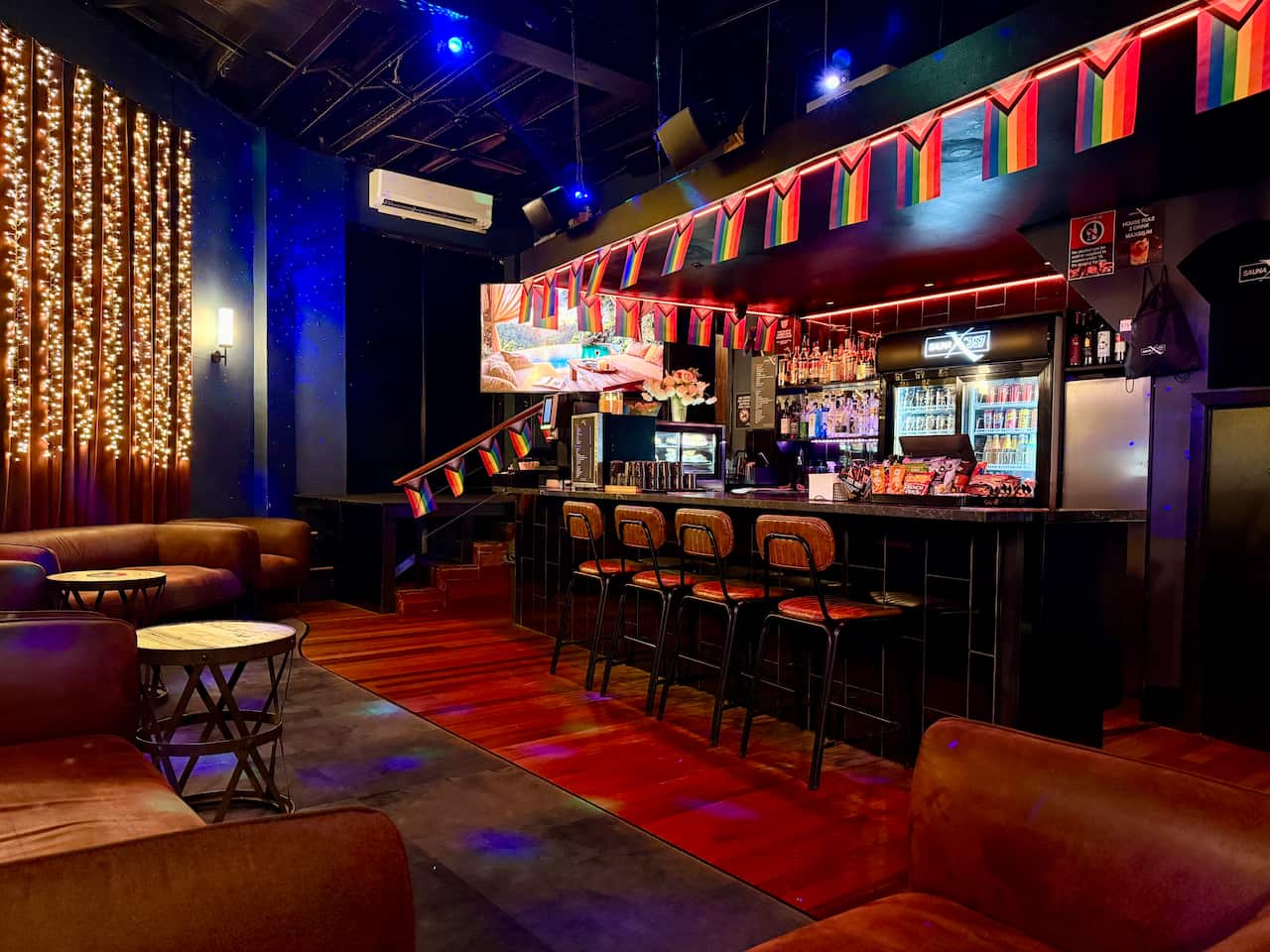
Walking past the dimly-lit front reception and locker room feels like entering a labyrinth. Each door leads to a different-sized room with differing furnishings: a mirror, a sling, a glory hole. Sure enough, several dryers are rotating towels at great speed in the laundry room. On the walls, signs instruct consent and cruising. An internal passageway leads directly to a neighbouring nightclub.
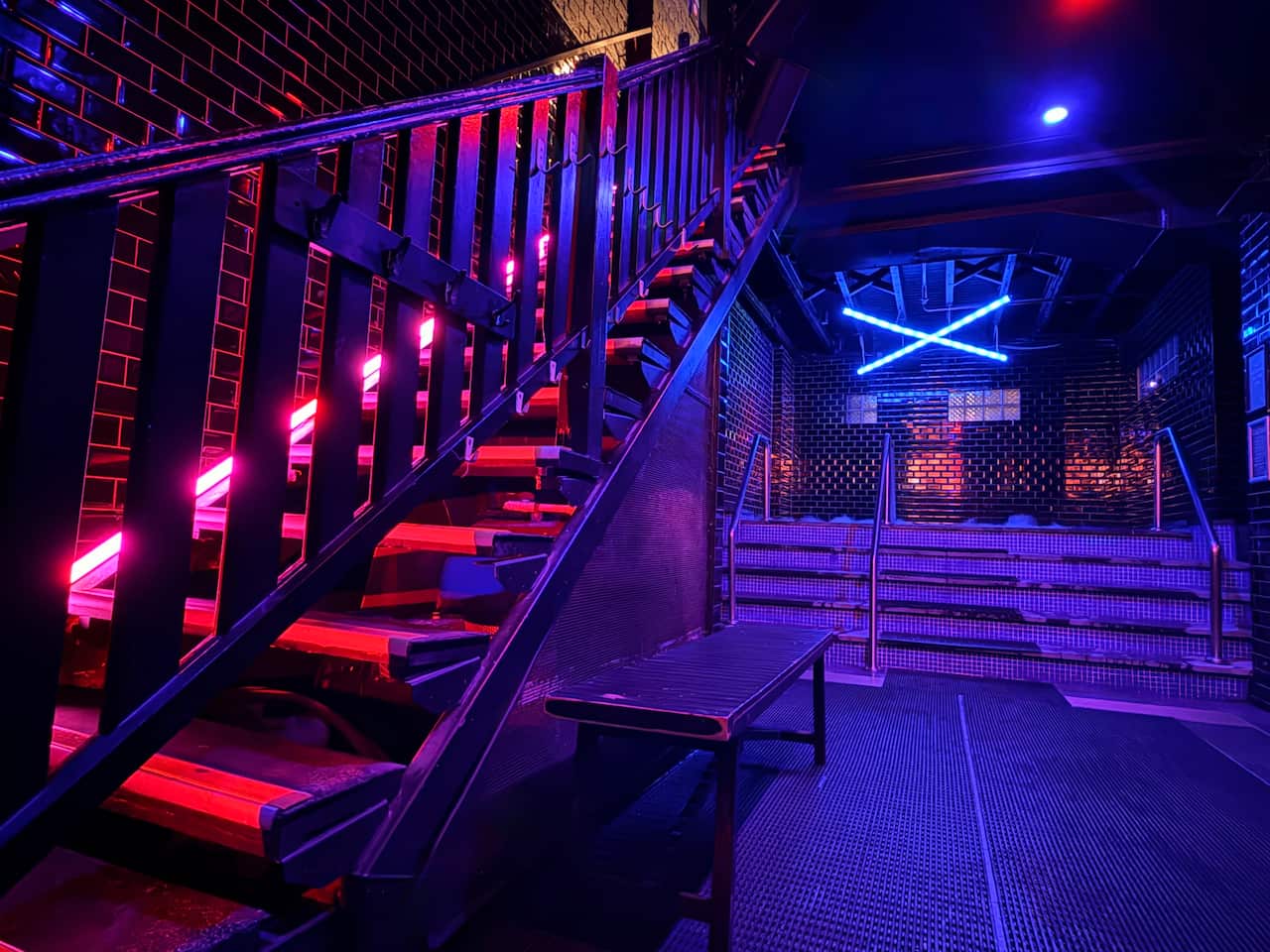
On our tour, McNamara fields several texts and phone calls — "there's always something" — managing the complex logistics of running a gay sauna in his stride.
"I'm usually here early because I have to meet a tradesperson. I'm constantly ordering cleaning products. The TV breaks down, buy a new TV; install the TV. If the beds get cracks in [them], buy a new bed."
Walking downstairs, we enter what McNamara calls the "wet area".
[It's] made up of steam rooms, sauna and spa — and we also have a douche room toilet.
There's one important rule on this floor, he explains.
"No [sex] in the spa. You're more than welcome to have a pash, maybe even some oral, preferably no fluids. But no f--king in the spa because it's not a sanitary thing to do."
More than a place to 'scratch an itch'
McNamara opened the sauna in 2024 after the closure of another long-running sauna, 357, from which he drew inspiration for the name.
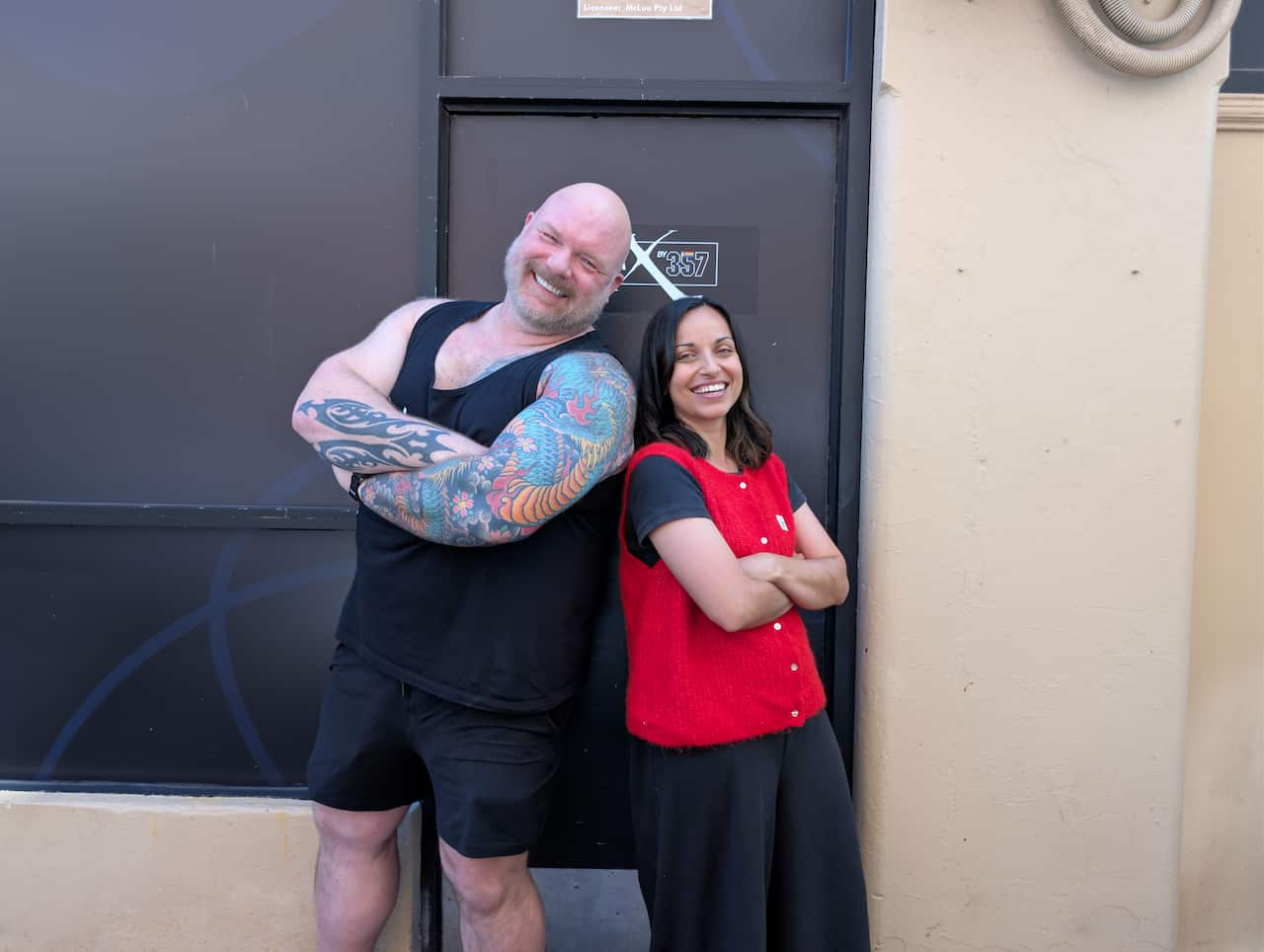
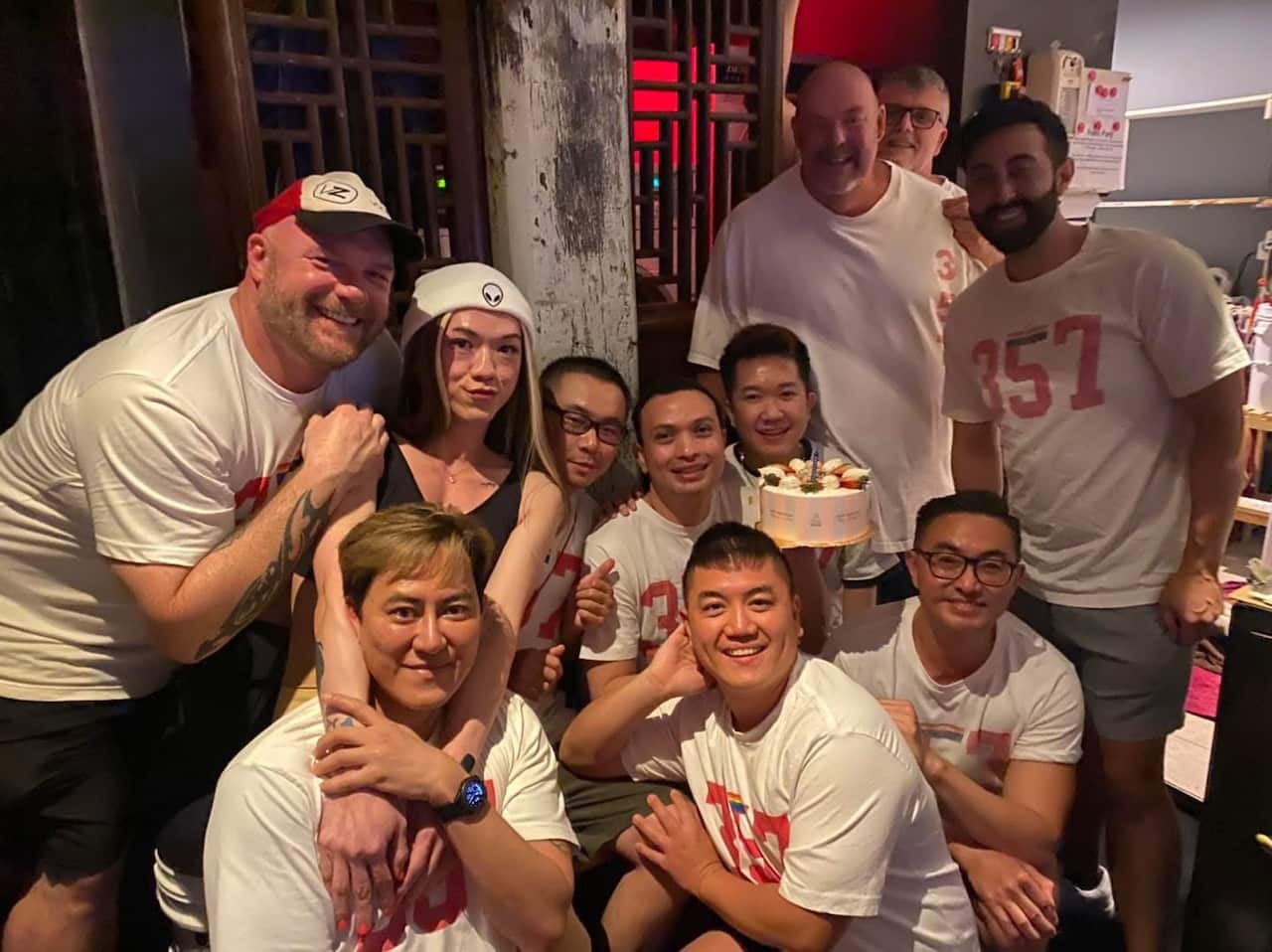
He had worked at 357 prior to its shuttering, first as a cleaner and later as a manager, alongside friends and co-owners Ty Dovans and Luke Frappell. The experience left a mark on McNamara, who had given up a 20-year career in corporate customer service to join 357 in 2020, after on-and-off stints since 2012.
For him, running a sauna is about continuing a long tradition of creating safe gathering spaces in Sydney.
"It's a very essential part of the queer community," McNamara says.
"People come to scratch an itch. They come because they're horny or they want to have sex in a place that isn't someone else's home [or] they don't want to risk doing something in public.
"This creates a safe space for them to do that. At the same time, it's also a place for queer people to be themselves and be around other queer people."
Ian Roberts, former rugby league player and LGBTQIA+ advocate, agrees that saunas have always served as meeting places.
"I used to go on weekends, but a lot of the time it wasn't about the sex. It was just to go because it's a cool place to hang out," he says.
"There's a bar there, there's food and drinks. [Saunas] were just another type of bar."
Some of the people who come through the doors of McNamara's sauna are closeted. Many are in their 70s and 80s and come to be with their 'chosen family', he explains.
"They all sit at the bar. They have a chinwag. They might go for a stroll upstairs if they see something they like, but that's not why they're here. They're here to connect with friends," McNamara says.
"There's a gentleman, probably in his 80s, who comes in with a huge trench coat. Always very well-dressed. He has two slices of cake, coffee and watches movies. And for him, that's that safe queer space for him.
He doesn't have to have sex. He just wants to be around other queer people.
From undercover to legal: gay saunas as safe spaces
Historically, the trajectory of gay saunas from clandestine operations to legal venues mirrors that of gay liberation.
Bath houses have traditional origins in Greco-Roman times, but gay saunas as sites for sex and community didn't begin in Australia until 1967, in Bondi Junction.
At that time, not only were gay saunas illegal in NSW — thanks to the Disorderly Houses Act 1943 — but just being gay was still a crime. To be more specific, gay male sexual acts were criminalised all over the country.
South Australia was the first to change these laws, but not until 1975; NSW didn't follow suit until 1984.
This didn't stop the legendary lesbian business owner Dawn O'Donnell from knocking on Waverley Council's door, dressed in white gloves, and applying to take over a 'health club' in Bondi Junction.
Many others followed suit, and by the 1970s and 80s, places like Sydney's Ken's at Kensington (then known as Ken's Karate Klub) and Melbourne's Steamworks were covertly operating.
These venues became targets of police raids, and by the 1980s, during the AIDS crisis, there were campaigns to close saunas altogether. In 1984, this public anti-sauna campaign was directed by former conservative politician, Reverend Fred Nile.
But these saunas were functioning as important places for men to gather and raise awareness of HIV, with many partnering with community organisations, such as ACON.
It's a legacy that continues today, says McNamara.
"We've got a little wall set up with brochures that come from ACON on things like STI health," he says.
We get to send the messaging out where [some community members] wouldn't otherwise see it.
This very building once operated as Bodyline, the first sauna in Australia's history to operate lawfully after going to court. The judge's 1991 ruling in the NSW Land and Environment Court sent a powerful message: saunas were essential environments for consensual safe sex between men.
Changing times
Sauna culture in Australia has continued to evolve over the decades, with many now opening their doors to the wider queer community.
There are queer parties held in gay saunas, and some, including McNamara's, have dedicated one night a week to being all-gender inclusive.
"We have always offered free entry to both trans ladies and cis ladies because, for one, people in the trans community are some of the most marginalised, both financially in terms of employment and also sexual violence," he says.
Whether this trend is adopted by other saunas or becomes a permanent paradigm shift is up to the next generation, says McNamara.
" I'm old. It's gonna be the next generation who will dictate what they want.
"I think there's always going to be a need for a gay male-only space. But that doesn't mean that there won't be further needs for other parts of the gender spectrum needing a space to [meet] maybe more than one day a week."
For McNamara, making saunas more inclusive is also about embracing diversity. He says it's important to get away from traditional messaging about the idealised 'chiselled' gay man.
This includes promoting body positivity and responding to studies examining white privilege in sauna culture.
"You will never see in any of our advertising any models, any chiselled bodies.
"I mean, I'm a chubby guy myself. If I was to go to a place like that, I would not feel comfortable because they're projecting that's what the ideal is.
"And let me tell you, that is not the ideal. People are into different body types."
Queer Renegades is out now on SBS Audio. New episodes drop weekly.
For the latest from SBS News, download our app and subscribe to our newsletter.







