IN BRIEF
- Grand Final weekend could generate up to $75 million in economic activity for Victoria, according to one estimate.
- But a sport business expert says the actual net benefit could be closer to $20 million to $25 million.
An all-interstate AFL Grand Final is expected to deliver a bigger economic boost to Victoria than a match between two Victorian teams.
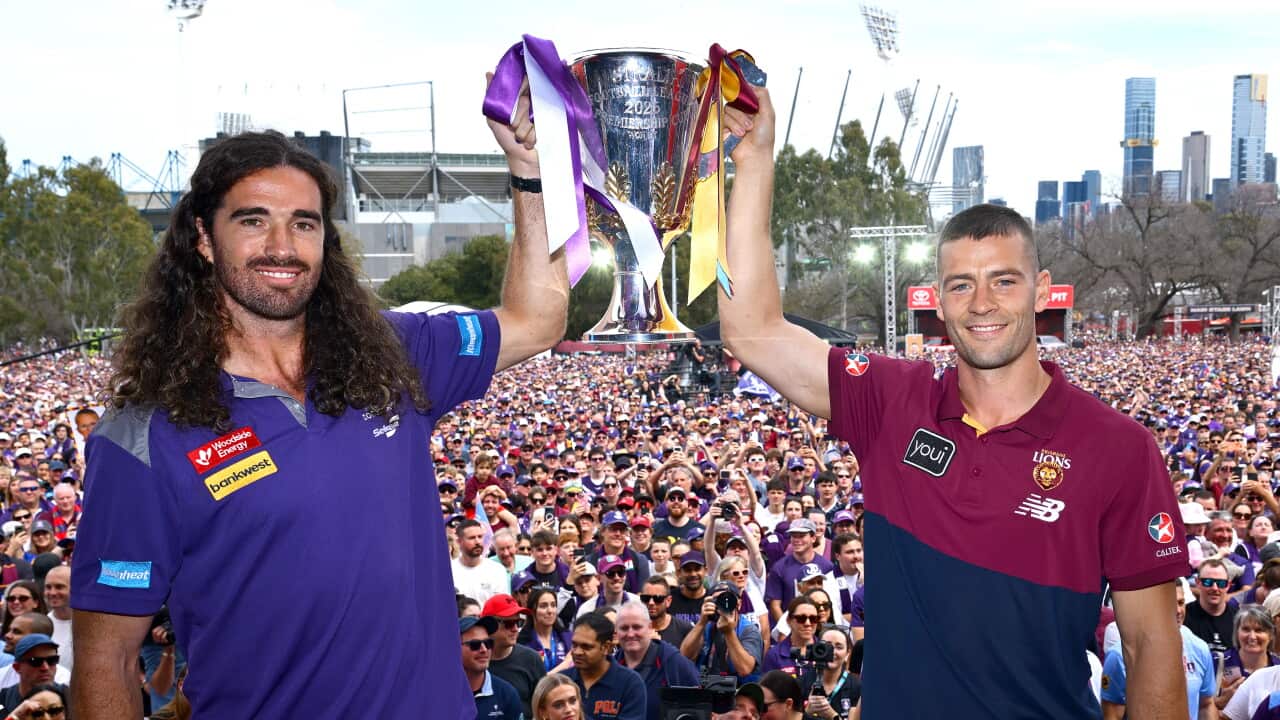
Fremantle and Brisbane will meet at the Melbourne Cricket Ground in front an expected crowd of 100,000 people on Saturday in just the second all-interstate Grand Final since Victoria introduced its Grand Final Eve public holiday in 2015.
And tens of thousands of supporters travelling from Western Australia and Queensland are expected to pour money into Melbourne's hotels, restaurants, bars and other businesses.
RMIT University Professor Angel Zhong estimates Grand Final weekend could generate up to $75 million in economic activity for Victoria.
She says an all-Victorian derby could generate roughly a third of that figure because much of the money spent by local supporters would simply be redirected from elsewhere within the Victorian economy.
News that makes sense
Your trusted source for staying up-to-date with the world around you. Get free daily news updates and analysis, straight to your inbox.
But Professor Hans Westerbeek, a sport business expert at Victoria University, says while the underlying argument is sound, the headline figure does not necessarily represent the amount Victoria ultimately gains.
"The Grand Final brings genuinely new money," he told SBS News.
But after accounting for money that leaves the state or economic activity displaced by the event, he estimates the real net benefit could be considerably lower.
So, where does the $75 million come from?
Zhong said the difference between an interstate and an all-Victorian Grand Final largely comes down to where supporters’ money originates.
"When interstate fans fly in, stay in hotels and eat in our restaurants, that is genuinely new money entering Victoria," she said in a statement.
"When people go to a local derby, they are mostly redirecting spending they would have made in the state anyway."
Westerbek agreed. Using what he described as a "back-of-the-envelope" calculation, Westerbeek compared a Grand Final in which about 90 per cent of spectators were Melbourne-based with one in which half the crowd travelled from interstate.
In the first scenario, he estimated roughly $5 million in value could be added to the Victorian economy.
If about half the crowd was interstate, he said that could rise to around $20 million to $25 million.
But, he said the gross visitor spend could be considerably higher.
Westerbeek estimated interstate visitors staying for two nights and spending on accommodation, food, drinks and tourism could generate around $60 million in visitor expenditure alone.
But emphasised that is not the same thing as Victoria being $60 million better off.
The money that doesn't make the headline figure
Westerbeek said headline economic impact figures can also be reduced by what economists call "displacement".
For example, some visitors who might otherwise have travelled to Melbourne could avoid Grand Final weekend because accommodation is booked out or more expensive, he said.
Their spending would therefore be replaced by that of visiting AFL fans, rather than representing entirely new economic activity.
That is separate from the substitution effect identified in RMIT's analysis, where spending by Victorian fans may simply be redirected from elsewhere in the state.
"There is definitely an influx of money, but there's also an outflow that is often not calculated in those headline figures," Westerbeek said.
Even money spent getting to Melbourne does not necessarily remain in Victoria.
Westerbeek said airfares, for example, largely go to airlines and travel operators that may be headquartered elsewhere.
What about Victoria's Grand Final public holiday?
For hospitality businesses packed with travelling football supporters, the public holiday the day before Saturday's big game can provide another day of strong trading.
But other businesses may face higher wage bills through public holiday penalty rates, fewer customers or an entire day without normal operations.
Zhong said whether the public holiday benefits a business depends heavily on its industry and location.
A restaurant near the MCG may have one of its strongest trading days of the year despite higher wage costs, while a business dependent on office workers could face higher costs and lower demand.
But a café reliant on office workers or a suburban restaurant with little connection to the game could face higher wage costs and fewer customers, or decide not to open at all.
Westerbeek said the wider loss of a normal working day was another factor that headline economic-impact estimates do not always capture.
For workers rostered on, penalty rates provide additional income.
But from a whole-of-economy perspective, Westerbeek said the lost productivity among sectors that shut down should also form part of any assessment of the weekend's financial impact.
"It certainly isn't something that is being featured or calculated when we talk about ... the headline reported benefits," he said.
That does not mean he believes Victoria loses from hosting the Grand Final.
"It is [a success]," he said.
"But it's not as substantial as the $75 million in terms of the headline number."
Melbourne's payoff goes beyond one weekend
Westerbeek told SBS News that the economic impact of the Grand Final is not limited to what visitors spend over the weekend, with Melbourne also deriving longer-term value from its reputation as a major events city.
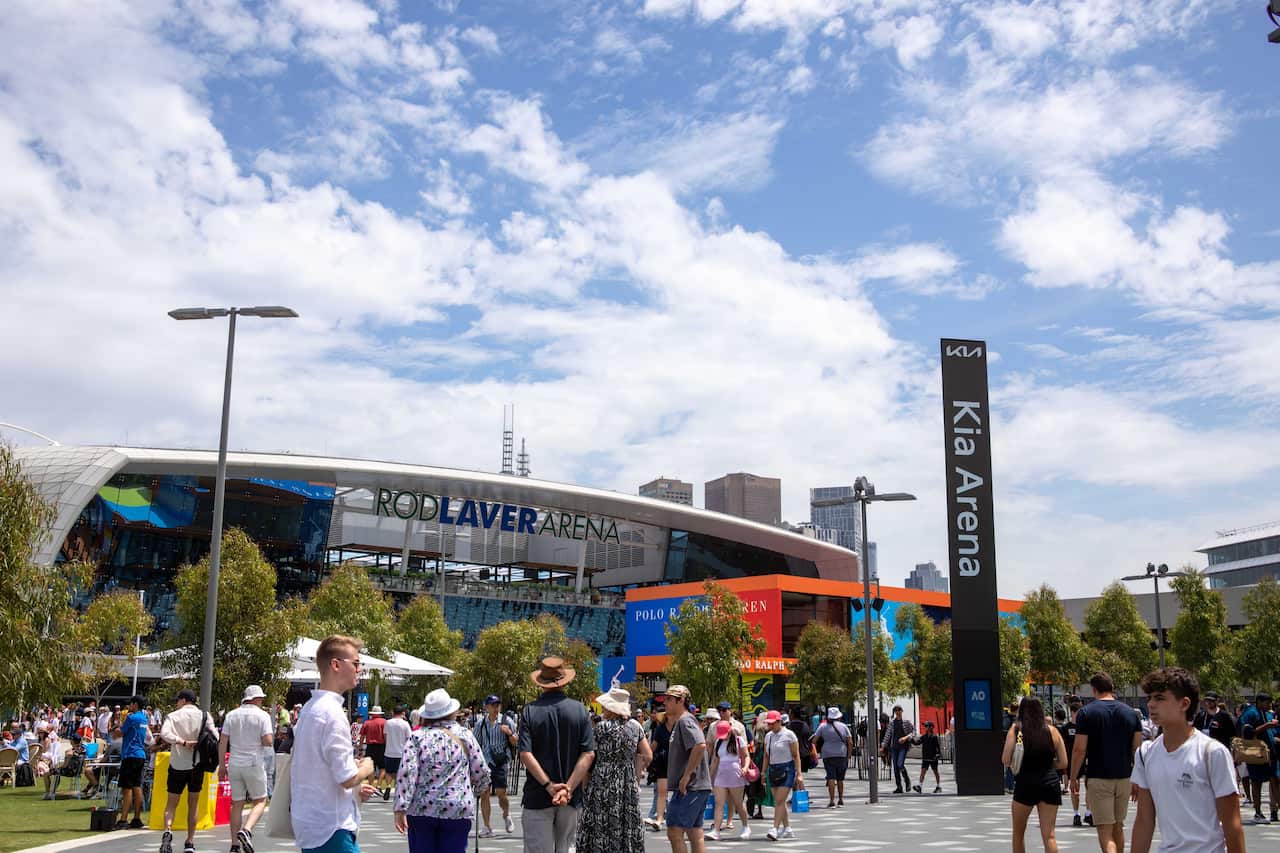
Melbourne has spent decades positioning itself as a major-events city, with the AFL Grand Final sitting alongside events including the Australian Open and Formula One Australian Grand Prix.
Westerbeek said individual sporting events should therefore not necessarily be assessed in isolation.
"The AFL Grand Final is not a once-a-year kind of thing. It is part of a portfolio of events, a year-round calendar," he said.
Rather than suddenly transforming Melbourne's tourism economy each September, he said the Grand Final helps sustain the infrastructure, hospitality industry, expertise and reputation the city has built around major events.
"The Grand Final maintains Melbourne's reputation rather than building it," he said.
Evidence that a single event can create sustained tourism growth is relatively weak, Westerbeek said.
Melbourne's advantage is that the next major event is never particularly far away.
"It's not a peak moment," he said.
"It is a pulsating moment. It's one of many events that keep Melbourne, justifiably, as Australia's, maybe even one of the world's, major event and sports capitals."
And while an interstate Grand Final may inject more outside money into Victoria, Westerbeek said the comparison misses something else entirely.
An all-Victorian Grand Final can generate social benefits for locals, including a sense of identity, pride and connection — that are difficult to attach a dollar figure to.
Those benefits may never appear in an economic-impact calculation.
But, he said, they are still part of what the Grand Final is worth.
For the latest from SBS News, download our app and subscribe to our newsletter.







