
It's often seen as a 'grandma hobby', knit-one, purl-one, cast on and count.
It's slow, tedious, and at times incredibly frustrating.
In a world of instant gratification, it should be a lost art. And yet, yarn craft is experiencing a resurgence. Young people are picking up knitting needles and crochet hooks and bucking the trend against fast fashion and disposable culture.
From sustainability to self-expression and mental well-being, a new generation is stitching together a purpose for an 'old' craft — one that refuses to unravel.
Sancia Ridgeway learned to knit in 2023 through watching YouTube videos.
News that makes sense
Your trusted source for staying up-to-date with the world around you. Get free daily news updates and analysis, straight to your inbox.
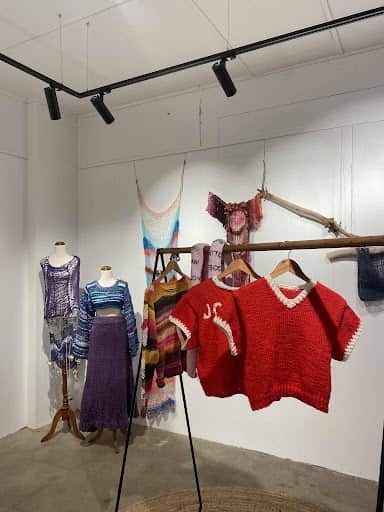
"My grandma was also a knitter, knowing she was a prolific knitter when she was alive, I thought it would be nice to learn," Ridgeway tells SBS News.
Since then, it's become much more than a hobby.
The 24-year-old Gumbaynggirr fibre artist from the mid-north coast of NSW has launched her own brand, Scuzz Knits, showcased her work through exhibition spaces and sold and commissioned original pieces.
"I find it so relaxing. It just never feels like work, it still feels like I'm going to the spa," Ridgeway says.
She also uses her craft as a form of activism.
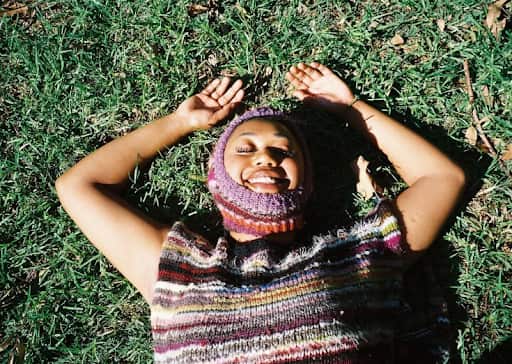
Six months after the No outcome of the 2024 Indigenous Voice to Parliament referendum, Ridgeway created Yarns About Blak Joy, challenging perceptions of First Nations people through knitting.
"I designed a book with six Aboriginal Australians speaking about their Blak Joy. And I knitted garments to represent their joys, because knitting is my own."
From scraps to statement
Ridgeway's work relies heavily on scrap yarn, eco-dying and donated fabrics.
"I really like to reuse yarn that's second-hand from op shops; it stops it from going to landfill," she says.
When a project is complete, rather than cutting and disposing of loose threads — sometimes as short as 5cm — Ridgeway gives them a second life.
"I colour code them and brush them out and rejoin them with different fluffy pieces of fibre.
I don't have much waste coming from my knitting practice; every little part of the yarn or wool is getting reused.
It's a careful, considered process, one that mirrors how many young makers are learning to value every thread.
In her garden, wearing a cardigan she knitted herself, Evvia Gonzales pulls blooms of marigolds to naturally dye her yarn.
The 28-year-old was taught to crochet by her grandmother at just six years old, and later picked up knitting during the COVID-19 pandemic.
Wanting to showcase her pieces, Gonzales created an Instagram account that now has more than 230,000 followers.
"I had quite a few things kind of go a bit viral, which was a total surprise to me because it was more just a visual diary," she tells SBS News.
Now the fibre artist sells patterns and original pieces full-time.
"I would do sample sales every two months, and that slowly morphed into me selling patterns more because it's very hard to price handmade pieces.
"One of my bag patterns has gone viral in Korea of all places, and so a bunch of Korean yarn stores are selling kits to make my patterns."
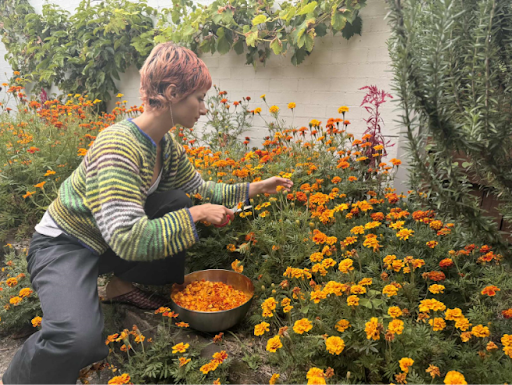
Moving to Sydney from the United Kingdom, Gonzales started a biweekly 'Makers Meetup', forging a social community of like-minded enthusiasts.
"There's something about traditional crafts that gives a good contrast to the world that a lot of young people are living in, where it's very screen-based," she says.
It's just so nice to have a really slow project. Where you have control over what you're doing, and you're building something tangible.
Stitched into the mainstream
Last year, UK television station Channel 4 released a show, Game of Wool, featuring competitive knitters facing weekly challenges.
The program is hosted by retired Olympic diver Tom Daley, who was known for his knitting projects on the sidelines of competitions.
Even in Hollywood, Canadian actor Ryan Gosling's knitted cardigan in his latest film, Project Hail Mary, has gone viral, with many — including Daley — trying to replicate the handmade, vintage style that features foxes on each side and paw prints on the sleeves.
One of the film's costume designers, Glynn Dillon, said the piece was created using a 1950s pattern from the Canadian company Mary Maxim, which originally featured wolves rather than foxes.
The pattern can be easily bought online for $11.
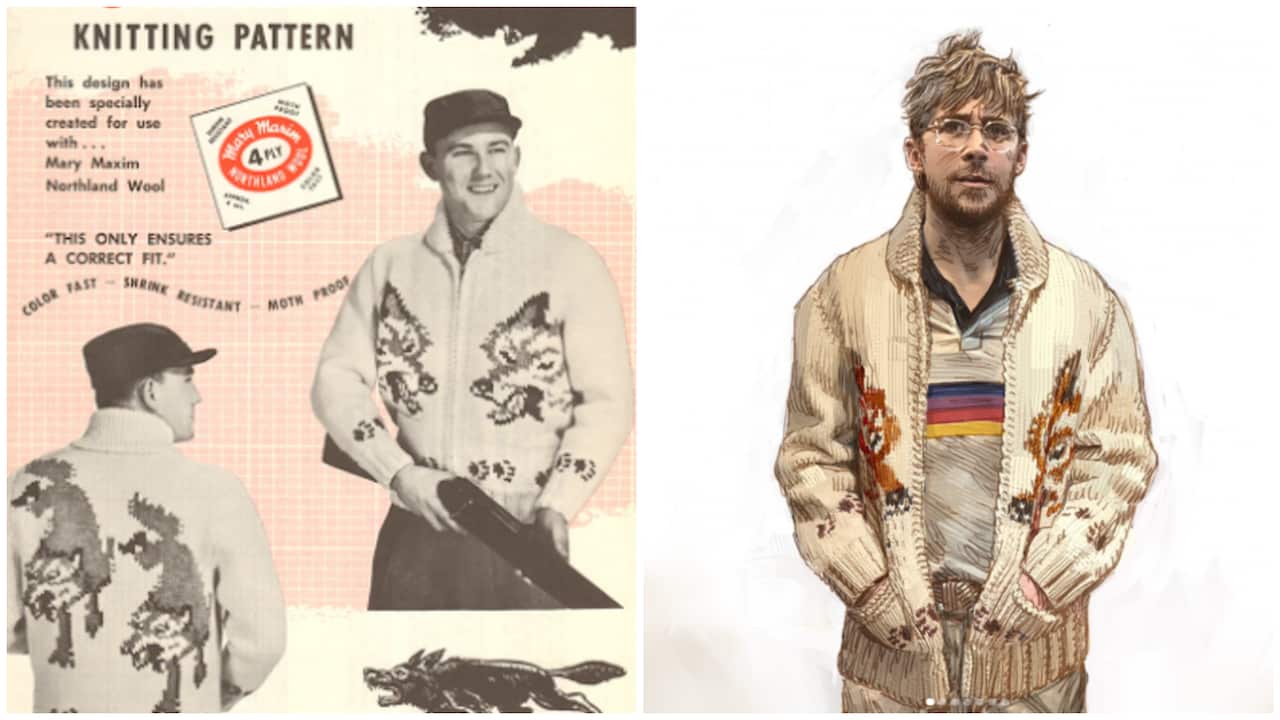
Pop culture moments like these are helping push knitting further into the mainstream.
The numbers behind the needles
In a 2025-2026 United States survey of 2,000 adults by research firm Mintel, 71 per cent said they had participated in a craft project in the past year.
Among gen Z, that figure rises to 86 per cent.
That growing interest isn't limited to the US. In Australia, online search trends point to a similar resurgence.
In the past five years, Google Trends data shows searches for beginner knitting patterns on YouTube in Australia have increased by 450 per cent.
Behind these numbers are makers like Caterina Sullivan, who has been knitting for more than 25 years and has watched the craft evolve from a niche pastime to mainstream interest.
In 2024, she launched the annual Australian Yarn Show to highlight the impacts the yarn industry has on crafters.
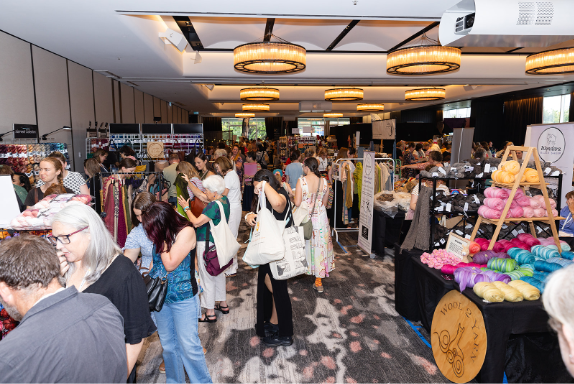
Sullivan says demand for materials surged during the COVID-19 pandemic.
"Not only did we see an increase in people participating in yarn crafts, but because so many people started participating, some businesses started up as well. A lot of indie dyers and producers started up in 2020 and 2021," she tells SBS News.
She says she sees young people driving the trend first-hand.
"The amount of young people participating in young crafts is inspiring.
"We had a little girl who attended [The Yarn Show] this year. I watched her cast on and knit a full top in one day and she was only 10 years of age."
More than just a good yarn
There is overwhelming evidence that yarn craft offers more than a creative outlet.
In 2020, an international study exploring the effects of crochet on well-being surveyed more than 8,000 people in 87 countries. It found that crochet is actively used by enthusiasts to manage mental health conditions, grief, chronic illness and pain.
At least 89.5 per cent of respondents also said crocheting made them feel calmer, while 82 per cent said it made them happier, and 74.7 per cent said it made them feel more useful.
British author Betsan Corkhill founded Stitchlinks, a nonprofit organisation dedicated to learning more about the health benefits of knitting.
She believes the movement of knitting acts as a physical, consistent pulse similar to a metronome, the device musicians use to keep time.
"You have your rhythmic, your bilateral coordinated pattern of movements which sets knitting apart from other activities" she said in a video posted on YouTube in June 2022.
A lifeline, stitch by stitch
The impact of knitting on the brain, while not extensively scientifically documented, has been widely reported anecdotally.
For some, its effects go beyond relaxation — becoming part of recovery itself — including for Sullivan, who turned to knitting after she suffered a series of strokes.
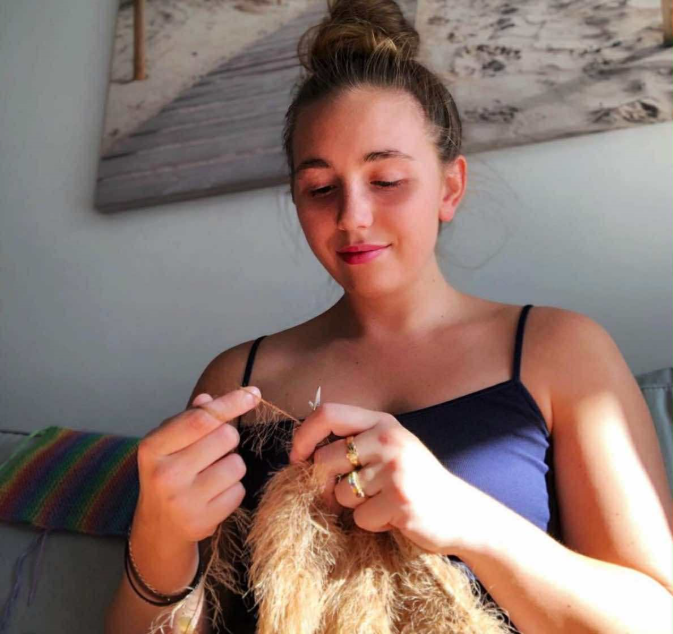
"The exercise physiologist commented on the fact that my fine motor skills had improved so quickly after my stroke and she thought it was down to having done so many years of knitting, and the muscle memory that I had, despite my brain not being able to recognise a lot of cues my body was sending," she says.
"Part of my physical recovery after my strokes was to increase my knitting.
It's just being able to work with your hands and engage mindfully and creatively.
While clinical research into knitting's neurological benefits is still emerging, experts often link repetitive, rhythmic hand movements to improved motor function and reduced stress, helping explain why so many turn to yarn crafts during recovery.
Relief away from screens
For others, the appeal is simpler — a way to step away from screens and reconnect.
Mothers Caroline Johnston and Ellyot Channells knew all too well the struggles of engaging with their children and peeling them away from screens.
The duo founded a children's clothing label and, during the winter season, began knitting pieces for customers while showcasing the process online.
"The more we were showing our knitting, the more we realised how much other people were really keen to learn how to do that for themselves and bring it into their everyday [lives]," Johnston tells SBS News.
Now the pair sell beginner-friendly knitting courses and patterns for parents and children.
"The knitting courses have been really popular ... it's definitely a movement that's been happening," Channells tells SBS News
"As a mother, sometimes, it can be hard to drop into play all the time, but knitting and handwork with your children can offer such an organic way of connecting."
Their experience reflects a growing appetite for slower, shared activities that bring families together without a screen in sight.
After watching her son pick up weaving with ease on his third birthday, Sullivan hopes yarn craft will be woven into school curricula.
"It's also a great way to teach kids that not everything comes instantaneously, being able to say, 'you have to work for this' is a really fantastic experience for young people," Sullivan says.
It's a lesson that extends beyond the classroom. In a culture built on speed, yarn craft offers something different: the patience to start, the discipline to continue, and the reward of something made to last.
For the latest from SBS News, download our app and subscribe to our newsletter.







