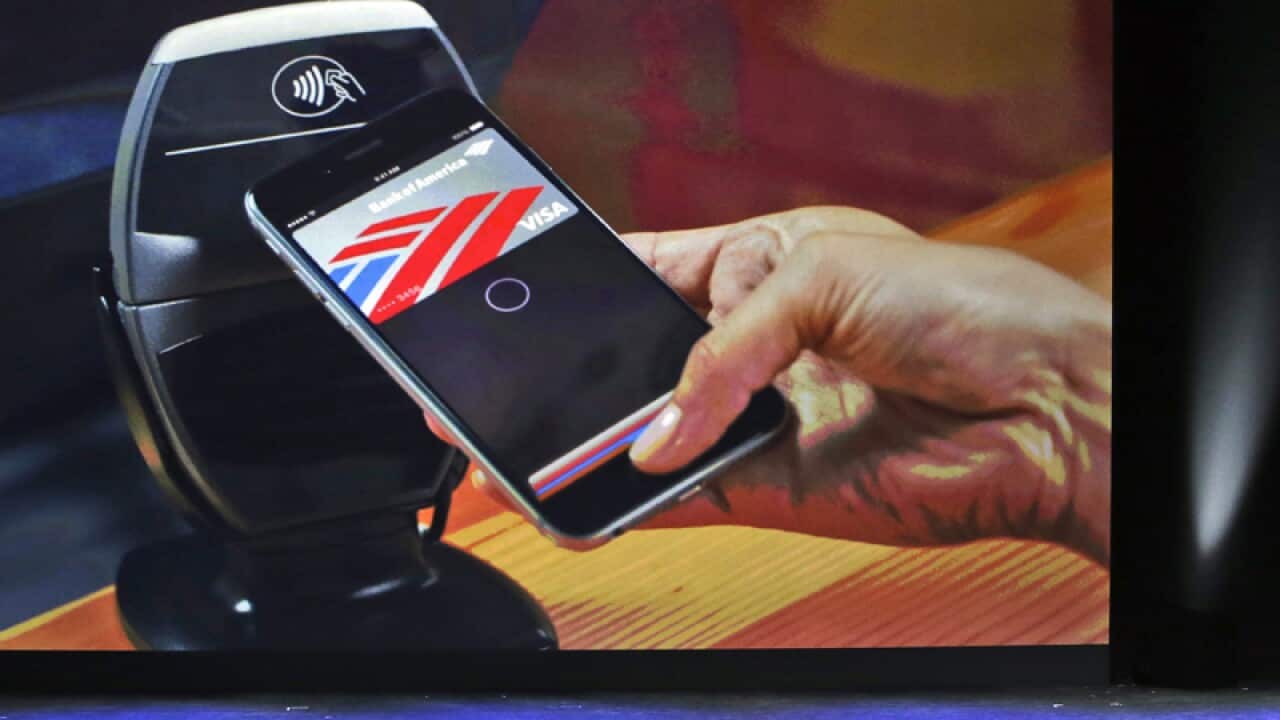
Apple wants the plastic credit card to become as rare as the paper cheque.
On Tuesday, the company announced Apple Pay, a digital payment system that lets people pay for retail store purchases using their phones rather than cash or credit cards.
Some consumers in the banking industry have already had the opportunity to trial it, including some in Australia.
The service, which will work both with iPhones and Apple's new Watch, is backed by a host of big retailers, along with most major banks and credit card issuers, including Visa, MasterCard and American Express.
So-called contactless payment isn't new. Starbucks, McDonald's, PayPal, Google and Square offer their own services but only a small portion of customers use them.
News that makes sense
Your trusted source for staying up-to-date with the world around you. Get free daily news updates and analysis, straight to your inbox.
Some experts believe Apple Pay - with its presence on millions of iPhones and its advanced security features- could be the service that leads to widespread adoption of the digital wallet.
Citi Investment Research analyst Mark May believes the sum total of mobile payments could grow from $US1 billion ($A1.08 billion) in 2013 to $US58.4 billion ($A63.19 billion) by 2017.
Payment digitisation paints an enticing vision of shopping's future: simply tap your device against a checkout screen and walk away with your new shoes.
But despite the flashy Apple Pay launch, Apple faces challenges making that vision a reality. The company and other digital wallet providers must convince shoppers that the transactions are safe - especially in the wake of recent American high-profile data breaches at Home Depot and Target.
Meanwhile, the company must also make a case to retailers that it's worth it for them to invest in new point-of-sale systems.
Many US merchants still aren't sold on the idea. About 220,000 stores are set up to accept Apple Pay. That's only 5.5 per cent of the 3.6 million retail locations in the US, according to the National Retail Federation.
The biggest US retailers, including Wal-Mart and Best Buy, are not participating in Apple Pay.
The main reason is cost. Each point-of-sale device, which uses something called near-field communication technology, costs hundreds of dollars, plus hours of worker training. And there's been little customer demand for the systems.
That may change now that Apple has entered the arena, says Gartner analyst Avivah Litan.
"There's no doubt young people want to use phones to make payments, but they have to have a place to pay," says Litan.
She predicts bigger retailers will see how well Apple partners like McDonald's do before they move into mobile payments.
"If it goes well at other retailers, Wal-Mart and other companies may break down and start taking it," Litan says.







