
Ill-fitting face masks are putting healthcare workers at risk of contracting coronavirus, with women and Asian people most likely to be impacted, a new report says.
The review of previous studies, published in the peer-reviewed Anaesthesia medical journal on Wednesday, said a standardised fit-testing procedure was needed to improve protection against COVID-19 and should form part of mandated health and safety protocols in hospitals.
Currently, in Australia, healthcare workers are often expected to check their own masks after putting them on by inhaling and exhaling sharply and feeling for air leaks. This process, known as fit-checking, is the minimum safety standard when personal protective equipment is worn.
"Satisfactory airborne protection will only be provided if the filtering facepiece respirators are properly fitted to the individual's face, providing a tight facial seal," said Professor Britta Von Ungern-Sternberg, from Perth Children's Hosptial, who co-authored the review.
News that makes sense
Your trusted source for staying up-to-date with the world around you. Get free daily news updates and analysis, straight to your inbox.
"It’s important that health care workers are checking their face mask when they put it on, but also regular fit testing of masks is needed to ensure there are no leaks that are often too small for health care workers to pick up with simple fit checking."
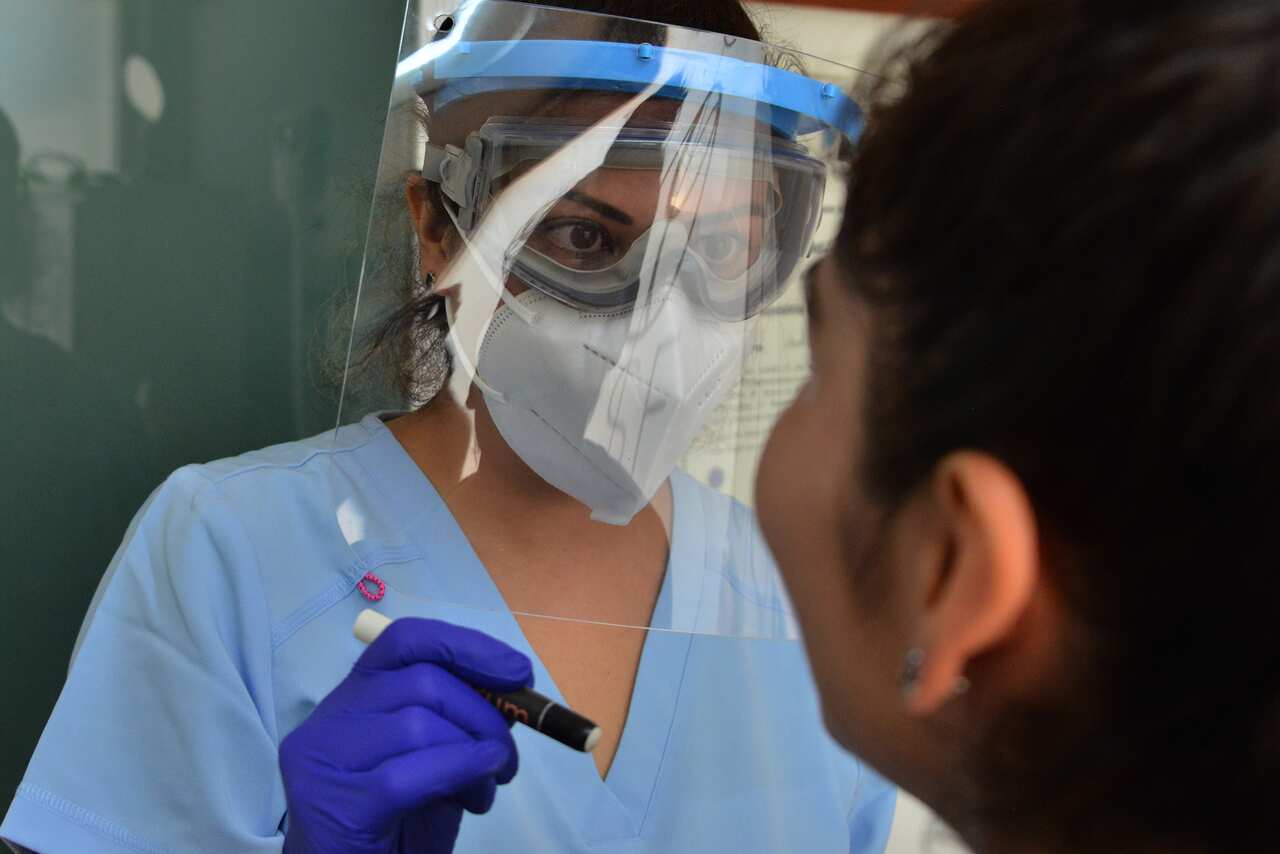
Women and Asian healthcare workers were less likely to have a properly fitting face mask, the review said, opening them up to a greater risk of infection.
The initial fit pass rate for women was 85 per cent, compared to 95 per cent for men, one study quoted in the review found. The initial fit pass rate was also higher for Caucasians compared with Asians, with 90 per cent to 84 per cent respectively.
For Asian women, the initial fit pass rate was particularly low with a reported mean of 60 per cent.
The authors said women and Asians were underrepresented in a fit-test panel used to assess face masks in the United States, which "may explain why reported initial fit-pass rates for filtering facepiece respirators vary widely with lower rates found in females and Asians".The correct fit was "far more important" than the material of the masks for airborne protection, Professor von Ungern-Sternberg said.
In a survey last month, the Royal Australasian College of Physicians found 20 per cent of their members in public hospitals had been forced to source their own PPE, including 45 per cent of respondents who said they had limited or no access to N95 or P2 masks.
More than 3,400 healthcare workers have so far contracted coronavirus in Victoria, with 261 of those cases active as of Wednesday morning.
Despite the challenges of the coronavirus pandemic the review calls for annual formal fit-testing of facemasks for health workers as opposed to relying on self-checks.
"The COVID-19 pandemic has highlighted deficiencies of some healthcare facilities to protect their healthcare workers in line with national and international recommendations and the requirement for formal fit-testing programmes appears to be particularly important," the authors said.
People in Australia must stay at least 1.5 metres away from others. Check your state’s restrictions on gathering limits. If you are experiencing cold or flu symptoms, stay home and arrange a test by calling your doctor or contact the Coronavirus Health Information Hotline on 1800 020 080. News and information is available in 63 languages at sbs.com.au/coronavirus.






